- Home
- Membership
- These are the 17 greatest spy movies of all time – how many have you watched?
These are the 17 greatest spy movies of all time – how many have you watched?
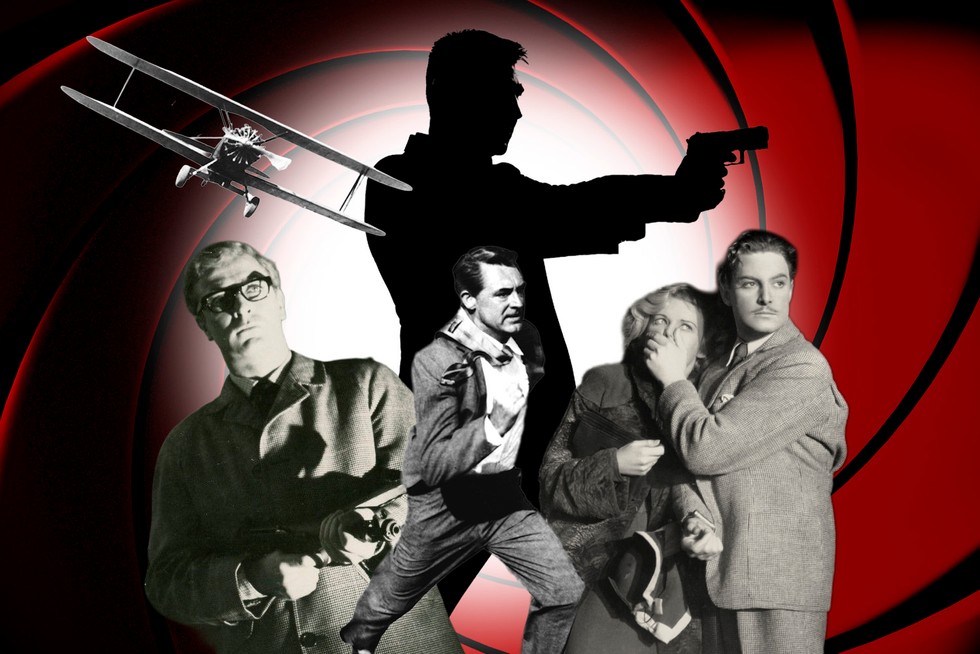
From suspenseful Hitchcock masterpieces to thrilling James Bond blockbusters, the espionage genre has gripped viewers for more than a century. Paul Burke names the films you can’t afford to miss
Published: November 24, 2026 at 10:00 PM
Save
- Share on facebook
- Share on twitter
- Share on whatsapp
- Email to a friend
With actor Robert Pattinson recently announced as the next James Bond, after much media and fan speculation, Ian Fleming’s iconic secret agent is set to return to the silver screen. The global appetite for spy stories is clearly insatiable. But what keeps us coming back?
Ad
Espionage cinema is more than gadgets and gunfights, false identities and coded messages: it mirrors the fears and obsessions of its time. Hitchcock’s thrillers tapped into the threat of invasion; John le Carré’s Cold War dramas exposed the moral compromises of espionage; and today’s films grapple with terrorism, surveillance and cyberwarfare.
But where should you turn for high-octane thrills, gripping conflict or savage satires? From Bond and Bourne to Smiley and a few less familiar agents, which films deserve to be called the greatest spy films ever made? These are 17 of the finest examples...

Robert Donat and Madeleine Carroll in The 39 Steps. Alfred Hitchcock’s spy thriller was loosely based on a novel by John Buchan | Credit: Getty Images
1. The 39 Steps
(Alfred Hitchcock, 1935)
The master of suspense, Alfred Hitchcock, clinches the award for the first great espionage movie.
Richard Hannay (Robert Donat) is bored by London, but a chance meeting with agent-in-hiding Annabella Smith (Lucie Mannheim) changes everything. When she is murdered in his flat, Hannay finds himself the chief suspect and soon on the run from the police.
Forced to prove his innocence, he falls foul of a spy ring selling secret plans to a mysterious foreign power. Fleeing to Scotland with reluctant accomplice Pamela (Madeleine Carroll), Hannay seeks out his unknown enemy to clear his name.
Hitchcock blends suspense, romance and sly comedy to create a timeless thriller, edging out his other prewar classic The Lady Vanishes. Look out for the music hall finale.

Nightclub owner Rick (Humphrey Bogart) watches pianist Sam (Dooley Wilson) serenade guests in Casablanca. The film, set in Vichy-controlled Morocco, went on to win the Academy Award for Best Picture | Credit: Getty Images
2. Casablanca
(Michael Curtiz, 1942)
Everybody comes to Rick’s Café Américain: it’s the most fashionable watering hole in Vichy-controlled Casablanca. Rick (Humphrey Bogart) has been drowning his sorrows ever since Ilsa (Ingrid Bergman) jilted him in Paris as the Germans invaded. Returning two years later with her husband, Victor Laszlo (Paul Henreid), the most wanted resistance fighter in Nazi Europe, Ilsa turns to Rick to help Victor escape to America. But can he put heartbreak aside?
Michael Curtiz’s film follows the sacrifice and courage of the love triangle against the backdrop of war. The “hill of beans” speech will melt you if the singing of the ‘Marseillaise’ hasn’t done that already. Transcending wartime propaganda, Curtiz’s film is a cinematic masterpiece.

Cary Grant and Ingrid Bergman in Notorious. Principal photography on Alfred Hitchcock’s film began less than two months after the end of the Second World War | Credit: Getty Images
3. Notorious
(Alfred Hitchcock, 1946)
Following the Second World War, Hitchcock, now in Hollywood, continued to explore the story of ordinary people caught up in momentous events.
Alicia Huberman (Ingrid Bergman), daughter of a convicted Nazi, is recruited by US agent TR Devlin (Cary Grant) to infiltrate Nazi fugitives hiding in Rio. Her mission is to rekindle her relationship with the group’s leader, Alexander Sebastian (Claude Rains). The complication? Devlin has fallen for Alicia himself.
Gripping and passionate, Notorious explores the personal cost of duty and the compromises it demands.

Orson Welles as Harry Lime in The Third Man. In 1999, the BFI named Carol Reed’s thriller as the greatest British film of all time | Credit: Getty Images
4. The Third Man
(Carol Reed, 1949)
This regularly tops the lists of greatest movies of all time and for good reason: Carol Reed’s adaptation of Graham Greene’s story is a convincing portrait of Vienna and early Cold War Europe.
American writer Holly Martins (Joseph Cotten) arrives for a job in the postwar city under the control of the Allied powers. He finds that his would-be employer and long-time friend Harry Lime (Orson Welles) was killed in a car accident the day before.
The British authorities, to Martins’s disbelief, accuse Lime of selling diluted penicillin, putting children’s lives at risk. Martins investigates, even as he falls for Lime’s girlfriend Anna (Alida Valli), and his loyalty is tested as he seeks justice for the victims of the black-market racket.
From the haunting zither soundtrack to the exhilarating scene in the sewers, this is a classy film.

Roger Thornhill (Cary Grant) is pursued by a cropduster in North by Northwest – arguably one of the most iconic scenes in Alfred Hitchcock’s filmography | Credit: Getty Images
5. North by Northwest
(Alfred Hitchcock, 1959)
The final Hitchcock gem of this list sees advertising executive Roger Thornhill (Cary Grant) facing a case of mistaken identity which makes him the target of a spy ring. Pursued across America, Thornhill encounters secret agents, shifting loyalties and the mysterious Eve Kendall (Eva Marie Saint), whose motives are unclear.
Grant’s comic timing as an ordinary man trying to survive a plot he barely understands stands the test of time and the Mount Rushmore climax is one of cinema’s most iconic scenes. A dazzling adventure that helped define the big-screen spy thriller.

James Bond (Sean Connery) lies in bed with Tatiana (Daniela Bianchi) in From Russia with Love. The second big-screen Bond adaptation delivers “glamour, action, humour and romance”, says Paul Burke | Credit: Getty Images
6. From Russia with Love
(Terence Young, 1963)
This Terence Young movie is my favourite Bond, just edging out Goldfinger and Dr No. Your favourite 007 is probably the actor you first saw in the part and for me it was Sean Connery.
Bond travels to Istanbul to steal a Soviet Lektor decoder machine with the help of Russian clerk Tatiana (Daniela Bianchi). But she has been hoodwinked by SPECTRE agent Rosa Klebb (Lotte Lenya), who plans to kill Bond and seize the device. Klebb and deadly assassin Grant (Robert Shaw) follow them from Istanbul to Venice in a film that delivers glamour, action, humour and romance.
Pacy, slightly tongue-in-cheek, it continues to delight audiences today.

Michael Caine as Harry Palmer in The Ipcress File. The film was created by several figures involved in the James Bond series, including producer Harry Saltzman and composer John Barry | Credit: MovieStillsDB
7. The Ipcress File
(Sidney J Furie, 1965)
James Bond may have defined glamorous espionage, but Sidney J Furie’s witty thriller was a genuine game changer. Michael Caine plays Harry Palmer, a cheeky working-class squaddie caught stealing and subsequently blackmailed into being a spy. He is tasked with finding a missing nuclear scientist and in the process uncovers a secret brainwashing programme: IPCRESS.
Witty and gritty, the story captures the anxieties of losing scientific talent in 1960s Britain, and as the outsider, unsure of whom to trust, Palmer is a forerunner of Jackson Lamb of Slow Horses. Combined with John Barry’s score and Furie’s camera work, The Ipcress File is one for the ages.

Adapted from a John le Carré classic, The Spy Who Came in from the Cold stars Richard Burton as British spymaster Alec Leamas | Credit: Getty Images
8. The Spy Who Came in from the Cold
(Martin Ritt, 1965)
Martin Ritt’s grainy rain-soaked vision of Berlin perfectly matches Le Carré’s dour tale of Western intelligence hypocrisy with an edge of viciousness never seen before in a spy movie.
British spymaster Alec Leamas’s (Richard Burton) last agent is shot dead crossing from East to West Germany by security chief Hans-Dieter Mundt (Peter van Eyck). Disillusioned, Leamas is sent by Control for one last operation, posing as a washed-up agent ripe for defection.
He is recruited by the East Germans; his mission is to trap Mundt by providing incriminating evidence he is a traitor. Mundt’s ambitious deputy, Fiedler (Oskar Werner), will take care of the rest. But this is only the first layer in a complex tale of double crosses.
Chilling and superbly acted, it remains an uncompromising spy classic.

The eponymous ‘Jackal’ (Edward Fox) finds time for target practice in the 1973 assassination thriller The Day of the Jackal | Credit: Getty Images
9. The Day of the Jackal
(Fred Zinnemann, 1973)
French President Charles de Gaulle seems to have the nine lives of a cat. After several failed assassination attempts, the Organisation armée secrète (OAS, or Secret Army Organisation) hires English assassin The Jackal (Edward Fox) to complete the job. Police commissioner Claude Lebel (Michael Lonsdale) races to catch the would-be assassin before he completes his mission.
Director Fred Zinnemann is faithful to Forsyth’s meticulously researched novel, building tension with a cool, spare feel. That we know de Gaulle survived only makes the suspense more impressive – a testament to Zinnemann’s control of the story. An ingeniously plotted thriller, I’d argue it’s the best assassination movie of all time.

Joe Turner (Robert Redford) threatens Leonard Atwood (Addison Powell) in Three Days of the Condor. Released in the wake of the Watergate scandal, the CIA thriller captures the political anxieties of its day | Credit: Getty Images
10. Three Days of the Condor
(Sydney Pollack, 1975)
What an opening. It’s a rainy day and it’s Turner’s (Robert Redford) turn to collect lunch for the office. When he returns, everyone has been killed. Turner is an analyst at a small CIA outpost, but why would anyone want to kill a team of researchers?
He goes on the run, soon learning he does not know who to trust. In desperation he kidnaps Kathy (Faye Dunaway). Luck more than judgment keeps them alive as assassins hunt them in this breathtaking cat-and-mouse chase.
Sydney Pollack wrings every drop of tension from the story of CIA betrayal released in the wake of Watergate. It ousts The Conversation and The Parallax View as the most enjoyable of the brilliant 1970s conspiracy movies centred on Nixon, civil rights and Vietnam.

Glenda Jackson and Walter Matthau share clandestine information in Hopscotch. The 1980 movie is a “witty rebuke to late-Cold War bureaucracy”, says Paul Burke | Credit: Getty Images
11. Hopscotch
(Ronald Neame, 1980)
Not every spy film needs a body count. Walter Matthau brings a light touch to Ronald Neame’s comedy as Miles Kendig, a veteran CIA operative whose bosses decide he is past his best.
Rather than accept retirement, Kendig threatens to publish a memoir exposing secrets of the CIA and other intelligence services. His former boss, Myerson (Ned Beatty), sets out to stop him, triggering an international game of cat and mouse.
With Glenda Jackson as Kendig’s resourceful ally and Herbert Lom in support, Hopscotch is a witty rebuke to late-Cold War bureaucracy.

Sean Connery and Alec Baldwin on the set of The Hunt for Red October. Based on Tom Clancy’s bestselling novel, it is the first of six films to feature the protagonist Jack Ryan | Credit: Getty Images
12. The Hunt for Red October
(John McTiernan, 1990)
As the Cold War began to thaw, John McTiernan adapted Tom Clancy’s bestseller into a gripping submarine thriller.
Soviet captain Marko Ramius (Sean Connery) commands an advanced nuclear submarine and heads towards the United States. Is he planning to defect or attack? CIA analyst Jack Ryan (Alec Baldwin) believes Ramius wants to surrender the vessel, but persuading the authorities is only the beginning. With Soviet forces in pursuit and nuclear war a possibility, tension mounts.
Claustrophobic and intricately plotted, it is a pulse-racing adventure.

Spy Game, released in 2001, follows Nathan Muir (Robert Redford) on a daring rescue mission to save his CIA protégé Tom Bishop (Brad Pitt) | Credit: MovieStillsDB
13. Spy Game
(Tony Scott, 2001)
Robert Redford is Nathan Muir, and this is his last day at the CIA. Instead of a farewell party, he learns his protégé Tom Bishop (Brad Pitt) has been captured in China and faces execution. The CIA superiors seem ready to let it happen, but Muir has no intention of seeing his protégé die.
So, while everyone thinks Muir is packing up one final time, he mounts a rescue operation. The clock is ticking as the cool, calculating Muir attempts to outmanoeuvre the bureaucracy.
The plot is devious and ingenious with lashings of fun and jeopardy. Redford kills it in every nail-biting, twisty scene.

Matt Damon in The Bourne Supremacy. The first two Jason Bourne films had a clear influence on the gritty reboot of the James Bond series that began with Casino Royale in 2006 | Credit: MovieStillsDB
14. The Bourne Supremacy
(Paul Greengrass, 2004)
When Matt Damon reprised the role of Jason Bourne, the franchise hit new high-octane heights.
Two years on from The Bourne Identity, Bourne is living the quiet life in Goa with Marie Kreutz (Franka Potente) when the CIA turns his life upside down again. Battling with psychogenic amnesia, Bourne seeks to find out more about Treadstone, the assassination programme he once worked for, while the agency tries desperately to keep it secret.
Paul Greengrass’s fast-cutting, immersive style puts the viewer in the middle of the action. Its influence was felt across the genre, not least in the tougher, more grounded Bond reboot that followed in Casino Royale.

Daniel Craig as James Bond in Casino Royale. Craig’s first outing as 007 was both a critical and commercial success – despite a mixed reaction to news of his casting in 2005 | Credit: MovieStillsDB
15. Casino Royale
(Martin Campbell, 2006)
By 2006, Bond needed a reset. The gadget-heavy excess of Die Another Day (2002) had left the series looking out of step with the tougher, more grounded spy action of the Bourne films. Director Martin Campbell went back to Ian Fleming’s first novel and gave us a 007 who has only just earned his licence to kill.
Daniel Craig’s Bond is brutally physical, but not yet emotionally armoured. His mission to bankrupt the terrifying Le Chiffre (Mads Mikkelsen) at a poker table becomes a far more personal test when he falls for Vesper Lynd (Eva Green).
The breathless opening chase is an instant classic, but it is the film’s darker insight that the secret service can exact a terrible price on the person beneath the tuxedo that makes this reboot endure.

Mark Rylance (left) and Tom Hanks in Bridge of Spies. Steven Spielberg’s drama chronicles the most notorious spy swap of the Cold War | Credit: MovieStillsDB
16. Bridge of Spies
(Steven Spielberg, 2015)
Tom Hanks plays American lawyer James B Donovan, who agrees to represent Soviet spy Rudolf Abel (Mark Rylance) despite public hostility. Years later, when US U-2 pilot Francis Gary Powers is captured by the Soviet Union, Donovan is tasked with facilitating the most notorious spy swap of the Cold War.
Steven Spielberg delivers a tense portrait of negotiations between Donovan and the East Germans, demonstrating how patience and principle can be as gripping as any chase. The best of Hanks’s performances and with a quietly mesmeric part from Rylance, it’s an intelligent drama that gets under the skin of the times.

Michael Fassbender as George Woodhouse in Black Bag. The 2025 spy thriller is proof that the genre is in “rude health”, says Paul Burke | Credit: MovieStillsDB
17. Black Bag
(Steven Soderbergh, 2025)
The conflict between duty and personal loyalty so often explored in spy movies is given a domestic twist in this delicious drama. When George Woodhouse (Michael Fassbender) is tasked with investigating a leak at the National Cyber Security Centre, his wife Kathryn (Cate Blanchett), a senior intelligence officer, comes under suspicion.
Steven Soderbergh captures the paranoia that haunts George’s every move as he is forced to choose between the evidence and protecting the person he loves. With sharp dialogue, unsettling scenes and thought-provoking twists, Black Bag shows that the new age of uncertainty makes the spy story as relevant as ever. A genre in rude health.
Ad
Paul Burke is author of Spies on Screen: From Silent to Streaming (Oldcastle Books, 2026)
Ad
Ad
Loading...
Ad
Loading...