- Home
- Membership
- From Mesopotamian goddesses to Victorian prudery: the history of female sexuality in 13 facts
From Mesopotamian goddesses to Victorian prudery: the history of female sexuality in 13 facts
A nun with a superior erotic understanding, Pompeia and her bedroom circumstances, and an ongoing quest for equality. Here’s what the historical record tells us about women’s sex lives down the ages
- James Osborne
Published: November 25, 2026 at 6:41 PM
Save
- Share on facebook
- Share on twitter
- Share on whatsapp
- Email to a friend
To hear the old cliché, you’d think that for centuries before modern feminism, women simply lay back and thought of England. Or, depending on the century and the woman, of ancient Athens, the Habsburg Empire or the French Third Republic.
Ad
It’s a poor version of history. Women have always found ways to express desire, and at times their appetites have been cause for celebration. But there’s a darker history here, too, of hypocrisy and repression, and of the fear a woman who knows what she wants can inspire.
Speaking on the HistoryExtra podcast about her book, Flick: The Story of Female Pleasure, Kate Lister offers 13 takeaways from her work.
What were prehistoric phallic objects used for?
At Hohle Fels cave in south-western Germany, archaeologists recovered a polished stone phallus roughly 30,000 years old, measuring about 20 centimetres long. Fashioned from fine-grained siltstone, it was reconstructed from 14 fragments, with a piece discovered in 2004 allowing researchers to piece together earlier finds.
- Read more | From magic spells to dirty graffiti: 16 surprising facts about sex in the classical world
But while there’s no ambiguity about its shape, its function is more difficult to ascertain.
“Archaeologists find quite a lot of those. But then the question is, “well, what were they?”” asks Lister. Could women in prehistory have used objects like the Hohle Fels phallus for their own sexual pleasure? “Were they sex objects? Were they erotic objects? Were they lucky objects? We’re just not sure.”
Despite this ambiguity, the very existence of these artefacts shows that the human interest in creating representations of genitals goes back a very long way indeed.
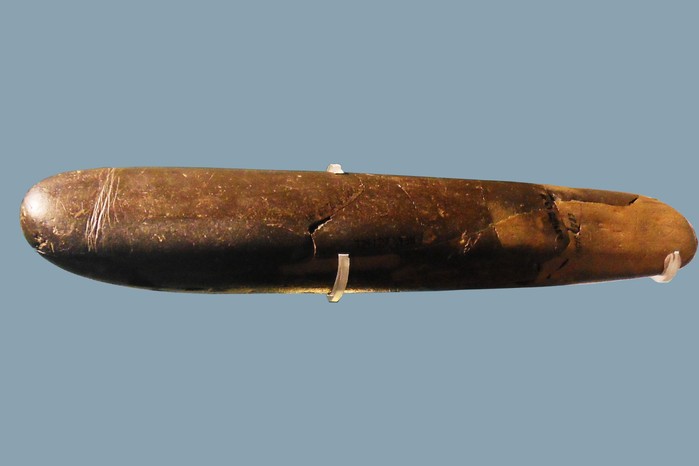
A 30,000-year-old polished stone phallus discovered at Hohle Fels cave in Germany | Credit: Wikimedia
“Clearly from our earliest ancestors, we have been very aware of phalluses and vulvas, and they have symbolically meant quite a lot to us.”
Ancient goddesses of fertility could be “quite horny”
Calling an ancient deity a “fertility goddess” instantly makes you think of crops, childbirth and motherhood. But that description certainly doesn’t do justice to the identity of the Mesopotamian goddess Inanna. “She is quite a horny, naughty goddess,” says Lister.
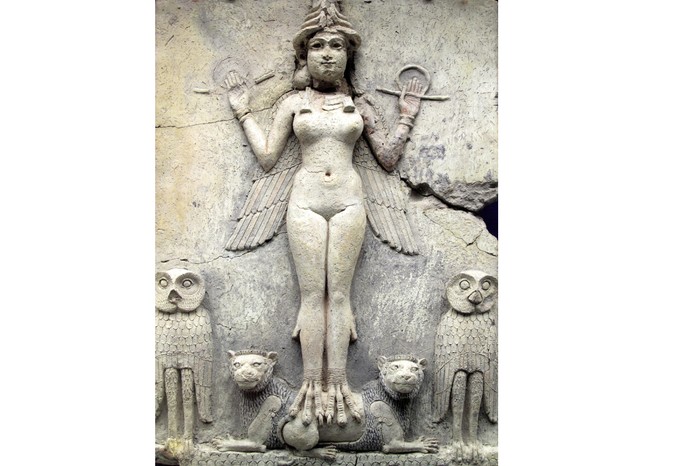
The Mesopotamian goddess Inanna was associated with fertility, sexuality and desire, but her character was far more complex than the traditional label suggests | Credit: Getty Images
In Sumerian songs about Inanna and her lover Dumuzid, lovemaking and agricultural abundance were closely connected. Images of cultivating land and producing fruitful crops symbolically expressed sexual attraction and satisfaction.
“Prudish historians in the 19th century refer to her a goddess of fertility, but it’s not really fertility. There are erotic songs sung about her, and stories about her sex life that are legendary.”
Women were once portrayed as the more lustful sex
Any idea that women naturally want less sex than men would have puzzled many ancient and medieval writers. Some portrayed women as the more lustful sex, supposedly less capable of governing their appetites. In classical Athens, that stereotype appeared in popular literature alongside arguments about women’s place in society.
“For the ancient Greeks, the idea of control is incredibly important. You control your baser emotions,” Lister explains.
Self-restraint demonstrated moral strength. Describing women as sexually voracious was therefore hardly a compliment: women’s supposed lack of control could become a justification for supervising their behaviour.
The stereotype also supplied material for comedy. In Aristophanes’ Lysistrata, women propose withholding sex to force men to end a war – but some initially recoil at the prospect of abstaining themselves.
Caesar’s wife faced a sexual double standard
“The first thing that you need to know in this story is that Julius Caesar was an absolute dirt bag,” says Lister. “All of the sources tell us this about him. He has a reputation for having sex with his friends’ wives and his enemies’ wives.”
- Read more | Cleopatra, Julius Caesar and Mark Antony: how the last pharaoh's love affairs shaped Ancient Egypt's fate
But while Caesar’s sexual exploits inspired songs, his wife’s suspected involvement in a scandal ended her marriage. In 62 BC, the Roman aristocrat Publius Clodius Culcher entered a women-only religious ceremony in Caesar’s household, allegedly seeking an illicit meeting with Caesar’s wife, Pompeia.
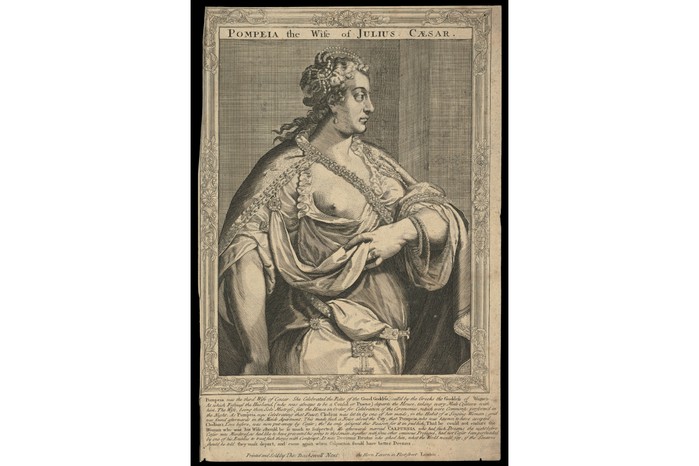
Julius Caesar’s wife, Pompeia, whose religious ceremony was allegedly infiltrated by Publius Clodius Pulcher in 62 BC | Credit: Wellcome Collection
“There’s no evidence she reciprocated his feelings, but just a hint of it is enough, and they get divorced. Poor Pompeia.”
Early Christian thinkers helped cast sexual pleasure as sinful
Saint Jerome, a priest and theologian who lived during the final centuries of the Western Roman empire, exerted an enormous intellectual influence as Christianity grew. That influence extended to perceptions of sex.
Lister identifies Jerome as one of the early Christian writers who advanced the idea that pleasure itself was sinful. Alongside suspicion of pleasure came the veneration of virginity. But this ideal presented an obvious practical difficulty.
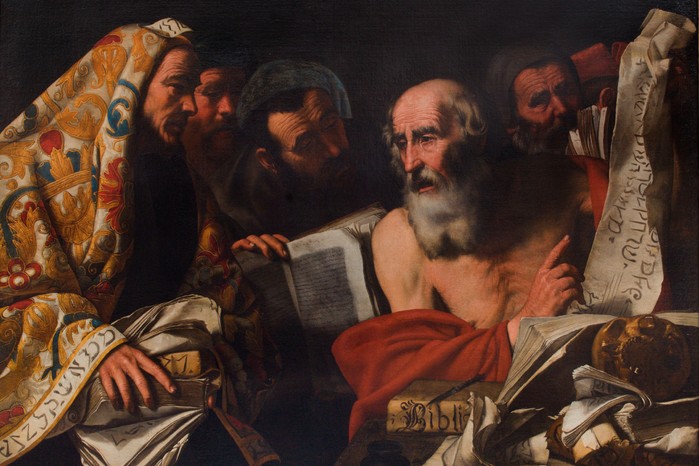
Saint Jerome, the influential early Christian theologian whose teachings helped shape attitudes towards sex and sexual pleasure | Credit: Getty Images
“Saint Jerome would’ve preferred if everybody was a virgin, but obviously this presents a bit of a conundrum for the early church fathers because if everyone’s a virgin, they’re going to run out of Christians pretty quick.”
The resulting concession, as Lister characterises it, permitted sex while remaining deeply suspicious of its pleasures.
A medieval abbess wrote about female orgasm
A medieval abbess might seem an unlikely source for an account of female orgasm. But Hildegard of Bingen, the 12th-century German religious leader and writer, candidly discussed women’s sexual responses in the medical work known as Causae et curae.
“She wasn’t just a nun. She was the mother superior, and she was a polymath, and she did all kinds of amazing stuff,” says Lister.
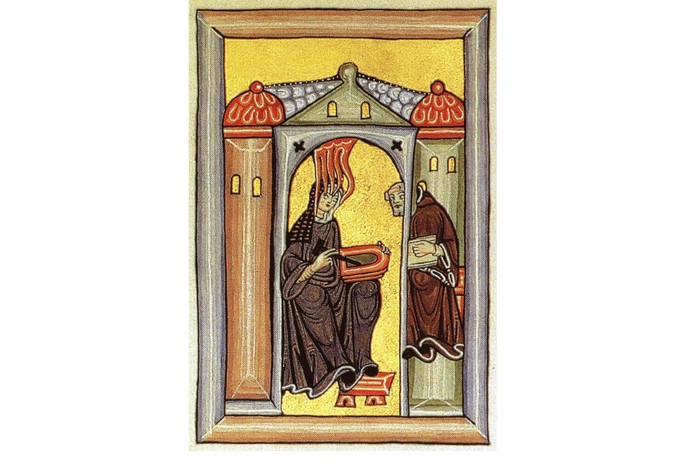
Hildegard of Bingen, the 12th-century German abbess who wrote candidly about female sexual pleasure and orgasm | Credit: Wikimedia
Hildegard’s interest in sex formed part of her consideration of reproduction. As Lister explains, “she writes a very medicalised description of women orgasming.”
Hildegard’s work offers a reminder that religious life and an interest in the workings of the sexual body were not necessarily incompatible – despite what Saint Jerome might have said on the matter.
A Welsh poet celebrated the vulva in verse
Male poets who praised women’s hair and beauty were overlooking something important, according to the 15th-century Welsh poet Gwerful Mechain: the vulva.
In a spirited poem often translated as Ode to the Vagina, she set about correcting the omission. As Lister explains, the poem is “this really intense celebration of the vulva and how amazing it is – and it’s really visceral and descriptive and celebratory”.
Mechain’s writing challenges the assumption that medieval women had neither the opportunity nor the inclination to speak openly about sex. But how was this poetry received? “She was clearly well known. She had something of a reputation,” says Lister.
Sex between women was sometimes dismissed as “not proper sex”
Throughout history, the absence of a male partner left some observers struggling to categorise sex between women. In societies that defined sex around penetration by a penis, lesbian sexuality was not always taken seriously.
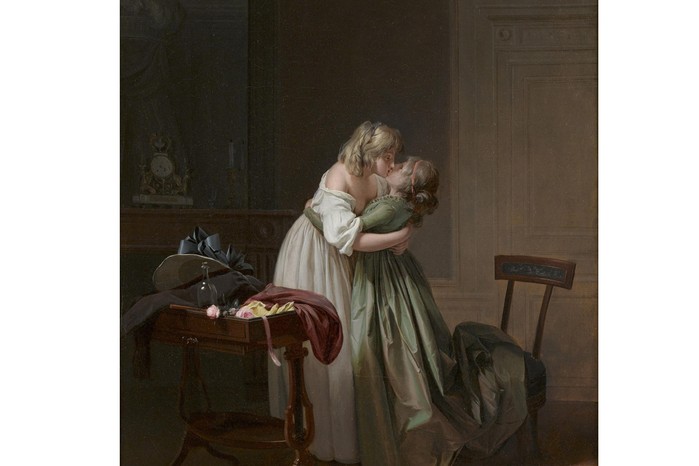
Relationships between women sometimes escaped attention, but could still attract legal scrutiny and prosecution | Credit: Getty Images
“This allowed lesbian sex to fly under the radar and to avoid the same levels of persecution as gay sex between men,” says Lister.
She points to the slang expression “playing at flats” as an example of this dismissive attitude. “Playing” suggested that the activity was not real sex, while “flats” referred to the absence of a penis. “And a lot of it is caught up with the idea that there isn’t a penis, so it’s not proper sex,” says Lister.
- Read more | The real Gentleman Jack: the secret life of Anne Lister, Britain's ‘first modern lesbian’
Such attitudes could allow relationships between women to escape scrutiny. But that did not mean they were always safe from prosecution.
Women could face execution for same-sex activity
“In some places, at some times, lesbians have been persecuted very, very heavily,” says Lister.
Catharina Linck, executed in 1721, is identified in Lister’s account as the last woman in Europe to be killed for lesbian sexual activity. Linck was accused of being a “female sodomite” and had used a leather, stuffed implement that Lister describes as “what we’d now call a strap-on”.
The case exposes the limits of the idea that sex between women simply passed unnoticed. Depending on the time, place and acts involved, the consequences could be fatal.
The Enlightenment gave sexual prejudice a medical vocabulary
The Enlightenment’s emphasis on reason and enquiry did not sweep away sexual prejudice. During the 18th century, medical explanations gave some old anxieties a new vocabulary: sexual behaviour could be condemned as a danger to health as well as a threat to morality.
“So you start to get a medicalisation of sex coming to the fore,” says Lister.
Doctors increasingly claimed authority over which appetites were healthy and which required treatment. But their judgements could reflect social expectations rather than unbiased observations of the body.
Victorian prudery coexisted with a flourishing market for pornography
The Victorians’ reputation for prudery tells only part of the story. As Lister points out, “there’s no single narrative” for the period.
“They could be very easily shocked. They were a group of people who were obsessed by sex, so you get government discussing it, you get doctors discussing it, priests discussing it, moralists discussing it. It’s discussed everywhere.”
Alongside these public debates and moral concerns, sexual material proliferated. Erotic photography, pornographic moving images and a booming trade in pornographic literature complicate any simple picture of Victorian restraint.
For Lister, the evidence makes clear that public disapproval and private enjoyment could coexist.
Some doctors tried to curb desire through surgery
In the 19th century, some doctors attempted to curb women’s sexual desire by surgically removing the clitoris. Others removed the ovaries.
These were drastic interventions, justified by the belief that a sexual appetite judged to be excessive could be a medical disorder. The increasing medicalisation of sex could therefore have devastating physical consequences for women subjected to treatment.
Of this practice, Lister notes that: “It’s not widespread, but it does happen, and it exists in medical literature.”
The sexual revolution did not deliver equality for everyone
The phrase “sexual revolution”, commonly associated with the upheavals of the 1960s and 1970s, suggests a decisive break with the past. But for Lister, it risks making liberation sound like a completed – and equal – project.
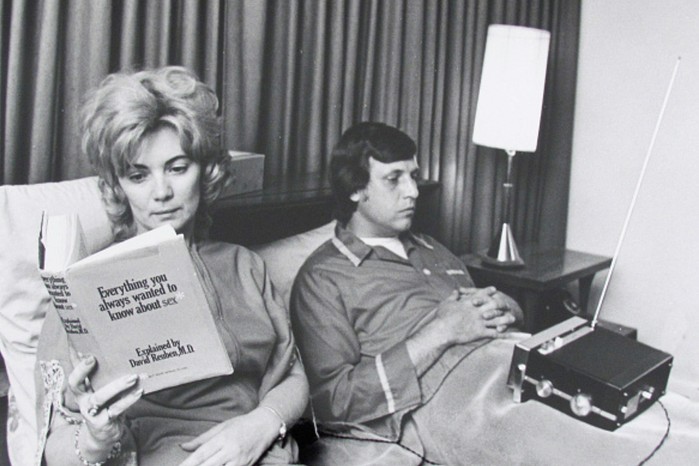
The 1960s and 1970s sexual revolution challenged traditional attitudes towards sex and relationships | Credit: Getty Images
Greater openness and access to contraception coexisted with racism, economic inequality and the persecution of gay people. Nor did new freedoms reach everyone at the same time. Who had the power to make choices, and who remained constrained?
Ad
“Things definitely changed,” says Lister. “Sex became part of a mainstream conversation in a way that perhaps it hadn’t done before, but it’s a very male- centred sexuality. Some people had a sexual revolution. But we didn’t have equality.”
Authors
James OsborneSenior content producer
James Osborne is a senior content producer at HistoryExtra
Ad
Ad
Loading...
Ad
Loading...