- Home
- Membership
- Think American kids hate vegetables? This 1950s phenomenon proves otherwise
Think American kids hate vegetables? This 1950s phenomenon proves otherwise
In 1952, the first toy commercial was broadcast on televisions in the United States, but its impact on the market went much deeper than the 98 cents it cost to buy the “funny face man”
- Jonny Wilkes
Published: November 25, 2026 at 11:50 AM
Save
- Share on facebook
- Share on twitter
- Share on whatsapp
- Email to a friend
Toy advertisements on radio were rather matter-of-fact affairs that spoke not to the children who would play with them, but to those spending the money, the parents. Yet with the emerging phenomenon that was television came new possibilities that would revolutionise both the toy and advertising industries.
Ad
Television history was made on 30 April 1952 when the first toy commercial was broadcast across the United States. It was directly aimed at the children themselves, actively trying to persuade them to go pester their parents for this new and exciting toy.
The new and exciting toy in question: Mr Potato Head.
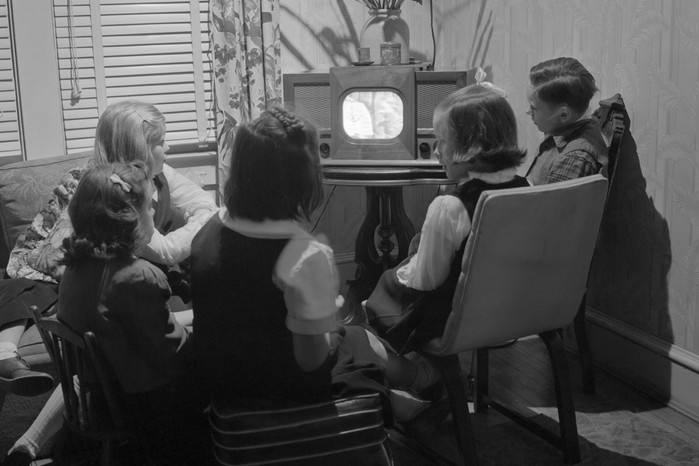
Children gather around a TV. Mr Potato Head's televised advert was a great innovation at the time, marking the start of a new kind of marketing | Credit: Getty Images
What was the first Mr Potato Head like?
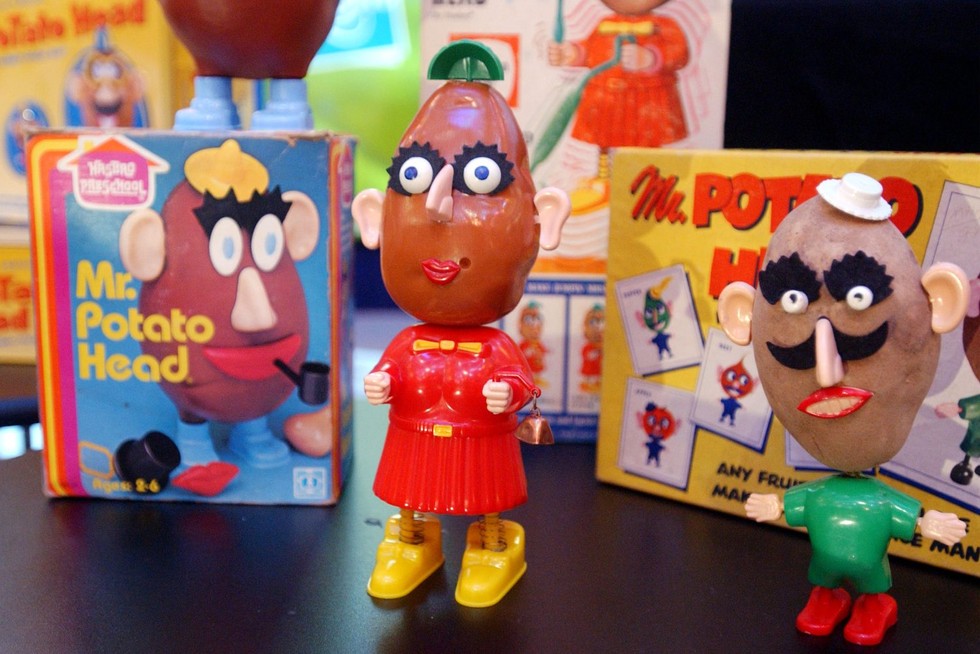
Dubbed the “funny face man”, the toy tuber had been developed by American inventor George Lerner in 1949 and sold to Hassenfeld Brothers, the company that would become Hasbro. It was not the Mr Potato Head seen today (or in Toy Story), but a do-it-yourself version that gave a different interpretation to the phrase ‘don’t play with your food’.
Costing 98 cents, the box came with plastic eyes, ears, noses, mouths, glasses, hat, moustache, hands and feet, but not a body. This had to be a real potato pilfered from the kitchen. The spud, it was thought, was the most logical option as they were relatively cheap and available all year round.
The makers of Mr Potato Head made it clear, though, that other fruits and vegetables would work too. One print advertisement, which describes the toy as “the new TV star”, suggests that bananas, beetroots, apples, oranges and cucumbers could be used to make “thousands of funny faces”.
Why was the Mr Potato Head commercial so important?
It could be argued that the reason why the television commercial for Mr Potato Head was aimed at the children rather than the parents, in a revolutionary shift in advertising practices, was that the adults would immediately dismiss the toy as a waste of food. Instead, children had to be convinced to go persuade their parents for the toy. This was the birth of what became known as ‘pester power’ or the ‘nag factor’.
For Mr Potato Head, the commercial, which has been lost, proved hugely successful with more than 1 million kits sold in the first year.
For the toy industry, it changed advertising forever with children now seen as a consumer demographic in the postwar boom of the 1950s. Before the decade was out, a plethora of iconic toys could be seen on the small screens and the shelves, including Play-Doh, the frisbee, hula hoop, slinky and Barbie.
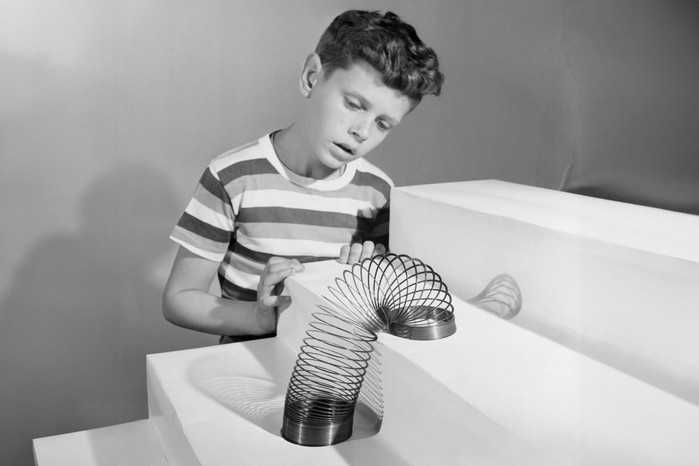
A boy watches a slinky move down some stairs. This was one of many toys that followed in the footsteps of Mr Potato Head, embracing TV advertising | Credit: Getty Images
What was next for Mr Potato Head?
Mr Potato Head went from strength to strength, too. The year after the game-changing commercial, Mrs Potato Head was introduced, soon followed by Brother Spud and Sister Yam. These also came with cars, boat trailers (or shopping trailer for Mrs Potato Head) and pets, called the Spud-ettes.
Ad
Partly due to complaints from parents – frustrated at discovering mouldy fruits and vegetables around their house – the plastic body was added in 1964.
Authors
Jonny WilkesFreelance writer
Jonny Wilkes is a former staff writer for BBC History Revealed, and he continues to write for both the magazine and HistoryExtra. He has BA in History from the University of York.
Ad
Ad
Loading...
Ad
Loading...