- Home
- Membership
- These ancient goddesses were obsessed with sex and war. Here's why
These ancient goddesses were obsessed with sex and war. Here's why
Ronald Hutton explains why goddesses embodying the dual forces of sex and violence are found across the ancient world

- Danny Bird
Published: November 27, 2026 at 3:30 PM
Save
- Share on facebook
- Share on twitter
- Share on whatsapp
- Email to a friend
Danny Bird: What first drew you to this idea that love and war goddesses are often the same figure? And when did you realise the pattern was widespread enough across the ancient world to deserve a book?
Ronald Hutton: It was a slow process. I think the catalyst was that, as a classicist, I’d always been fond of and known a great deal about Venus and Aphrodite. What set me on the path of joining the dots was a symposium on the Sumerian goddess Inanna, with her famous descent into the underworld. That meant getting to know Inanna very well, and in doing so I noticed striking similarities in both persona and myth with Venus and Aphrodite. I then realised there were stepping stones connecting them, in places like Cyprus and Syria. I saw a kind of domino effect, whereby Inanna, in many ways, helped shape the personae of the other goddesses, one by one.
Ad
At that point I thought the picture was complete – my dominoes had fallen as far as the far end of the Mediterranean. But then I noticed how similar Freyja was in the Norse sagas. And finally, it struck me that the Morrigan, the Celtic goddess of love and war up in Ireland, was the missing piece of the jigsaw. With that, my gallery was complete.
So in the book you explore the stories of Inanna, Aphrodite, Venus, Freyja and the Morrigan, as well as the Egyptian goddess Hathor. Do any other deities make the cut?
That’s pretty well the lot. You’ve only left out Anat and Athtart – better known by her Greek name, ‘Astarte’ – who are found in Syria. These fall under what we might call the ‘Levantine Enigma’. Even though we have some wonderful legends about them, we know so much less about these colourful Syrian goddesses.
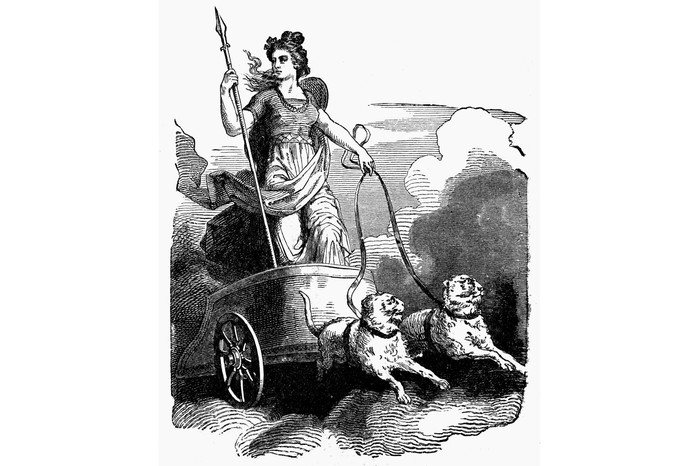
A 19th-century engraving of the Nordic-Germanic goddess Freyja, being drawn on her chariot by two cats | Credit: Topfoto
The legends are not quite enough to establish their identity, largely because they were written on unbaked clay tablets, which tend to crumble. We’ve got all these tablets from one ancient site on the coast of Syria, Ras Shamra. And tantalisingly, just as a story is really getting going, the tablet cracks, and we lose a chunk, or sometimes everything. Some stories survive only as tiny fragments.
You’ve structured the book around ‘the Family’, who fit the love-and-war template neatly, and ‘the Outliers’, who only carry some traits. Why did the Outliers belong in this story?
They’re only outliers geographically, whereas ‘the family’ are goddesses of love and war who seem to me to be joined up genealogically. The older among them helped to give birth to the younger in this wave-like movement from east to west, beginning with Inanna and ending with Venus.
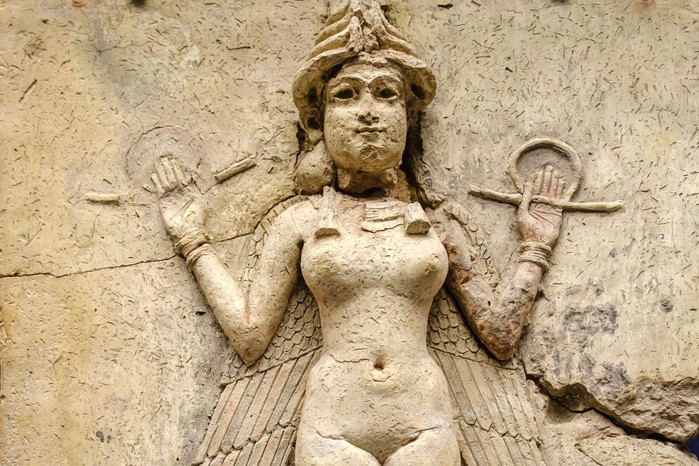
The Burney Relief, also known as Queen of the Night, in the British Museum, features a winged Mesopotamian goddess with bird’s talons. She is unnamed but is probably Ishtar | Credit: Alamy
Freyja and the Morrigan are outliers geographically, because they’re way to the north and west, and yet they’re strikingly similar. They don’t just have a few characteristics in common, they share the lot.
The only real outlier is Hathor, the Egyptian goddess of love, the Egyptian Venus. I had to include her, otherwise practically every reviewer would ask: “What about Hathor?” So, I put in Hathor, regrettably, only to show that she doesn’t fit.
What made this pairing of love and violence in one divine feminine figure so compelling and enduring for ancient worshippers?
That’s the big question, isn’t it? There’s no definitive answer. The most obvious one hinges on the fact that ancient warfare was largely a whole set of single combats [a duel between two single combatants]. Both love and war – well, sex and war – involved dramatic conjunctions of human bodies, and also ecstatic experiences in which people underwent extreme physical and emotional reactions and lost control of themselves. They went into battle frenzy, or the ecstasy of lovemaking.
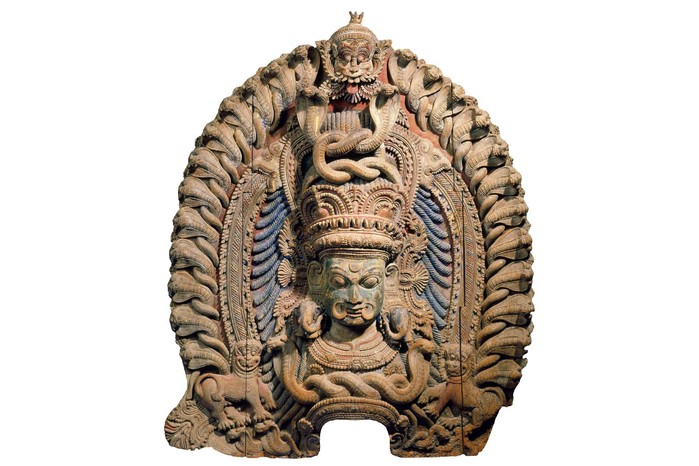
A 15th-century Indian stone carving of Kali, the Hindu goddess of time, doomsday and death. Ronald Hutton wonders whether she too might fit the pattern he is exploring | Credit: Getty Images
There’s something I learned as a historical re-enactor, particularly in the Civil War Re-enactment Society of the Sealed Knot, which is that the single-combat effect on the battlefield is rather like picking a partner. As the two opposing lines come together, you’re selecting the person approaching you, the one you’re going to fight, and it’s like a dance. And that’s exactly what the ancient people called it.
- Read more | Three thousand years ago, the ancient Greeks turned an even older civilisation into a monster
I want to follow up on something from the book: this notion, particularly around Aphrodite, that love was seen by the ancients almost as an illness or madness, a surrender of control. Can you say more?
Yes, the Greeks – at least the really ancient Greeks, down to the time of Alexander the Great – were really quite terrified of love. A lot of the Greek male ethos was about self-control: about achieving balance, calm, harmony, self-knowledge, getting a grip on things. And both aspects of love, the emotional and the physical, are largely about losing control. So, this terrier-like propensity of Aphrodite to shake human beings about, like a dog shaking a rat, really unsettled the ancient Greeks. And the oldest Greek poetry is full of this outpouring of woe about what a dreadful thing love is.
These goddesses wielded huge power in the divine realm, but their worshippers were often living in patriarchal societies. What does that gap tell us about divine femininity versus ancient women’s real-world status?
It tells us that there’s no relationship between the two in any civilisation at any time. Look at India until recently, which is festooned with some of the most gung-ho, savage goddesses on the planet, and yet where the position of women has usually been more downtrodden than in most other places on the planet. In fact, you could posit, probably wrongly, an equation whereby the more feisty, terrifying and domineering the goddesses in a culture, the more browbeaten the human women.
I wouldn’t like to propose that as a truth, but it does work for certain cultures.
Do you think these cults ultimately speak more to masculine aggression than feminine power?
The answer is they can do, but not necessarily. In every culture, these goddesses have an enormous female following. Indeed, in ancient Greece, Aphrodite seems to have had more female worshippers than male, to judge from the names attached to the offerings we’ve uncovered. And in Mesopotamia, goddesses like Inanna and Ishtar, who are basically the same, again had considerable appeal to women.
Is Inanna truly the common ancestor of these later goddesses, or is this more a case of convergent evolution, with separate cultures arriving at the same archetype on their own?
Ishtar certainly descends from Inanna, because she’s simply Inanna with a makeover and a new name but they are the same. The mythology of the Syrian goddesses, particularly Anat, echoes the earlier myths of Inanna. And Aphrodite is clearly a goddess who comes from the east to the Greeks via island stepping stones like Cyprus, Crete and Cythera.
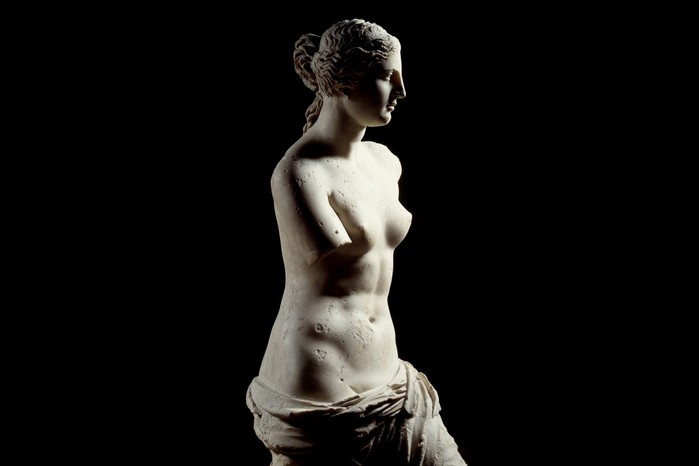
The Venus de Milo has been displayed at the Louvre since it was found in the 1820s. This ancient Greek marble is believed to depict Aphrodite, goddess of sexual love and beauty | Credit: Getty Images
The Greeks themselves were always a bit doubtful about her, as this dangerous foreigner. As for Venus, everybody’s always known that the Roman deities took on the iconography and mythology of the Greek gods, so Aphrodite morphs into Venus smoothly, gaining some extra characteristics that make her distinct.
How were these goddesses actually worshipped? Were there rites or temple practices that keep turning up across these different cults?
There certainly are, but that’s simply because certain forms are common to ancient paganism. Every deity has holy places, which in most cultures are human-built shrines or temples. And in every culture, worship is in the hands of community leaders – sometimes religious leaders, sometimes secular. They lay on the festivals which people in general can enjoy.
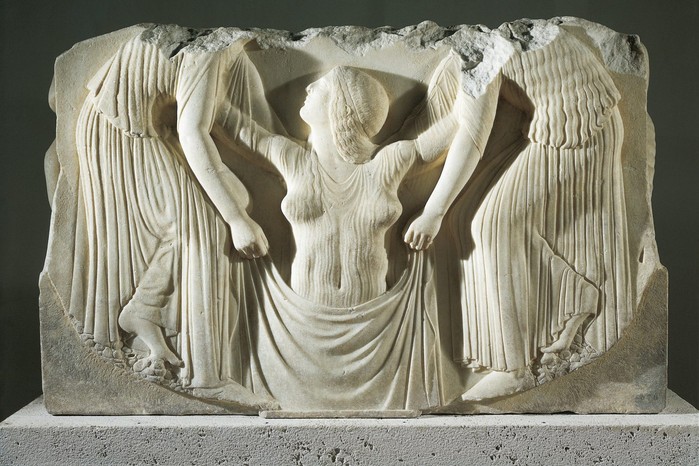
The Ludovisi Throne is an ancient Greek white marble relief portraying the birth of Aphrodite | Credit: Getty Images
In every culture, there’s a mixture of female and male deities who end up in family relationships in stories, and this enormous penumbra of lesser divinities goes right down to beings almost equivalent to our elves or fairies. And in every ancient culture, sacrifice was the great act of worship. It consisted of making offerings which the humans themselves then often consumed, so you consecrated what you were going to eat. Blood sacrifice – creepy, to modern eyes – consisted, really, of just eating meat. Most people in an ancient culture would not have been able to afford it most of the time; they’d have eaten cheese, eggs, other protein. So, meat was a big deal, and at a religious festival it would be provided for people.
Especially under the Greco-Roman regulations and apparently also the Egyptian ones, the animal offered for sacrifice, a piece of livestock, should show no fear and suffer no pain. It should be led unsuspecting to the place of death and then killed at a single blow. So the awful atmosphere of a 20th-century slaughterhouse, with animals squealing in fear, is completely missing. It was possibly the most humane way in which one can slaughter an animal for consumption. The inedible bits were then given to the deities, burnt on the altar, and everybody else had a barbecue.
Aphrodite isn’t a goddess most people associate with conflict – you describe her surviving today as little more than an “ideal hippy goddess” – yet I believe her origin story is steeped in violence?
It’s one myth in particular, from a writer called Hesiod, who was one of the very first Greek poets, though even among the earliest sources others disagreed with him. To Hesiod, and we don’t know why, Aphrodite is one of the greatest and oldest of the deities – there before the king of the gods, who later became Zeus. She’s created out of a bloody family tiff, in which the eldest son of Uranus, the chief male deity of the time, is persuaded by his mother to castrate his father.
The wounded Uranus springs into the sky, where he remains, leaving Cronos, his eldest son, to take over the Earth. Cronos casually dumps the severed genitals into the sea, where they float around. A foam forms over them and takes the shape of a beautiful young woman: Aphrodite. Most agree she comes ashore on the coast of western Cyprus, off a rather harshly pebbly beach, so it would have hurt her newborn divine feet a bit.
How does the Greek Aphrodite relate to her Roman counterpart, Venus?
Venus seems to start out as a sort of Cabbage Patch doll, probably a deity of the market garden, the vegetable patch, and was possibly sexless. But Venus was also identified with the definitely feminine, rather flowery Etruscan goddess called Turan, from the people north of Rome.
Before history begins, both of these goddesses were merged and put together with the Greek Aphrodite, taking on her physical characteristics and her mythology, probably because Aphrodite is the most beautiful, attractive and sexiest of the Greek goddesses. When the Romans and Etruscans were busy identifying their deities with the well-known, mythology-rich Greek kindred deities, it was easiest to twin your local Venus with Aphrodite.
From that moment, Venus never looked back. She took on Aphrodite’s statuary and mythology, lock, stock and barrel.
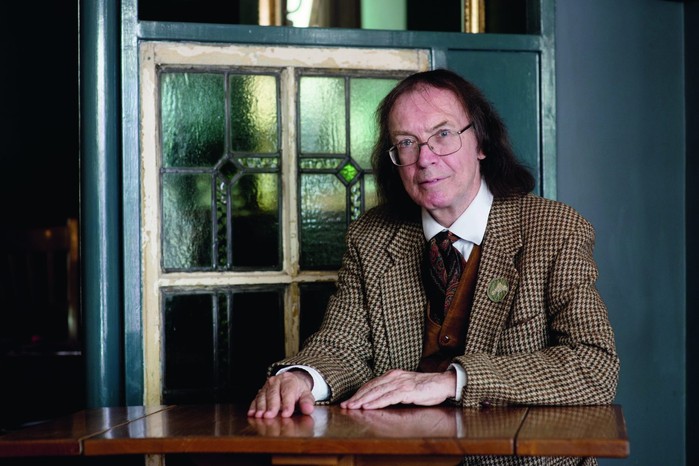
Credit: Jeni Nott
What happened to these goddesses and their cults as monotheism spread? Was there something about this figure – the female deification of sex and violence – that Christianity found especially threatening and sought to erase?
Christianity found pretty well the whole of ancient paganism threatening and in need of erasure, and it wasn’t picky. It took out all the goddesses and gods together. What I find interesting is that the erasure is so incomplete that the Greek and Roman myths remained treasured by Christian writers, except that the deities were either left entirely in the world of romance and fiction, where the church wasn’t bothered about them, or they were turned into allegories, which made them acceptable, or they were turned into planetary spirits appointed by God to exert their influence over humans. The sex and war goddesses survive remarkably well in this, except usually stripped of the war element.
But even so, a figure like the Morrigan, along with her fellow Irish war goddesses, is what you would think would be every Christian monk’s or priest’s nightmare. Not only are these goddesses incredibly violent and sadistic, but they’re also incredibly highly sexed. So it should have been easier just to write them out of the record, simply to forget them. And yet they have this starring role, usually without any health warnings or signs of medieval abhorrence.
Why do you think they have survived? Why have they evaded erasure?
Simply because I think they’re so deeply exciting and interesting. The disapproval of them can be implicit. There are lots of ‘bad girls’, particularly in Irish mythology. In the semi-human realm, there’s Queen Maeve, the greatest queen of medieval Irish legend, who again is someone who fights in battle and takes out heroes. She’s also sexually extremely promiscuous, and utterly ruthless and amoral politically: the sort of young, beautiful woman who’d seduce a hired-in foreign warrior just to keep him on side, on a campaign that also includes her own husband.
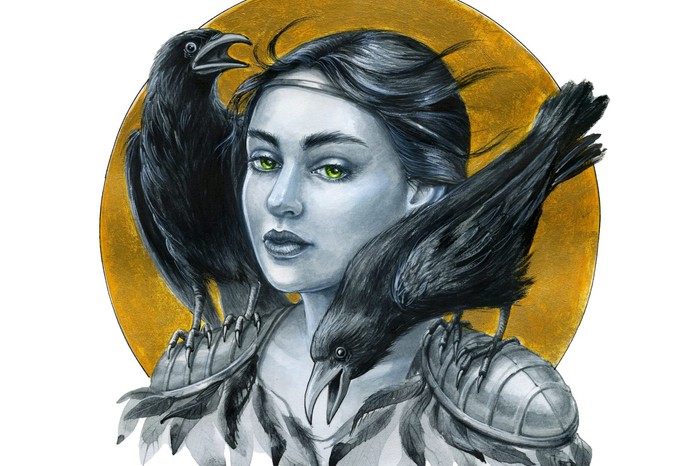
A modern watercolour portraying the Morrigan, the Irish war goddess, who often appears in the form of a crow | Credit: Dreamstime
These goddesses have had quite an afterlife. Aphrodite and Venus in art, Inanna and the Morrigan in modern paganism and feminist thought. Do today’s revivals do justice to who they actually were, or flatten them into something more palatable?
I don’t think they’re flattened; they remain extremely colourful. For example, we have no ancient visual portraits of the Morrigan, so if somebody like me is trying to put something on a slide to make a talk exciting, I have to rely exclusively on modern reimaginings of them. And the modern reimaginings make them extremely warlike, extremely colourful.
Both sex and war involved dramatic conjunctions of human bodies and also ecstatic experiences in which people lost control of themselves
The Norse goddess Freyja is much softer than the Morrigan, and her love aspect is emphasised, but she’s often shown in armour, and often shown with her chariot drawn by wildcats – she’s clearly pretty aggressive. The Morrigan, though, really seems to have been turned into a wholesale war-and-death goddess, associated with lots of gothic black frocks, ravens and crows, which loses completely the medieval dimension of her as a love goddess, and indeed merges her with other medieval Irish goddesses who were much more purely goddesses identified with darkness, horror, violence and carrion birds.
And some of these goddesses are enjoying a real revival, aren’t they? Their cults still exist, and they’re still being worshipped today.
Not so much still being worshipped as being worshipped again, because of a big revival. The Morrigan has got more devotees now than she’s had for probably more than 1,000 years, maybe even 1,500. Mostly in America, and mostly among those who like the dark side of life, but her influence is wider than that. If you want a spectacularly effective example of Morrigan-related imagery, just try the music video for Madonna’s 1998 hit ‘Frozen’.
- Read more | This ancient goddess commanded a Wonder of the World – but why did she have thirty breasts?
Of all the goddesses in the book, do you have a favourite, one whose story surprised you, challenged you, or that you most enjoyed getting to grips with?
I haven’t been challenged by any of them. I think I’m either insensitive, or simply quite robust spiritually. I’m also enough of a modern liberal and a diversity agenda person, to appreciate a bit of transgression. So, for example, the undoubted ancient link between Inanna and Ishtar and what we might call LGBTQ+ themes is very strong, and I find that very attractive. But I’m also quite loyal, and I first encountered Venus as a child, in Virgil’s Aeneid, so I’ll stick with her. That said, when I travel, it shapes things: when I’m in Ireland, I think of the Morrigan above all, and likewise in Iceland, Freyja.
To the writer Hesiod, Aphrodite is one of the greatest and oldest of the deities – there before the king of the gods, who later became Zeus
Finally, what do you most hope people take away from this book?
I don’t really prescribe any particular response from my readers. I’d simply like them to enjoy the book and take from it what they want. If they can use it for anything from poetry and music to fancy dress parties, then I’m perfectly happy.
If people want to think more deeply about the themes, to consider whether there is actually a direct genetic relationship running from Mesopotamia to Italy and westward, and whether there is, in fact, an identity of a sex-and-war goddess that transcends my particular patch of the Old World – whether it can be extended, for example, to Kali, Devi and similar goddesses of the Indian subcontinent, and maybe further afield – that’s for others to explore.
And most profoundly, perhaps, this connection between sex and violence, which certainly pervades popular entertainment right down to modern-day screenplays, is something worth reflecting on too.
Ronald Hutton is professor of history at the University of Bristol. His books include Queens of the Wild: Pagan Goddesses in Christian Europe: An Investigation (Yale, 2022)
Ad
This article was first published in the December 2026 issue of HistoryExtra Magazine
Authors
Danny BirdContent producer
Danny Bird is a content producer at HistoryExtra
Ad
Ad
Loading...
Ad
Loading...