- Home
- Membership
- Ancient Romans hated Nero – and this is the surprising way they showed their disdain
Ancient Romans hated Nero – and this is the surprising way they showed their disdain
"The simple act of writing a name can also be a political statement", writes Kavita Puri
- Kavita Puri
Published: November 25, 2026 at 3:30 PM
Save
- Share on facebook
- Share on twitter
- Share on whatsapp
- Email to a friend
For the past 10 years, walking under the same railway bridge near my home each day, I’ve read a piece of graffiti written in black spray paint in capital letters: “BREXIT WAS SOLD TO US BY LIARS.” It has become part of the landscape, just as much as the local convenience store, pub and gym. These words are high up on the wall of the bridge – maybe too high for easy removal.
Ad
To some people, these seven words may be seen as vandalism or destruction of property. But they can also be seen as a form of public expression – even protest – in a democracy. So much of the iconography of the past – such as statues and grand buildings – signifies power and celebrates the powerful, whereas graffiti often gives voice to the ordinary people.
The word graffiti seems to have been coined in 1851 from the Italian word graffito, meaning ‘a scratch’, used by archaeologists to describe writing they found on walls in Pompeii. Because, of course, political graffiti has existed for thousands of years. Some of the earliest and best-documented examples are those words inscribed in Pompeii, from before its destruction in AD 79. During excavations, thousands of painted endorsements for political election candidates were discovered on walls. There were also insults, satire, even jokes about potential candidates and officials.
WATCH | Pompeii wasn’t destroyed when you think it was
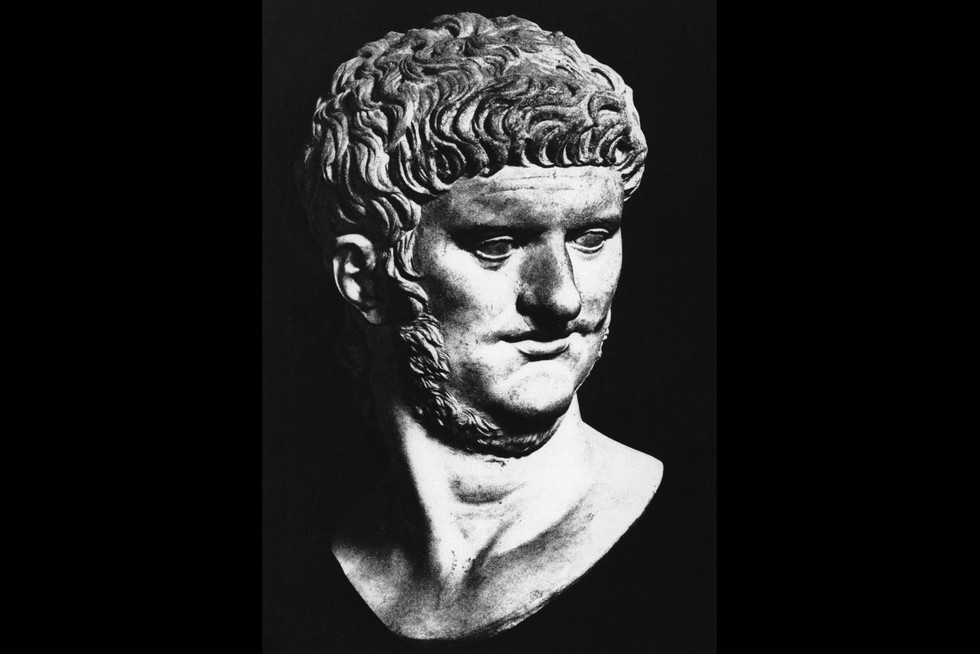
Writings from the time also suggest that graffiti was a popular way for the people of Rome to voice their displeasure about the actions of their leaders, written on walls, columns and even placards hung around the necks of statues. Plutarch wrote that Brutus was apparently encouraged to join the conspiracy against Julius Caesar after seeing graffiti written under cover of darkness. And Suetonius wrote that, towards the end of Nero’s reign, when food prices were particularly high and the notorious emperor was increasingly unpopular, mocking graffiti around the city criticised imperial excesses.
However, only 10 per cent of ancient Romans could read. But by the 18th century, literacy rates in Paris had reached around 50 per cent. In the years before the French Revolution of 1789, the statue of King Louis XV, standing where the Place de la Concorde is today, was frequently daubed with graffiti criticising the monarchy. Things got so bad that railings had to be put around it, and soldiers were on guard night and day.
Graffiti has often been used in conflicts. In May 1945, when the Soviets took Berlin, they wrote their names and victorious slogans in the Reichstag – lettering that has been preserved in the reconstructed building.
Graffiti can also be an identifying marker. In Northern Ireland, graffiti or murals indicate not only political expression but also religious allegiance and territorial boundaries.
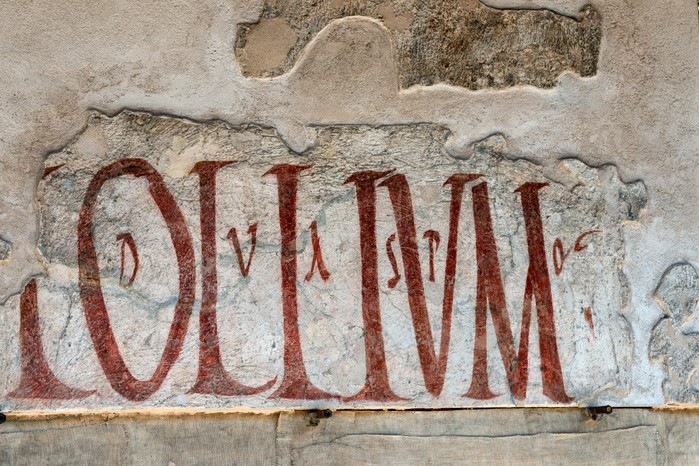
Words daubed on the walls of Pompeii promoted political candidates, directed insults, and even – as in this image – advertised olive oil for sale | Credit: Getty Images
- Read more | From magic spells to dirty graffiti: 16 surprising facts about sex in the classical world
Sometimes, graffiti is poignant. During the First World War, conscientious objectors were held in Richmond Castle in North Yorkshire. Some were forced to fight; others were told that they would be executed for cowardice if they didn’t. One message on the wall, dated 11 August 1916, was written by Percy F Goldsbrough from Pontefract, who shared that he was kept in a cell for “refusing to be made into a soldier”.
For as long as humans exist, so will graffiti. It gives expression to dissent, protest and satire; the simple act of writing a name can in itself also be a political statement. Words will continue to be written in public places, scrubbed out, written again and, sometimes, preserved.
These allow us to hear voices from the past – not those of the great and the good, but of ordinary people.
The graffiti near my home, which I’ve passed every day for 10 years, has become a relic, a familiar part of my existence. Who knows how long it will remain.
Ad
This article was first published in the December 2026 issue of HistoryExtra Magazine
Authors
Kavita Puri
Kavita Puri is a journalist, author and broadcaster. A new edition of her book Partition Voices: Untold British Stories, marking the 75th anniversary of partition, is out now, published by Bloomsbury
Ad
Ad
Loading...
Ad
Loading...