HistoryExtra Home of Britain’s bestselling history magazine and award-winning podcast 2026-11-24T22:01:02.000Z https://www.historyextra.com/feed/atom HistoryExtra <![CDATA[These are the 17 greatest spy movies of all time – how many have you watched?]]> https://www.historyextra.com/membership/17-greatest-spy-movies-films-james-bond/ 2026-11-24T22:01:02.000Z 2026-11-24T22:00:59.000Z With actor Robert Pattinson recently announced as the next James Bond, after much media and fan speculation, Ian Fleming’s iconic secret agent is set to return to the silver screen. The global appetite for spy stories is clearly insatiable. But what keeps us coming back?
Espionage cinema is more than gadgets and gunfights, false identities and coded messages: it mirrors the fears and obsessions of its time. Hitchcock’s thrillers tapped into the threat of invasion; John le Carré’s Cold War dramas exposed the moral compromises of espionage; and today’s films grapple with terrorism, surveillance and cyberwarfare.
But where should you turn for high-octane thrills, gripping conflict or savage satires? From Bond and Bourne to Smiley and a few less familiar agents, which films deserve to be called the greatest spy films ever made? These are 17 of the finest examples...
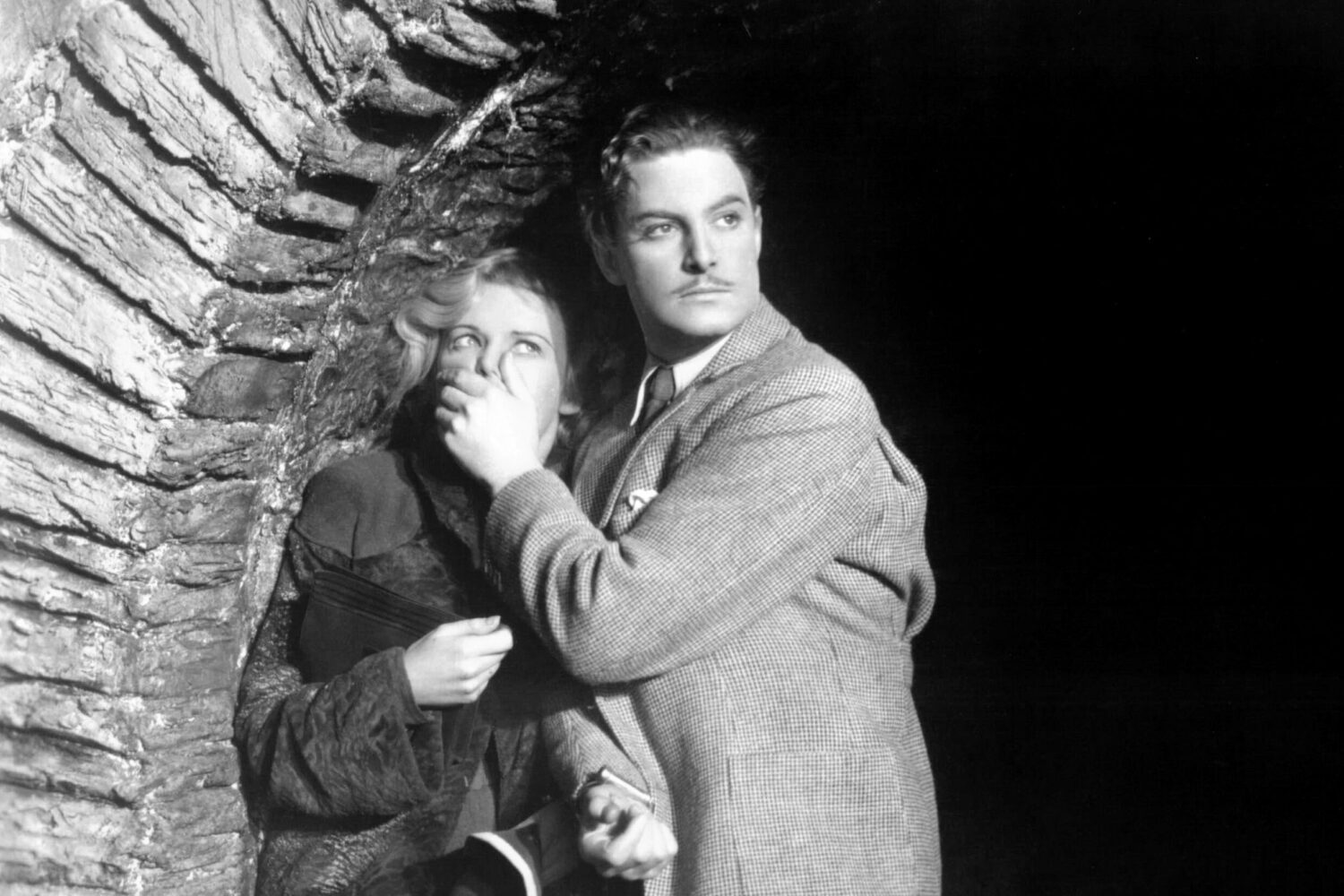
1. The 39 Steps
(Alfred Hitchcock, 1935)
The master of suspense, Alfred Hitchcock, clinches the award for the first great espionage movie.
Richard Hannay (Robert Donat) is bored by London, but a chance meeting with agent-in-hiding Annabella Smith (Lucie Mannheim) changes everything. When she is murdered in his flat, Hannay finds himself the chief suspect and soon on the run from the police.
Forced to prove his innocence, he falls foul of a spy ring selling secret plans to a mysterious foreign power. Fleeing to Scotland with reluctant accomplice Pamela (Madeleine Carroll), Hannay seeks out his unknown enemy to clear his name.
Hitchcock blends suspense, romance and sly comedy to create a timeless thriller, edging out his other prewar classic The Lady Vanishes. Look out for the music hall finale.
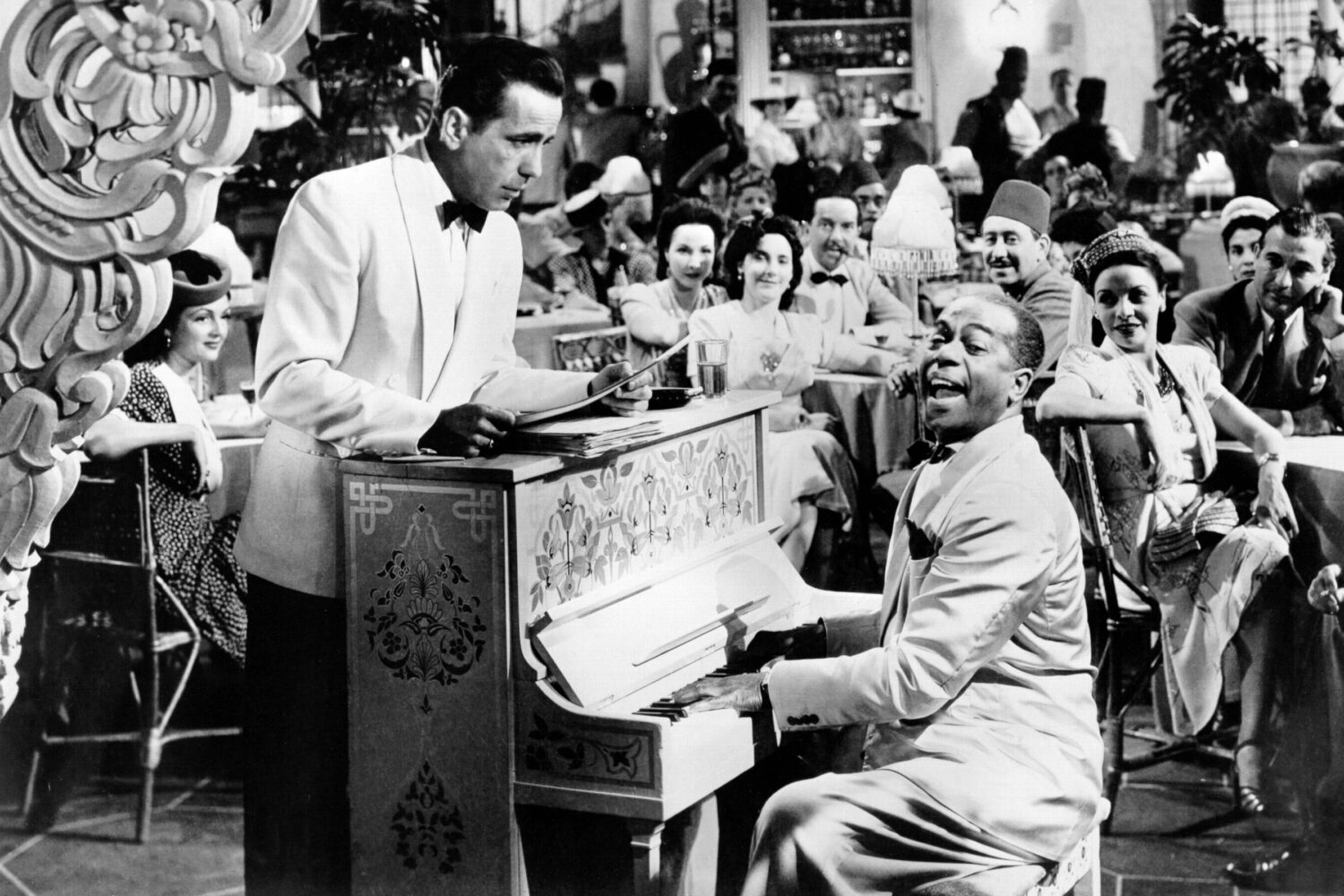
2. Casablanca
(Michael Curtiz, 1942)
Everybody comes to Rick’s Café Américain: it’s the most fashionable watering hole in Vichy-controlled Casablanca. Rick (Humphrey Bogart) has been drowning his sorrows ever since Ilsa (Ingrid Bergman) jilted him in Paris as the Germans invaded. Returning two years later with her husband, Victor Laszlo (Paul Henreid), the most wanted resistance fighter in Nazi Europe, Ilsa turns to Rick to help Victor escape to America. But can he put heartbreak aside?
Michael Curtiz’s film follows the sacrifice and courage of the love triangle against the backdrop of war. The “hill of beans” speech will melt you if the singing of the ‘Marseillaise’ hasn’t done that already. Transcending wartime propaganda, Curtiz’s film is a cinematic masterpiece.
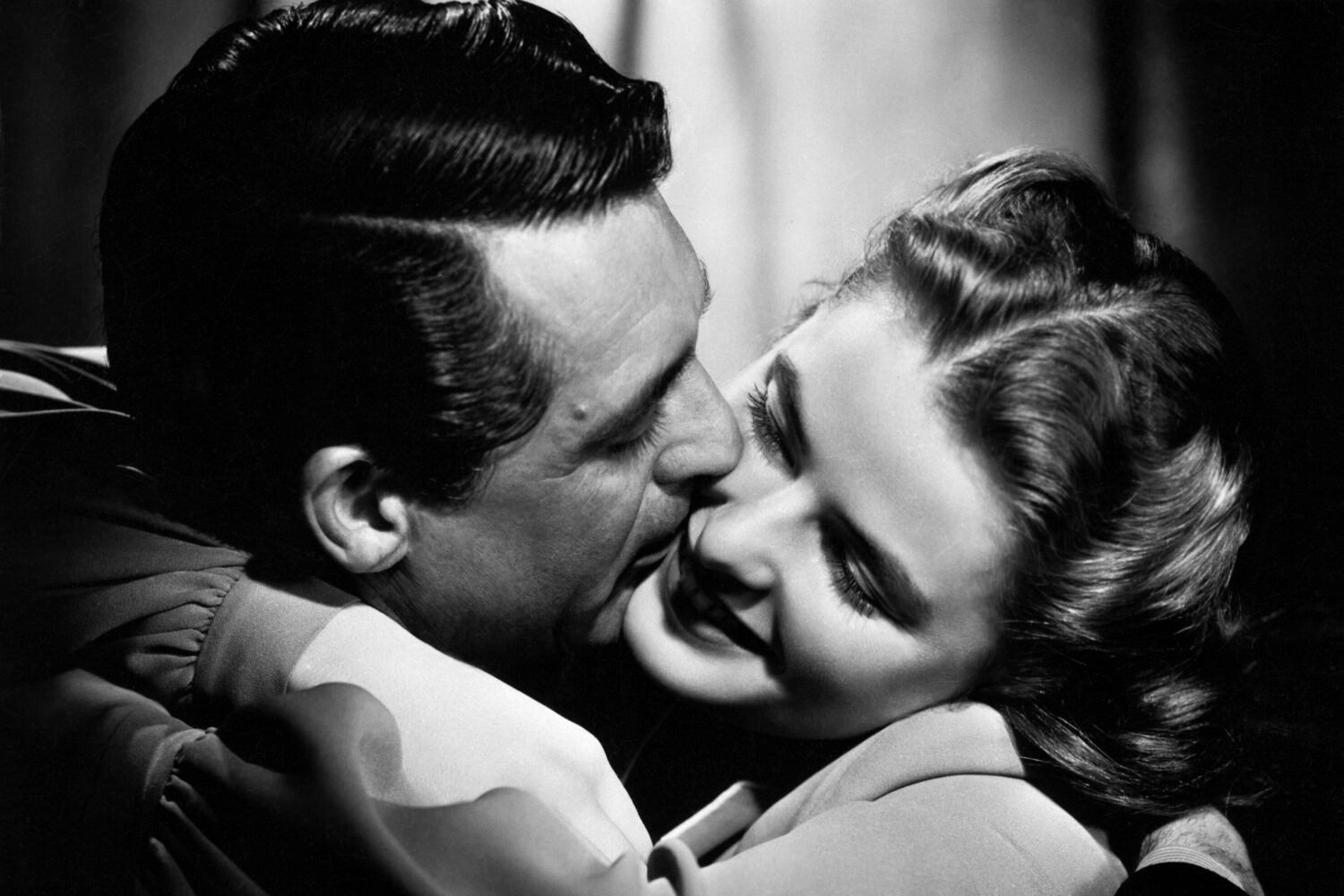
3. Notorious
(Alfred Hitchcock, 1946)
Following the Second World War, Hitchcock, now in Hollywood, continued to explore the story of ordinary people caught up in momentous events.
Alicia Huberman (Ingrid Bergman), daughter of a convicted Nazi, is recruited by US agent TR Devlin (Cary Grant) to infiltrate Nazi fugitives hiding in Rio. Her mission is to rekindle her relationship with the group’s leader, Alexander Sebastian (Claude Rains). The complication? Devlin has fallen for Alicia himself.
Gripping and passionate, Notorious explores the personal cost of duty and the compromises it demands.
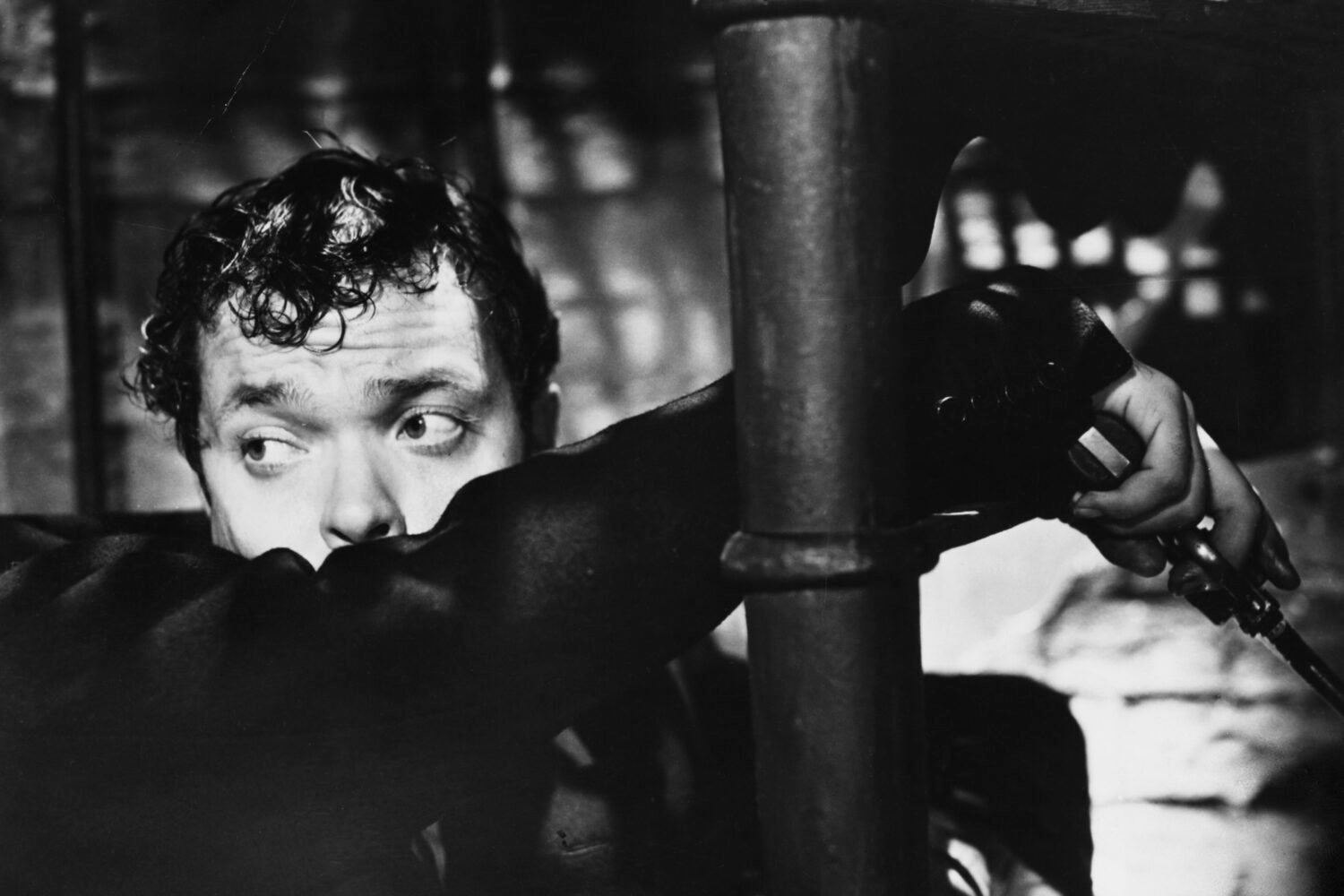
4. The Third Man
(Carol Reed, 1949)
This regularly tops the lists of greatest movies of all time and for good reason: Carol Reed’s adaptation of Graham Greene’s story is a convincing portrait of Vienna and early Cold War Europe.
American writer Holly Martins (Joseph Cotten) arrives for a job in the postwar city under the control of the Allied powers. He finds that his would-be employer and long-time friend Harry Lime (Orson Welles) was killed in a car accident the day before.
The British authorities, to Martins’s disbelief, accuse Lime of selling diluted penicillin, putting children’s lives at risk. Martins investigates, even as he falls for Lime’s girlfriend Anna (Alida Valli), and his loyalty is tested as he seeks justice for the victims of the black-market racket.
From the haunting zither soundtrack to the exhilarating scene in the sewers, this is a classy film.
5. North by Northwest
(Alfred Hitchcock, 1959)
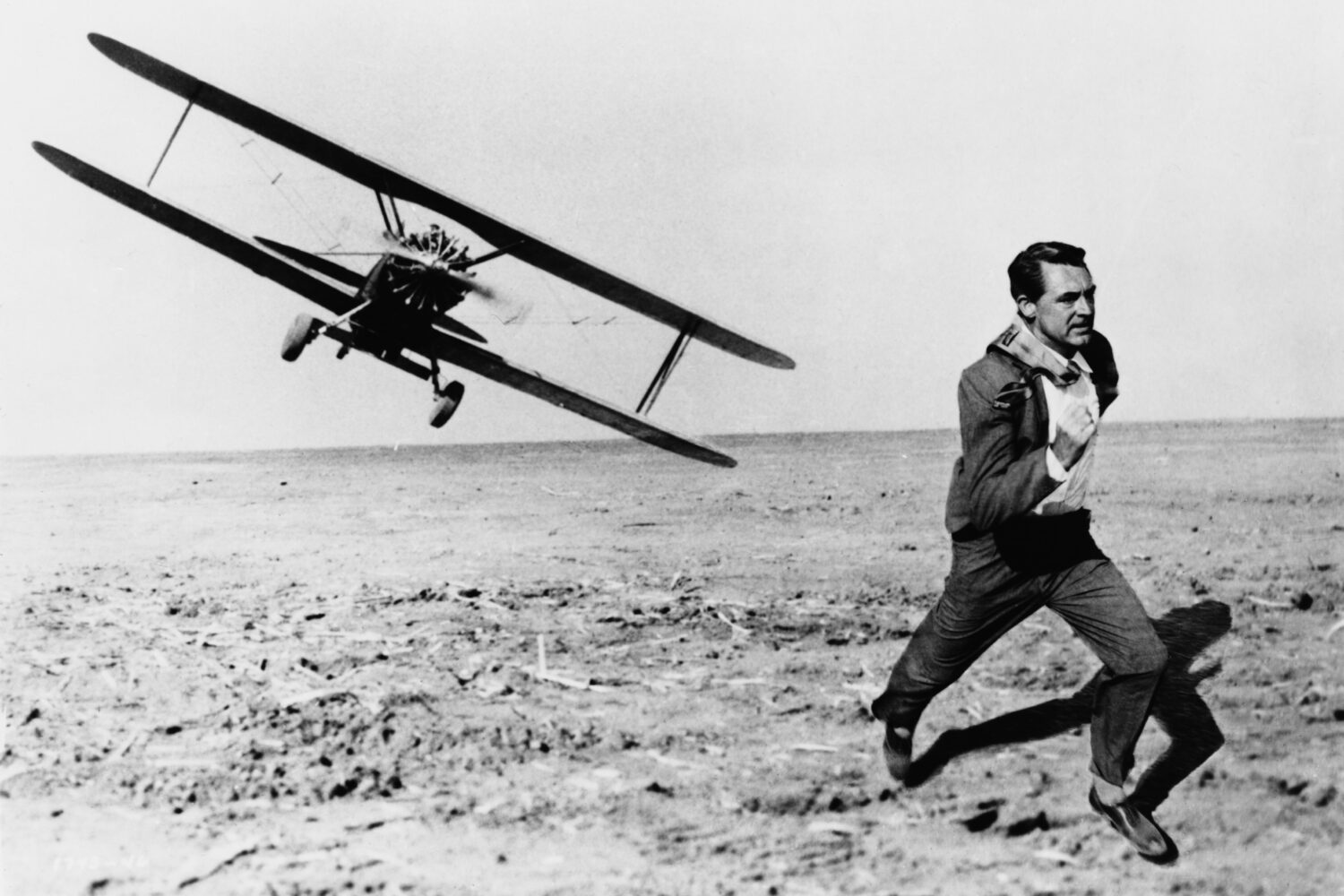
The final Hitchcock gem of this list sees advertising executive Roger Thornhill (Cary Grant) facing a case of mistaken identity which makes him the target of a spy ring. Pursued across America, Thornhill encounters secret agents, shifting loyalties and the mysterious Eve Kendall (Eva Marie Saint), whose motives are unclear.
Grant’s comic timing as an ordinary man trying to survive a plot he barely understands stands the test of time and the Mount Rushmore climax is one of cinema’s most iconic scenes. A dazzling adventure that helped define the big-screen spy thriller.
6. From Russia with Love
(Terence Young, 1963)
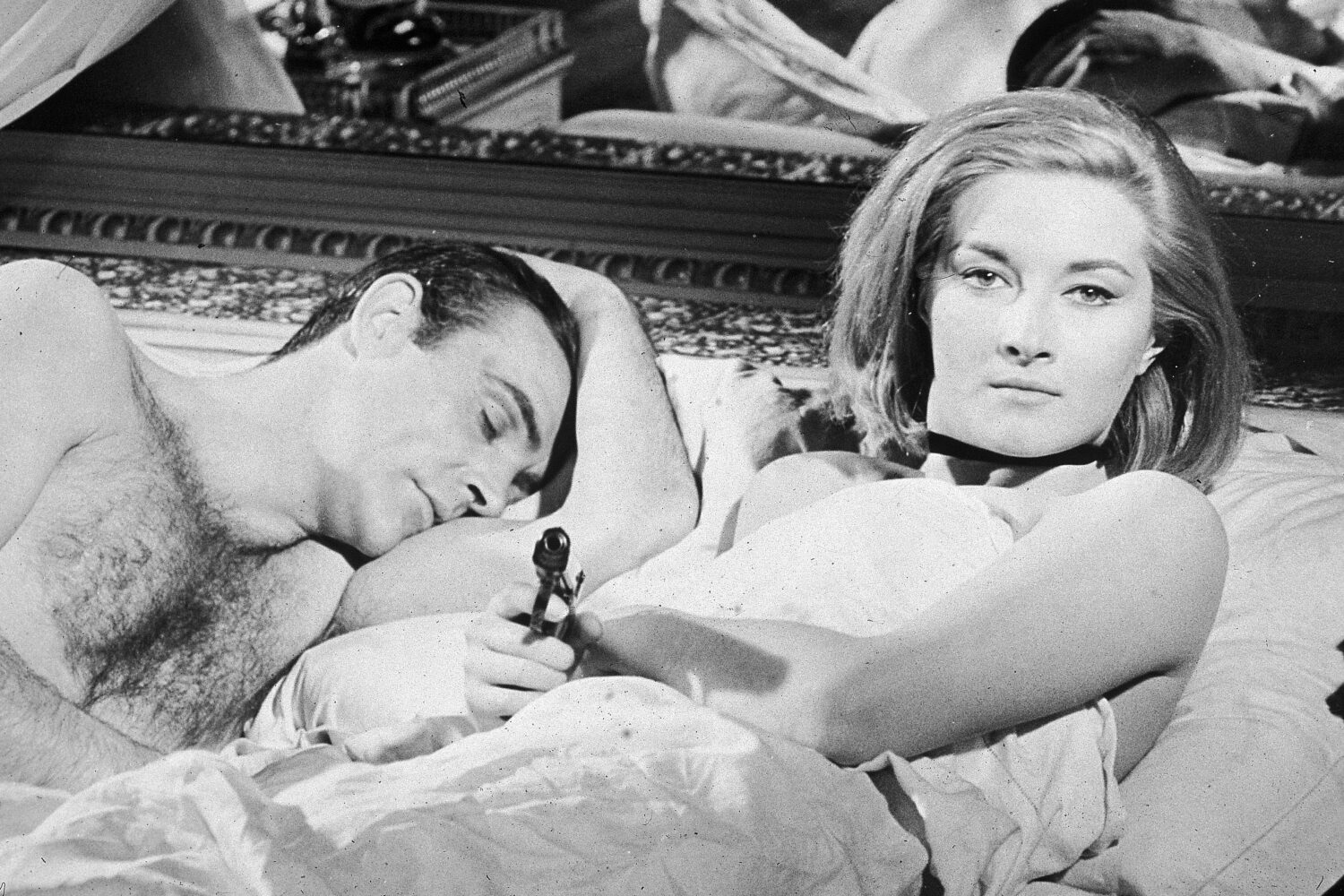
This Terence Young movie is my favourite Bond, just edging out Goldfinger and Dr No. Your favourite 007 is probably the actor you first saw in the part and for me it was Sean Connery.
Bond travels to Istanbul to steal a Soviet Lektor decoder machine with the help of Russian clerk Tatiana (Daniela Bianchi). But she has been hoodwinked by SPECTRE agent Rosa Klebb (Lotte Lenya), who plans to kill Bond and seize the device. Klebb and deadly assassin Grant (Robert Shaw) follow them from Istanbul to Venice in a film that delivers glamour, action, humour and romance.
Pacy, slightly tongue-in-cheek, it continues to delight audiences today.
7. The Ipcress File
(Sidney J Furie, 1965)
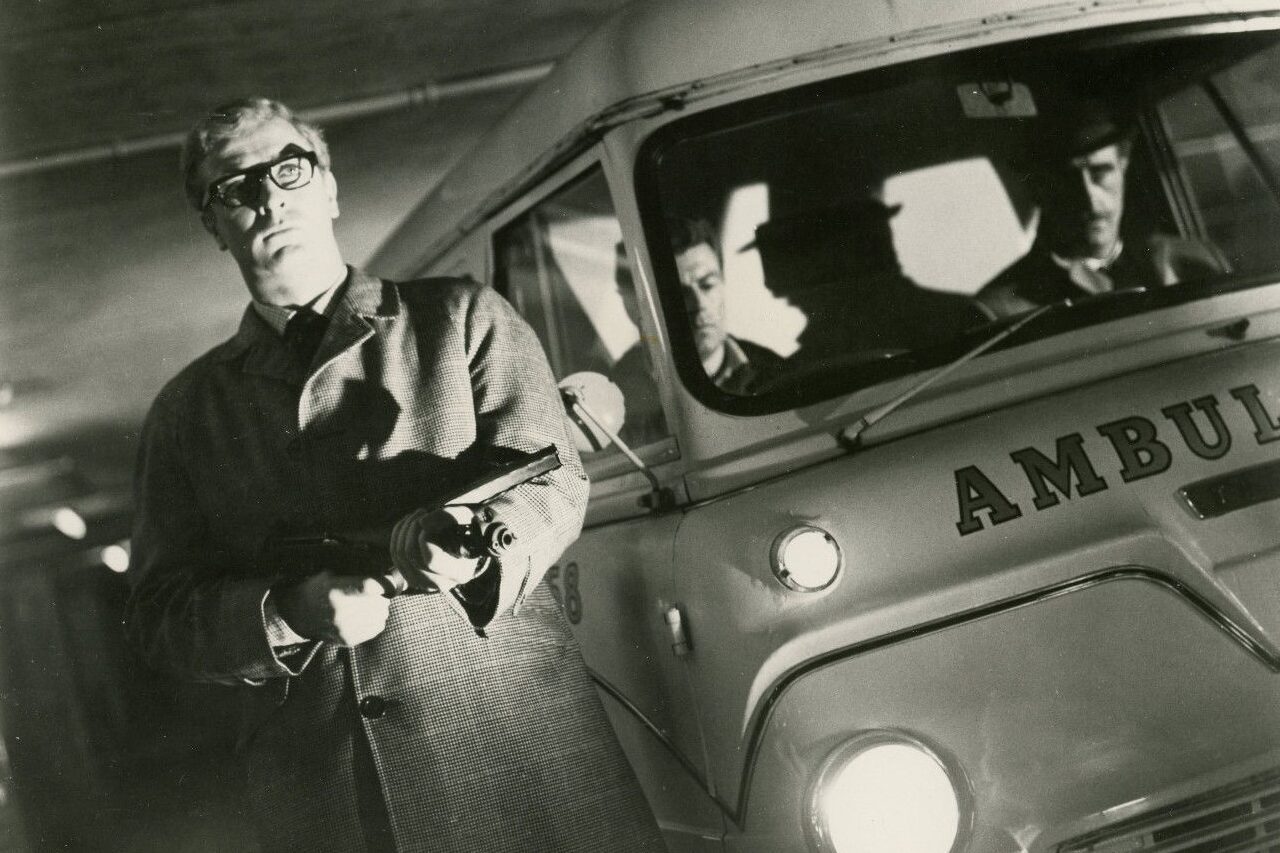
James Bond may have defined glamorous espionage, but Sidney J Furie’s witty thriller was a genuine game changer. Michael Caine plays Harry Palmer, a cheeky working-class squaddie caught stealing and subsequently blackmailed into being a spy. He is tasked with finding a missing nuclear scientist and in the process uncovers a secret brainwashing programme: IPCRESS.
Witty and gritty, the story captures the anxieties of losing scientific talent in 1960s Britain, and as the outsider, unsure of whom to trust, Palmer is a forerunner of Jackson Lamb of Slow Horses. Combined with John Barry’s score and Furie’s camera work, The Ipcress File is one for the ages.
8. The Spy Who Came in from the Cold
(Martin Ritt, 1965)
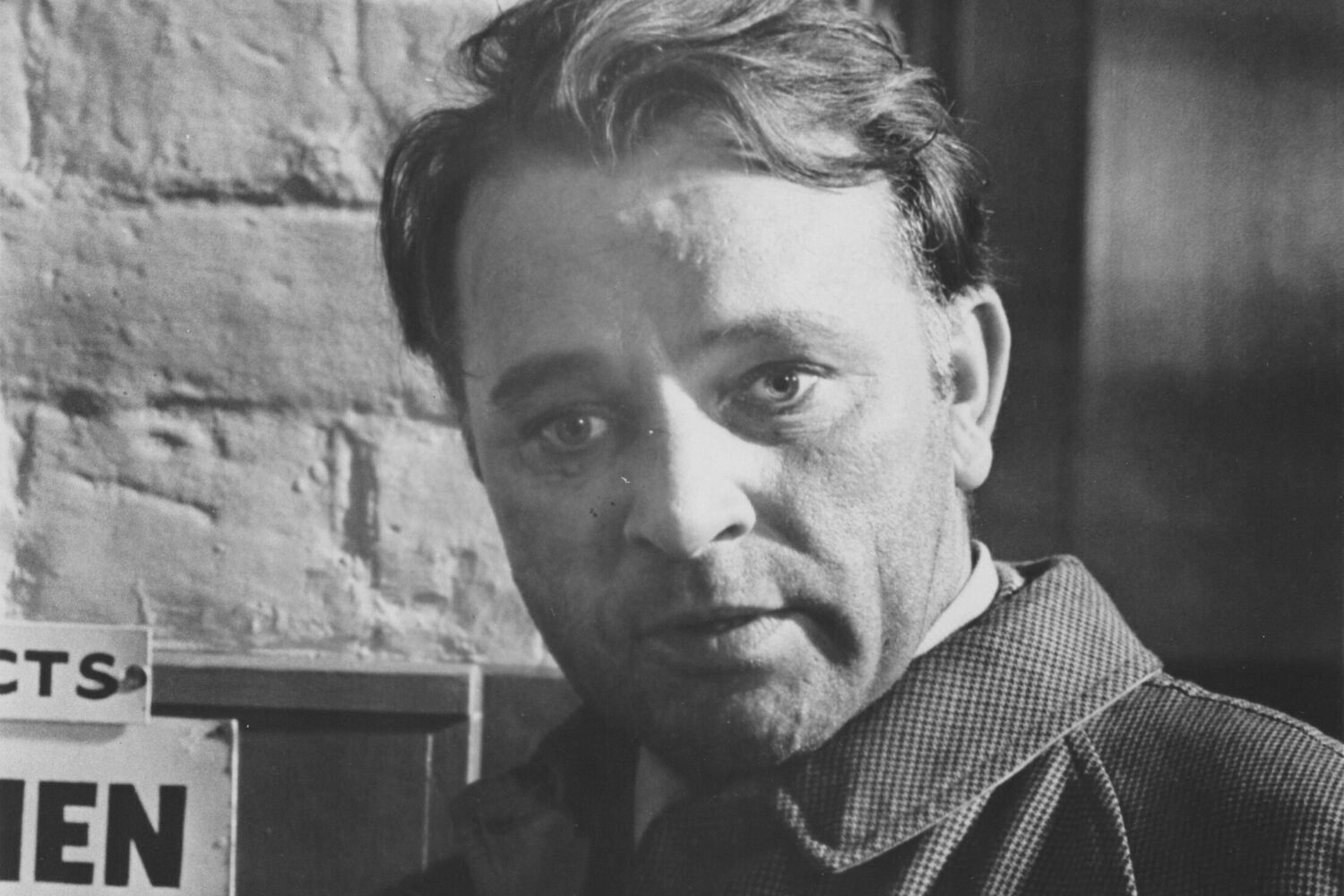
Martin Ritt’s grainy rain-soaked vision of Berlin perfectly matches Le Carré’s dour tale of Western intelligence hypocrisy with an edge of viciousness never seen before in a spy movie.
British spymaster Alec Leamas’s (Richard Burton) last agent is shot dead crossing from East to West Germany by security chief Hans-Dieter Mundt (Peter van Eyck). Disillusioned, Leamas is sent by Control for one last operation, posing as a washed-up agent ripe for defection.
He is recruited by the East Germans; his mission is to trap Mundt by providing incriminating evidence he is a traitor. Mundt’s ambitious deputy, Fiedler (Oskar Werner), will take care of the rest. But this is only the first layer in a complex tale of double crosses.
Chilling and superbly acted, it remains an uncompromising spy classic.
9. The Day of the Jackal
(Fred Zinnemann, 1973)
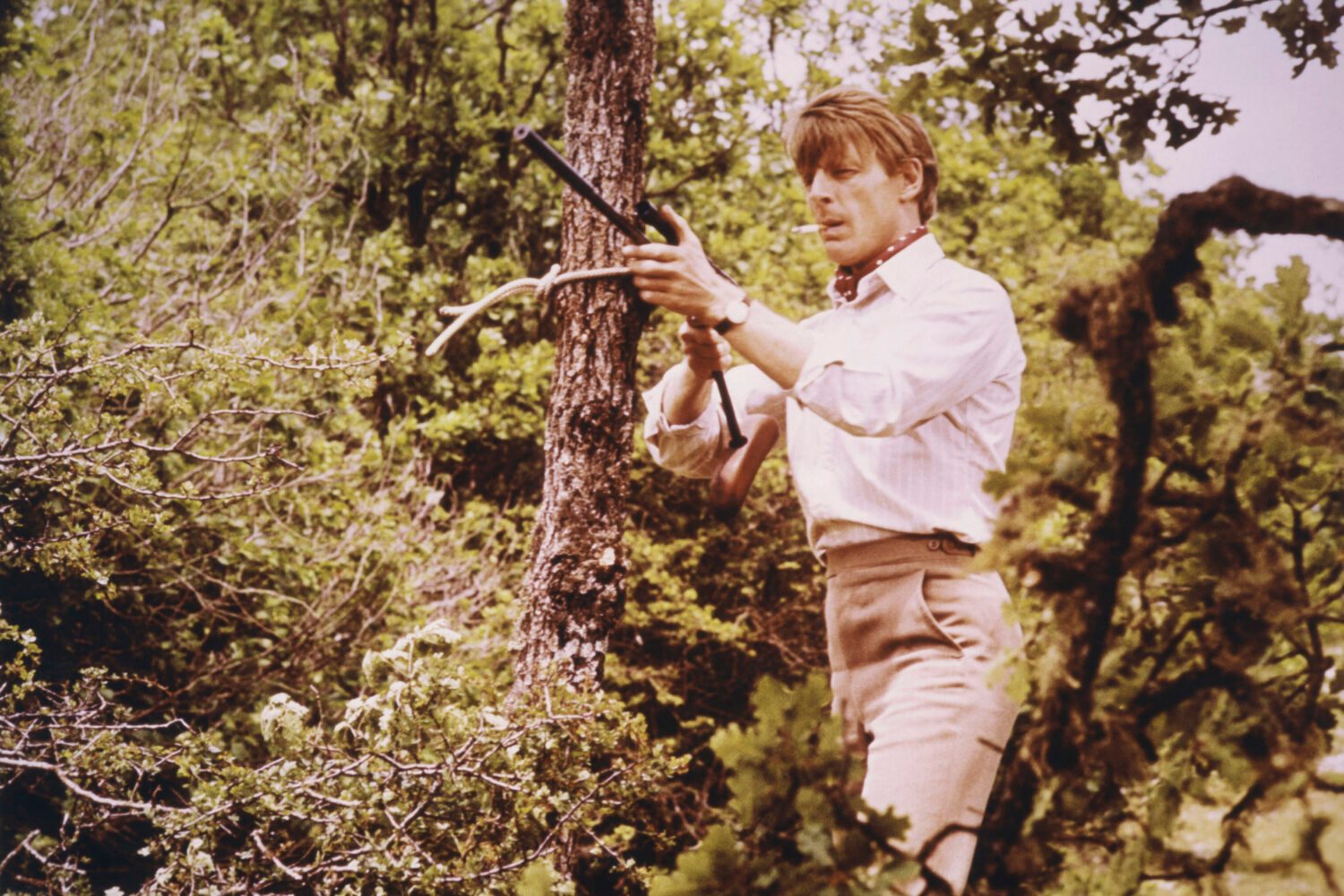
French President Charles de Gaulle seems to have the nine lives of a cat. After several failed assassination attempts, the Organisation armée secrète (OAS, or Secret Army Organisation) hires English assassin The Jackal (Edward Fox) to complete the job. Police commissioner Claude Lebel (Michael Lonsdale) races to catch the would-be assassin before he completes his mission.
Director Fred Zinnemann is faithful to Forsyth’s meticulously researched novel, building tension with a cool, spare feel. That we know de Gaulle survived only makes the suspense more impressive – a testament to Zinnemann’s control of the story. An ingeniously plotted thriller, I’d argue it’s the best assassination movie of all time.
10. Three Days of the Condor
(Sydney Pollack, 1975)
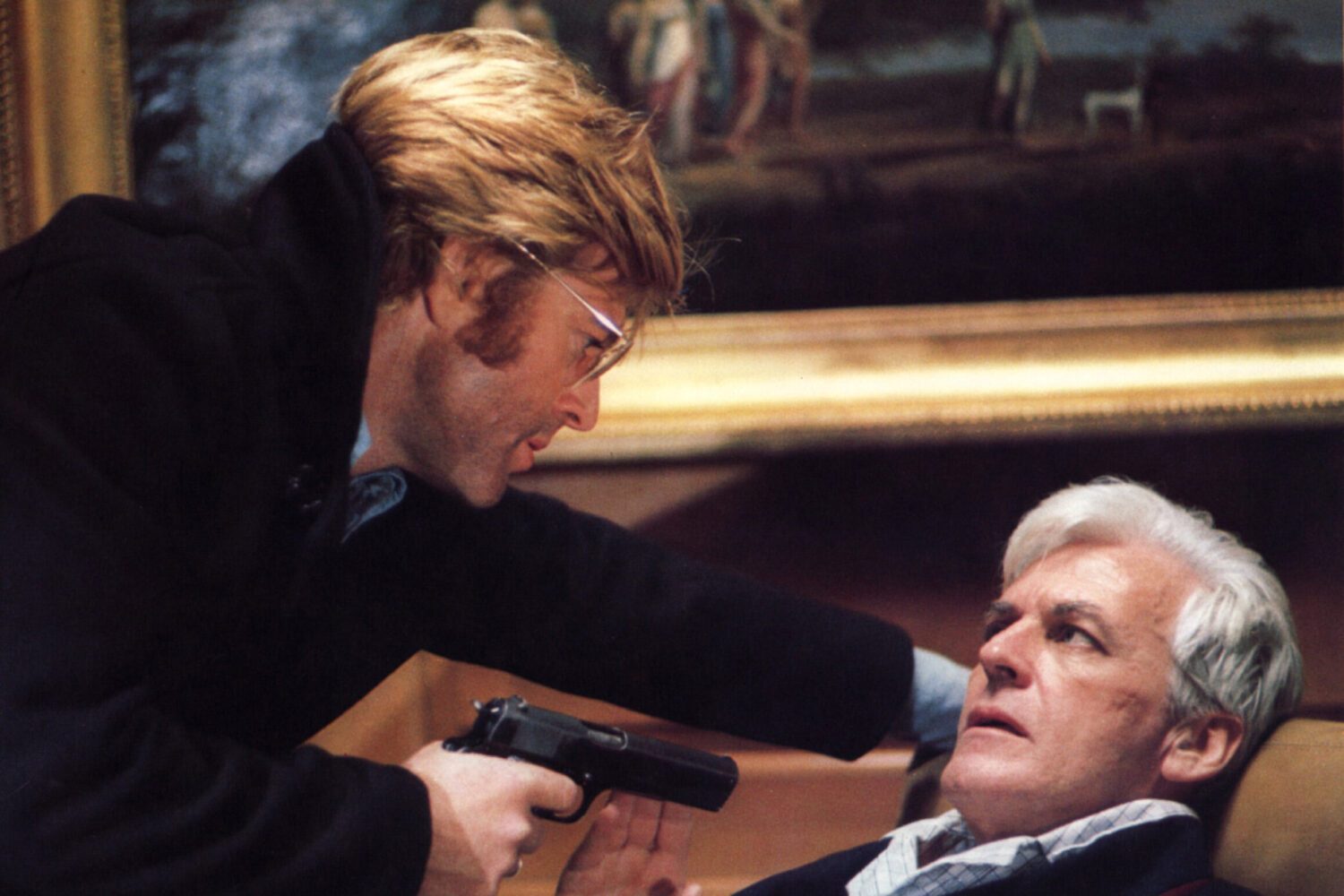
What an opening. It’s a rainy day and it’s Turner’s (Robert Redford) turn to collect lunch for the office. When he returns, everyone has been killed. Turner is an analyst at a small CIA outpost, but why would anyone want to kill a team of researchers?
He goes on the run, soon learning he does not know who to trust. In desperation he kidnaps Kathy (Faye Dunaway). Luck more than judgment keeps them alive as assassins hunt them in this breathtaking cat-and-mouse chase.
Sydney Pollack wrings every drop of tension from the story of CIA betrayal released in the wake of Watergate. It ousts The Conversation and The Parallax View as the most enjoyable of the brilliant 1970s conspiracy movies centred on Nixon, civil rights and Vietnam.
11. Hopscotch
(Ronald Neame, 1980)
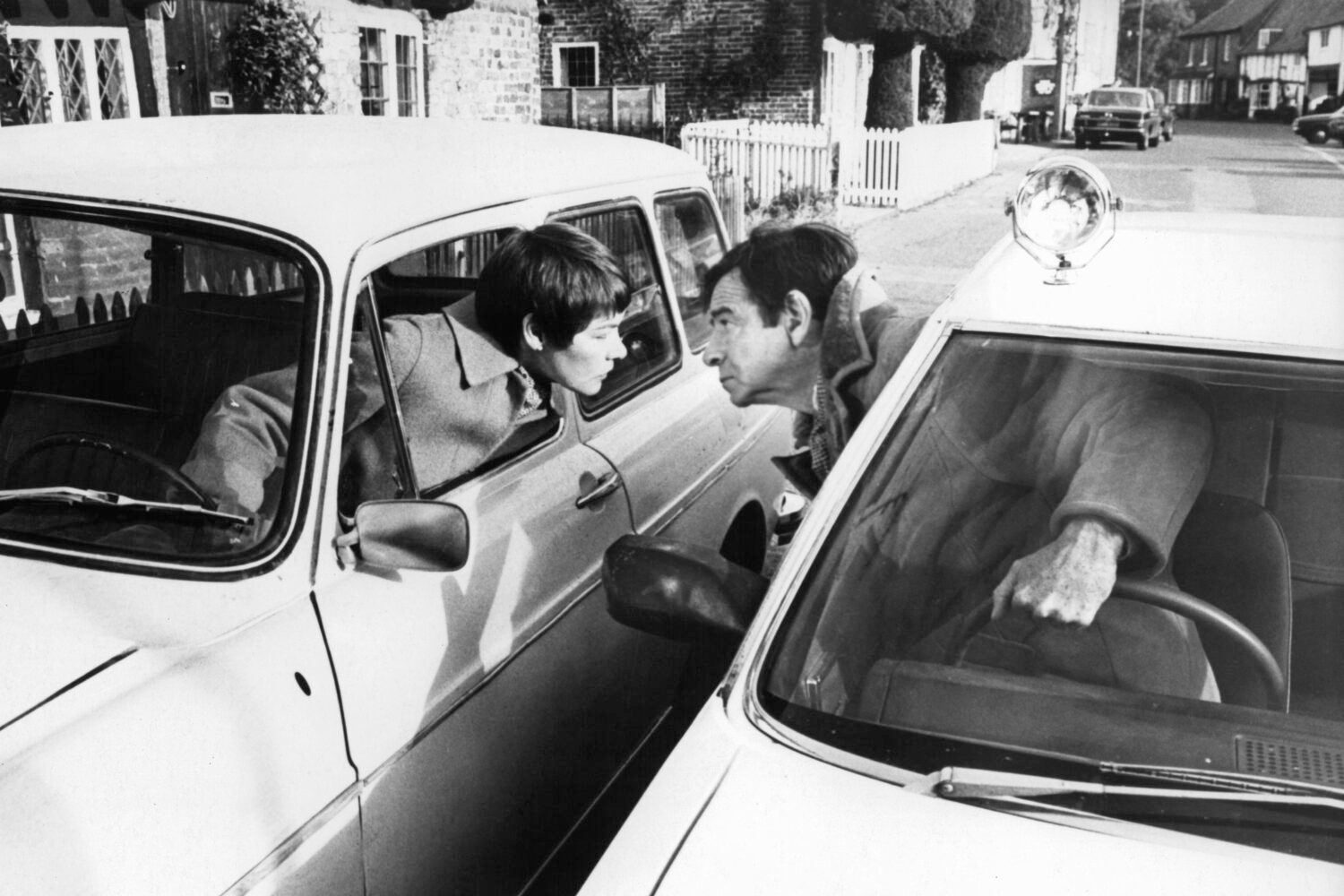
Not every spy film needs a body count. Walter Matthau brings a light touch to Ronald Neame’s comedy as Miles Kendig, a veteran CIA operative whose bosses decide he is past his best.
Rather than accept retirement, Kendig threatens to publish a memoir exposing secrets of the CIA and other intelligence services. His former boss, Myerson (Ned Beatty), sets out to stop him, triggering an international game of cat and mouse.
With Glenda Jackson as Kendig’s resourceful ally and Herbert Lom in support, Hopscotch is a witty rebuke to late-Cold War bureaucracy.
12. The Hunt for Red October
(John McTiernan, 1990)
As the Cold War began to thaw, John McTiernan adapted Tom Clancy’s bestseller into a gripping submarine thriller.
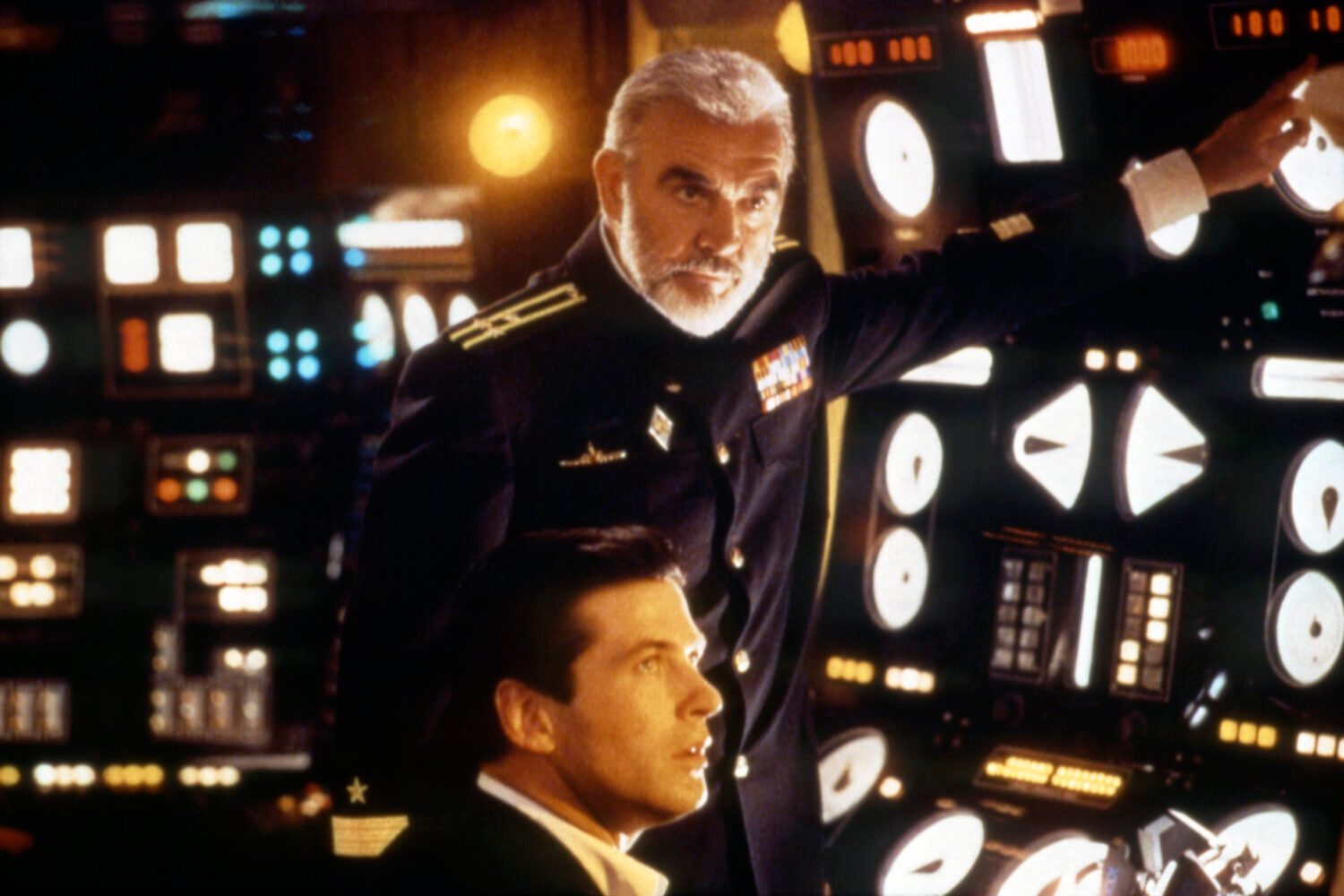
Soviet captain Marko Ramius (Sean Connery) commands an advanced nuclear submarine and heads towards the United States. Is he planning to defect or attack? CIA analyst Jack Ryan (Alec Baldwin) believes Ramius wants to surrender the vessel, but persuading the authorities is only the beginning. With Soviet forces in pursuit and nuclear war a possibility, tension mounts.
Claustrophobic and intricately plotted, it is a pulse-racing adventure.
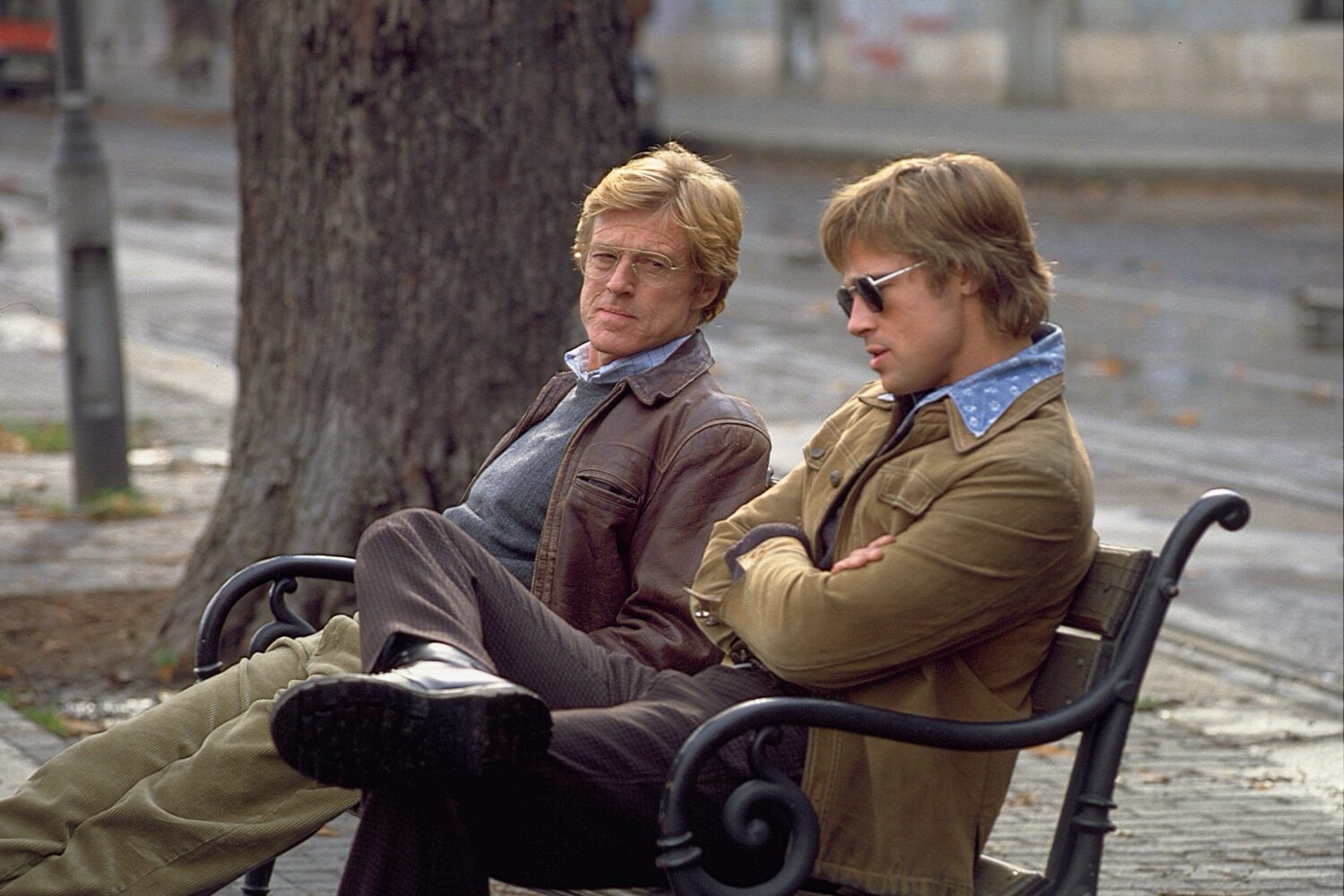
13. Spy Game
(Tony Scott, 2001)
Robert Redford is Nathan Muir, and this is his last day at the CIA. Instead of a farewell party, he learns his protégé Tom Bishop (Brad Pitt) has been captured in China and faces execution. The CIA superiors seem ready to let it happen, but Muir has no intention of seeing his protégé die.
So, while everyone thinks Muir is packing up one final time, he mounts a rescue operation. The clock is ticking as the cool, calculating Muir attempts to outmanoeuvre the bureaucracy.
The plot is devious and ingenious with lashings of fun and jeopardy. Redford kills it in every nail-biting, twisty scene.
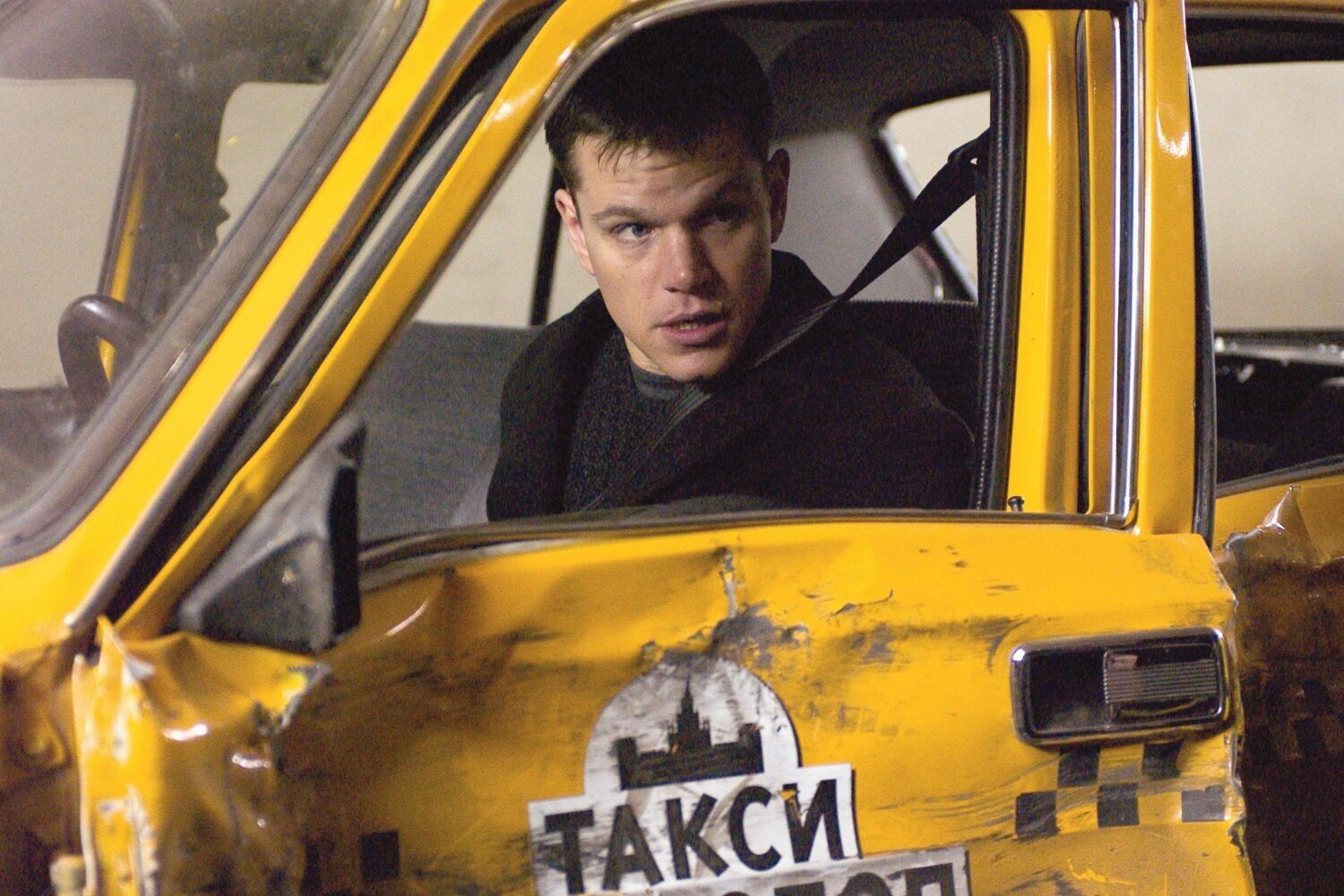
14. The Bourne Supremacy
(Paul Greengrass, 2004)
When Matt Damon reprised the role of Jason Bourne, the franchise hit new high-octane heights.
Two years on from The Bourne Identity, Bourne is living the quiet life in Goa with Marie Kreutz (Franka Potente) when the CIA turns his life upside down again. Battling with psychogenic amnesia, Bourne seeks to find out more about Treadstone, the assassination programme he once worked for, while the agency tries desperately to keep it secret.
Paul Greengrass’s fast-cutting, immersive style puts the viewer in the middle of the action. Its influence was felt across the genre, not least in the tougher, more grounded Bond reboot that followed in Casino Royale.
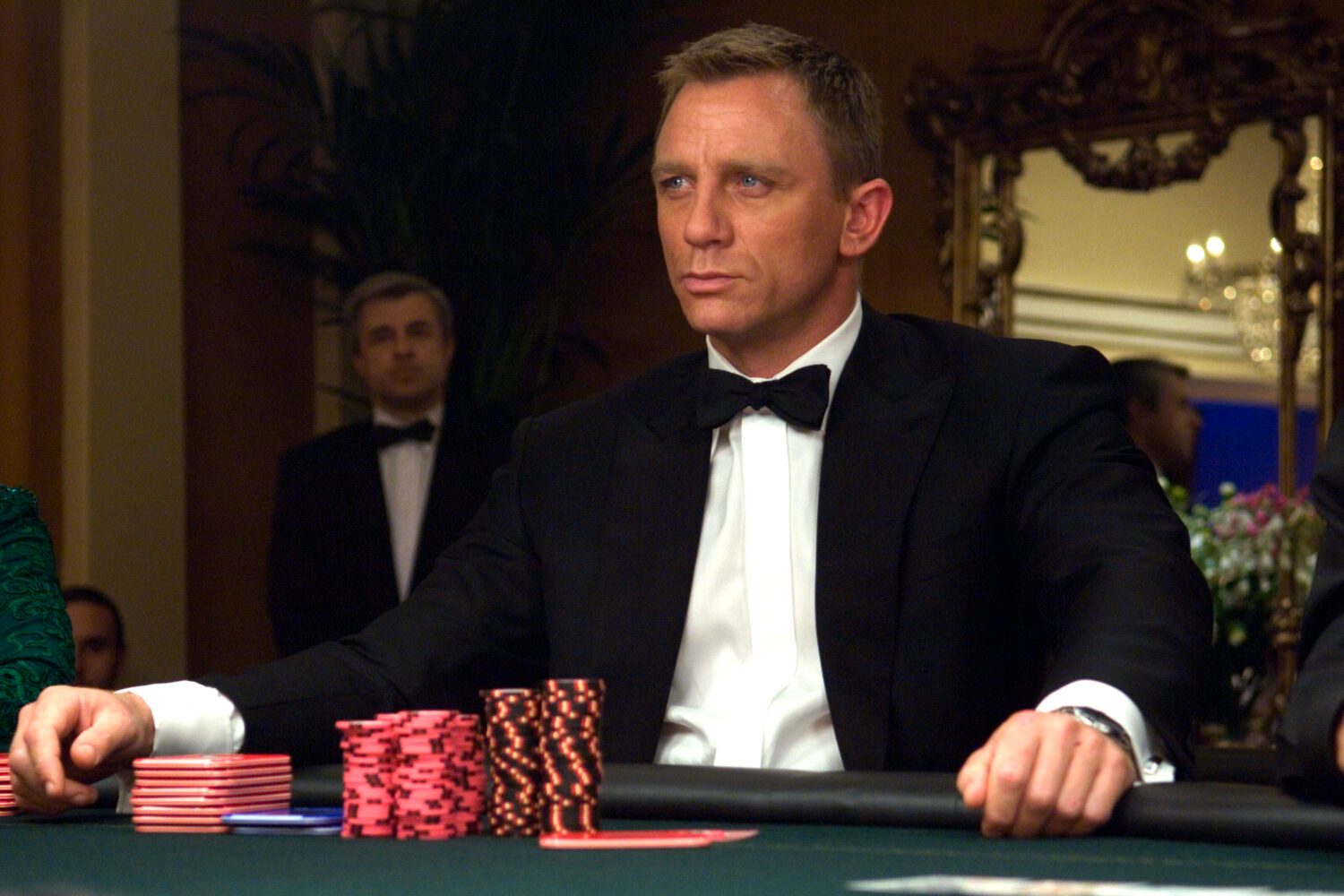
15. Casino Royale
(Martin Campbell, 2006)
By 2006, Bond needed a reset. The gadget-heavy excess of Die Another Day (2002) had left the series looking out of step with the tougher, more grounded spy action of the Bourne films. Director Martin Campbell went back to Ian Fleming’s first novel and gave us a 007 who has only just earned his licence to kill.
Daniel Craig’s Bond is brutally physical, but not yet emotionally armoured. His mission to bankrupt the terrifying Le Chiffre (Mads Mikkelsen) at a poker table becomes a far more personal test when he falls for Vesper Lynd (Eva Green).
The breathless opening chase is an instant classic, but it is the film’s darker insight that the secret service can exact a terrible price on the person beneath the tuxedo that makes this reboot endure.
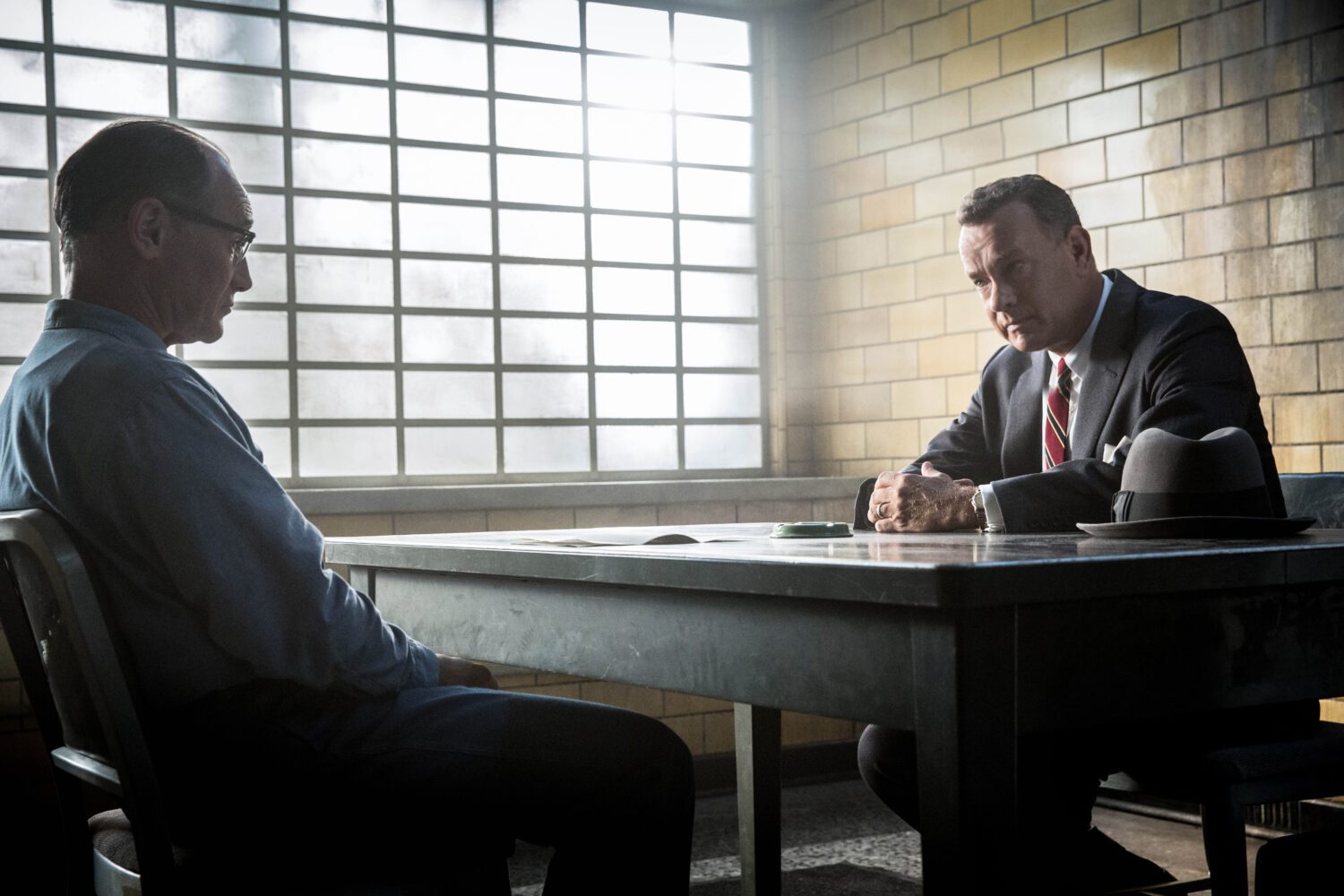
16. Bridge of Spies
(Steven Spielberg, 2015)
Tom Hanks plays American lawyer James B Donovan, who agrees to represent Soviet spy Rudolf Abel (Mark Rylance) despite public hostility. Years later, when US U-2 pilot Francis Gary Powers is captured by the Soviet Union, Donovan is tasked with facilitating the most notorious spy swap of the Cold War.
Steven Spielberg delivers a tense portrait of negotiations between Donovan and the East Germans, demonstrating how patience and principle can be as gripping as any chase. The best of Hanks’s performances and with a quietly mesmeric part from Rylance, it’s an intelligent drama that gets under the skin of the times.
17. Black Bag
(Steven Soderbergh, 2025)
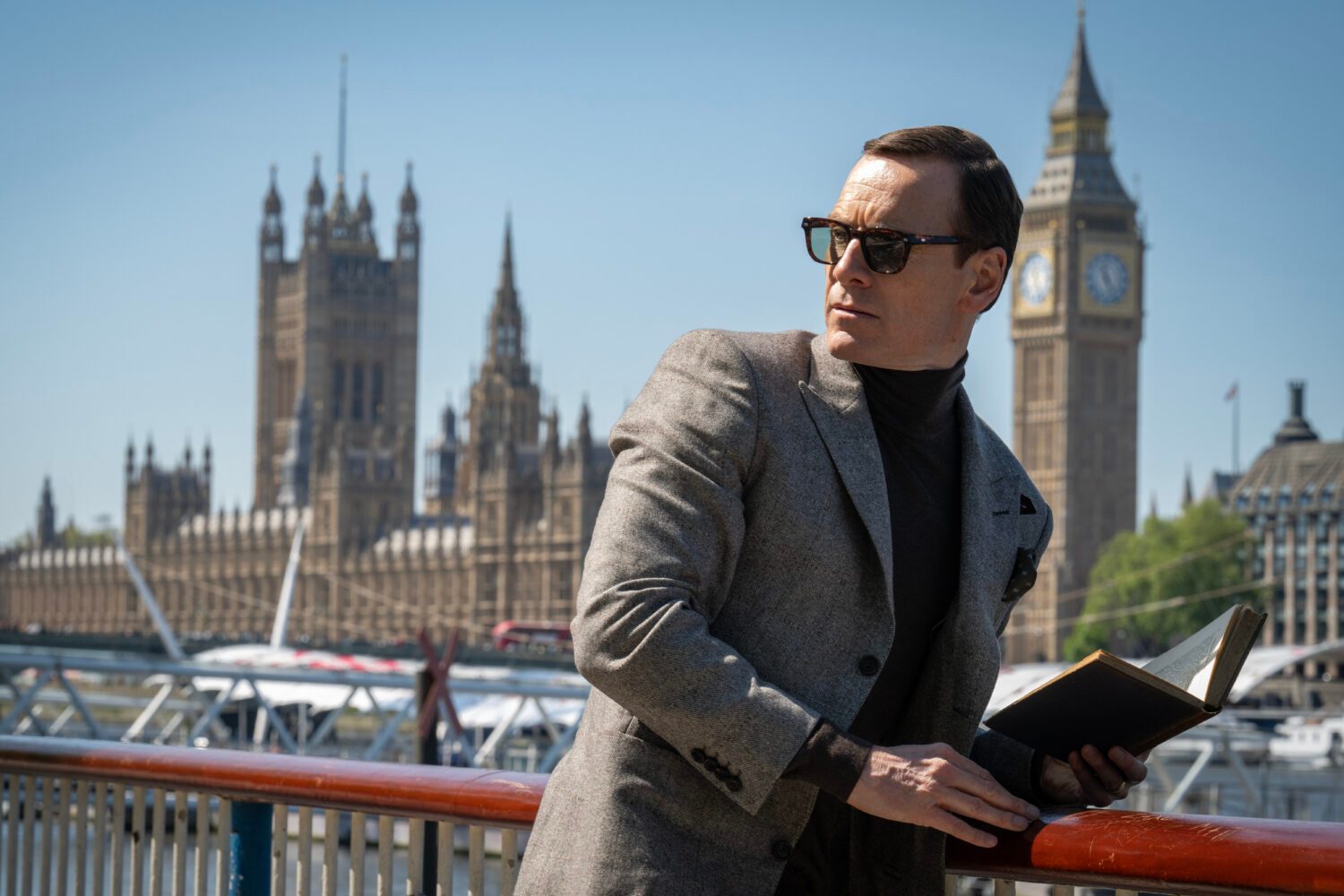
The conflict between duty and personal loyalty so often explored in spy movies is given a domestic twist in this delicious drama. When George Woodhouse (Michael Fassbender) is tasked with investigating a leak at the National Cyber Security Centre, his wife Kathryn (Cate Blanchett), a senior intelligence officer, comes under suspicion.
Steven Soderbergh captures the paranoia that haunts George’s every move as he is forced to choose between the evidence and protecting the person he loves. With sharp dialogue, unsettling scenes and thought-provoking twists, Black Bag shows that the new age of uncertainty makes the spy story as relevant as ever. A genre in rude health.
Paul Burke is author of Spies on Screen: From Silent to Streaming (Oldcastle Books, 2026)
]]> Jonny Wilkes <![CDATA[Think you know everything about the history of Thanksgiving? These 21 facts will prove you wrong]]> https://www.historyextra.com/period/modern/thanksgiving-history-facts-when-first-what-why-pilgrims-turkey/ 2026-11-24T14:36:03.000Z 2026-11-24T14:35:54.000Z 1. There are only two accounts of the first Thanksgiving
The story of the first Thanksgiving has been highly mythologised in American history. In 1621, the so-called Pilgrims who travelled on the Mayflower and formed the settlement of Plymouth, in Massachusetts, came together with the local indigenous peoples, the Wampanoag, for a feast to celebrate a good harvest and the growing friendship of settler and Native American in the New World. That is the version long told in schools.
In truth, the Pilgrims threw themselves a harvest festival and around 90 of the Wampanoag showed up. Without their help, especially a man named Squanto, the European settlers would have likely perished in their brutal first winter. The only sources for the three-day feast are sparse mentions in writings by two of the Pilgrims, Edward Winslow and William Bradford. Neither actually used the word ‘thanksgiving’, however, and since they gave few details of what happened, the mythologising took over.
2. They may not have eaten turkey at the first Thanksgiving
For many Americans, no modern Thanksgiving meal is complete without a turkey as the centrepiece of the table. It’s unclear, however, whether this tradition began in 1621.
The Pilgrims cooked up a selection of fowl – which may have included turkey, but could just as easily been duck and goose – while the Wampanoag killed a number of deer, meaning venison was on the menu. They might have had seafood, too, including eels, clams, mussels and lobster.
Yes, William Bradford mentioned a “great store of wild Turkies” in the region, but the bird did not become a staple of the Thanksgiving meal until the 19th century.
3. The first Thanksgiving may have happened earlier than 1621
While the 1621 feast became the foundation for the Thanksgiving holiday, perhaps Americans should celebrate a different year. Other acts of thanksgiving, based in the tradition of Christian harvest festivals, took place earlier in the short-lived Popham Colony in Maine and Jamestown in Virginia, both founded in 1607.
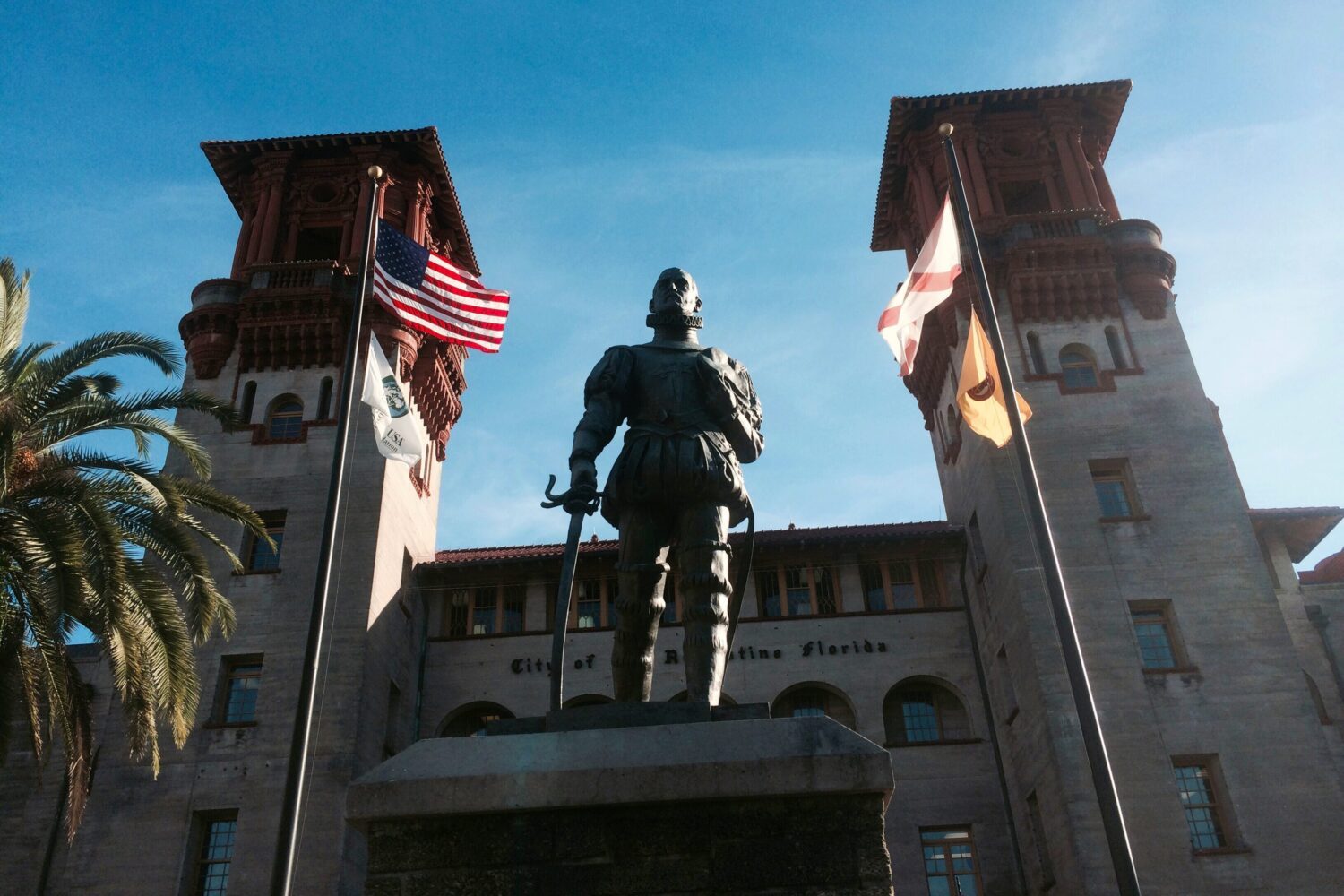
Two years before the Pilgrims and Wampanoag, the Berkeley Hundred settlement, also in Virginia, held a celebration and decreed that the same day should be “perpetually kept holy as a day of thanksgiving to Almighty God”. The true first Thanksgiving, however, was not English, but Spanish. On 8 September 1565, in what is now St Augustine, Florida, hundreds of Spaniards held a religious ceremony and shared a meal with the local people to mark their safe arrival.
4. Americans eat around 46 million turkeys every year
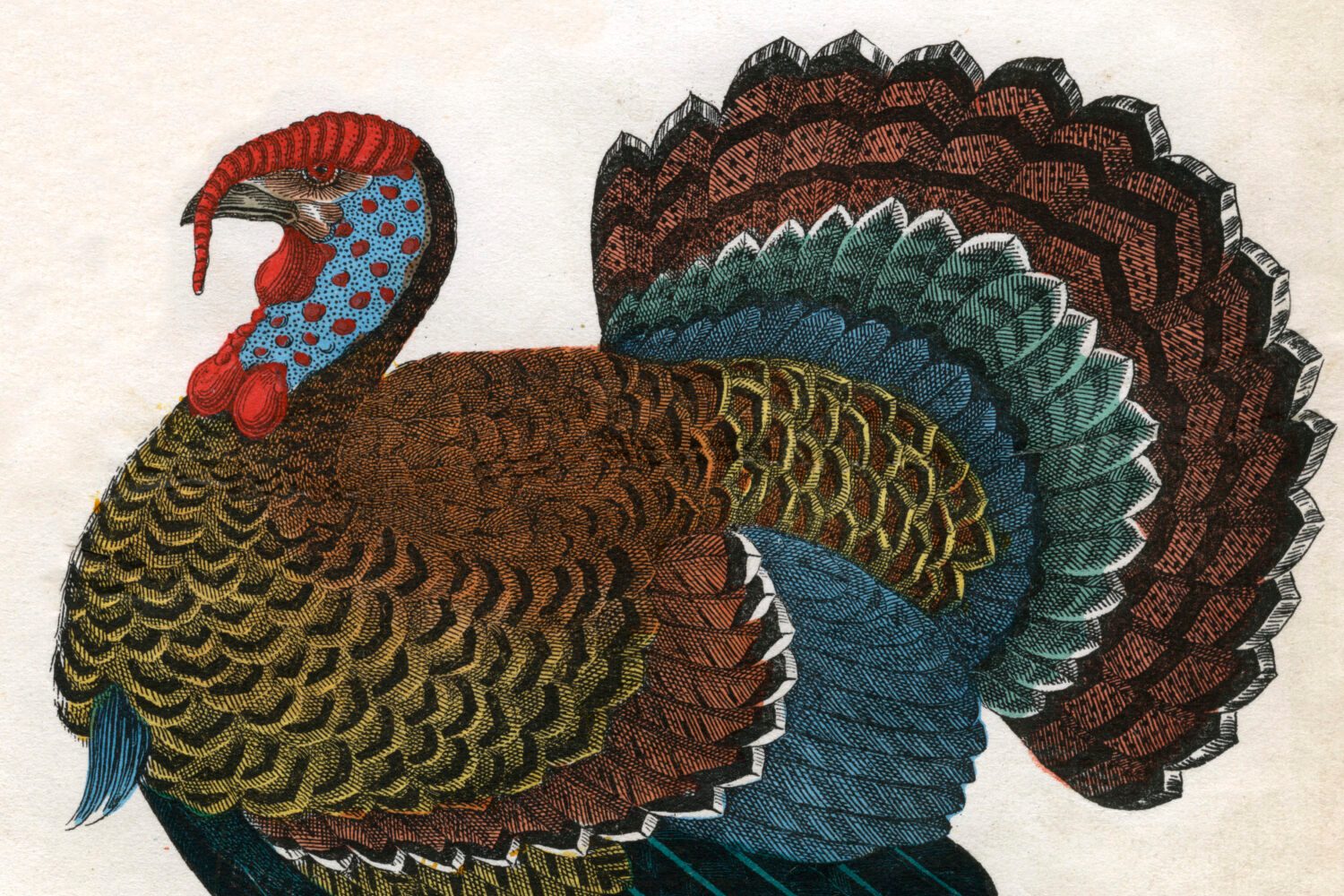
A major reason why turkey became the meat of choice for Thanksgiving is that the birds are both abundant and large (meaning a lot of meat), and it’s a good thing, too. There’s a reason the holiday is also referred to as Turkey Day.
With apologies to the non-meat eaters out there, it is estimated that around 46 million birds are killed for the holiday every year in the US alone, according to the Department of Agriculture. That’s one turkey for every seven or eight Americans.
5. The fastest time to carve a turkey is under four minutes
Without wanting to dismay all the Americans who take immense pride in serving up the meal every Thanksgiving, the Guinness World Record for the fastest time to carve a turkey is currently held by a British person.
The UK does eat its fair share of turkeys at Christmas, after all. In 2009, Paul Kelly, a turkey farmer in Essex, managed the feat in just three minutes and 19.47 seconds.
6. The author of Mary Had a Little Lamb is known as the ‘Mother of Thanksgiving’
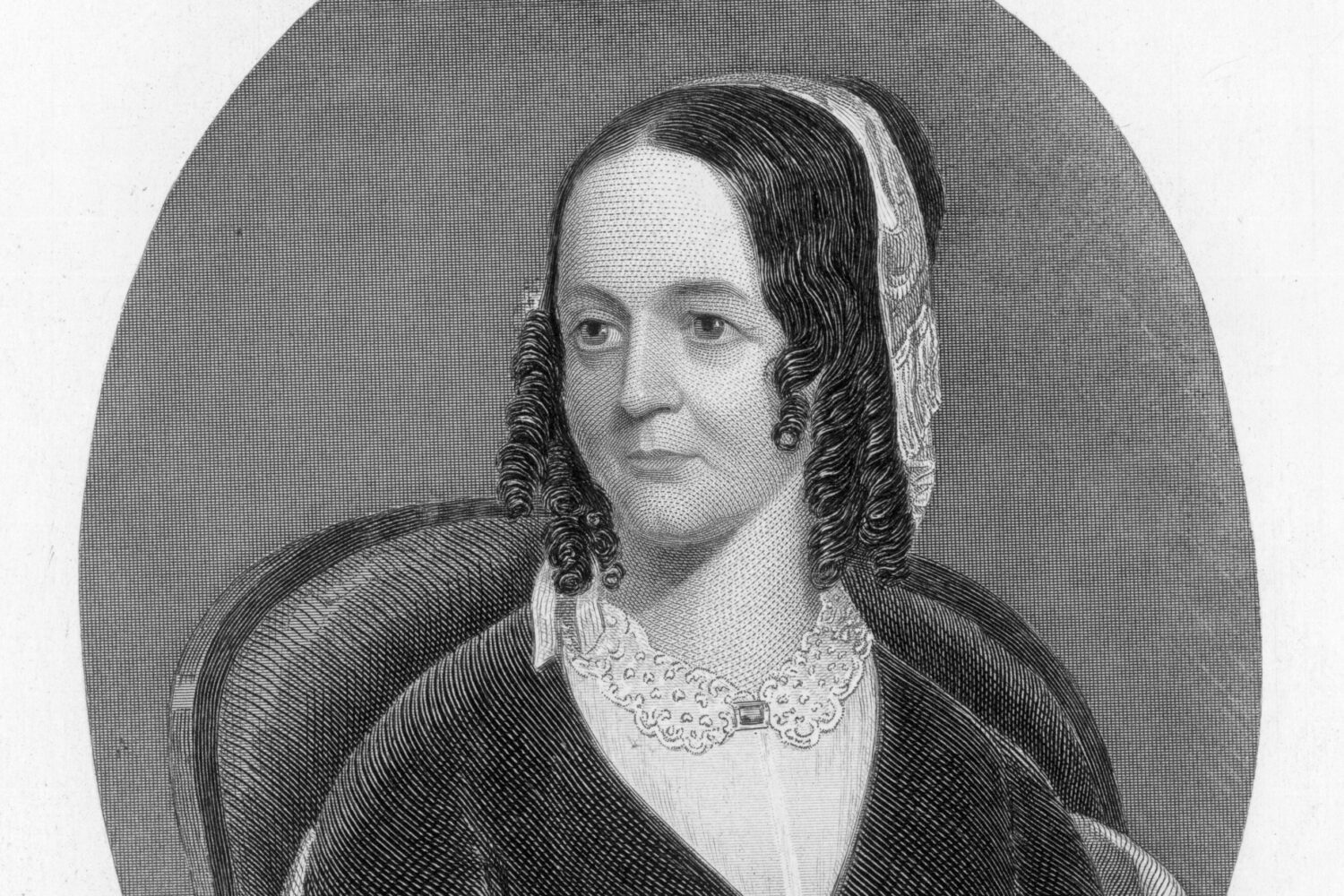
Sarah Josepha Hale was a writer, the first American woman to be editor of a magazine and, in 1830, she published the nursery rhyme, Mary Had a Little Lamb (originally titled Mary’s Lamb).
One of her biggest passions, though, would always be Thanksgiving. Born in 1788 in New England, she grew up with the local celebrations and customs that took place every year, and wanted Thanksgiving to become a national holiday. For years, she embarked on this campaign, writing editorials for her magazine, Godey’s Lady’s Book, which had a peak circulation of 150,000, as well as countless letters to presidents asking for their help.
Finally getting somewhere with Abraham Lincoln, she is now heralded as the ‘Mother of Thanksgiving’.
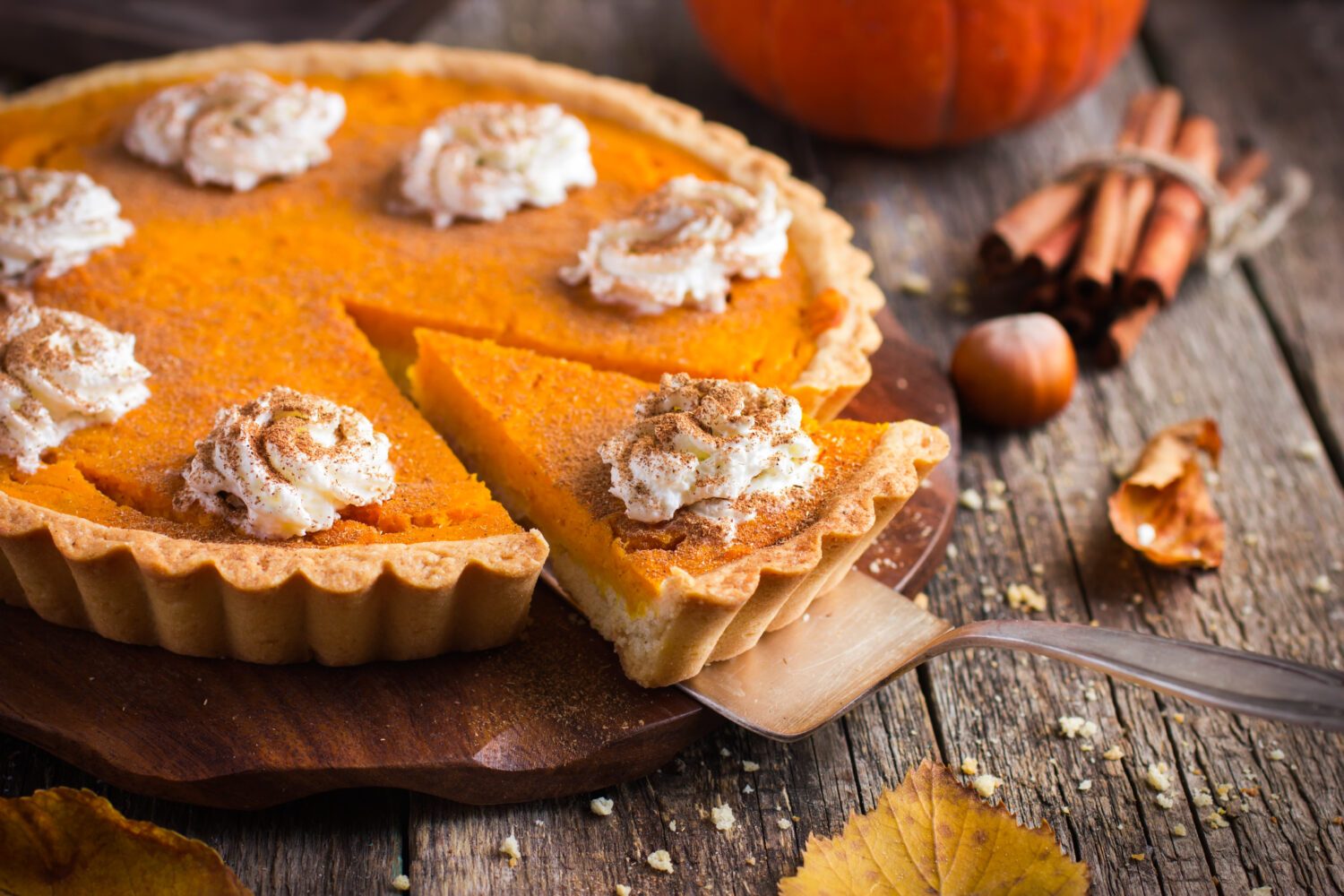
7. In 1705, a town postponed Thanksgiving because of pumpkin pie
Until Sarah Josepha Hale’s campaign, it was up to each town and state to determine how to mark Thanksgiving, with most of the events taking place only in the US northeast. For the people of Colchester, Connecticut, the celebrations had to include pumpkin pie. The dessert had become a symbol of the bounty of the New World.
In 1705, however, they faced a problem: bad weather prevented supplies from reaching them, including the molasses that they needed to make their pies. Rather than have a Thanksgiving without them, the townsfolk elected to postpone the festivities for a week until the molasses could be delivered.
8. Thomas Jefferson was opposed to Thanksgiving (sort of)
In 1789, George Washington issued a presidential proclamation naming Thursday 26 November as a “day of public thanksgiving and prayer”. This did not make the holiday official, as each president had to issue their own proclamations every year. While John Adams followed Washington’s example, the third president, Thomas Jefferson, did not.
He did not oppose families coming together for a nice meal – in fact, he encouraged it as governor of Virginia – but he felt that the religious significance of Thanksgiving meant the president could not endorse it. Otherwise, he would undermine the separation of church and state as established by the first amendment of the Constitution, which he had helped get written.
9. Benjamin Franklin preferred turkey to bald eagles
The bald eagle has been a national emblem since being chosen to adorn the Great Seal of the United States in 1782. However, the decision did not meet the approval of the great polymath and Founding Father, Benjamin Franklin. He thought the bald eagle had “bad moral character”, was “generally poor”, “often very lousy” and a “rank coward”, as he wrote in a letter to his daughter. The turkey, on the other hand, was a “much more respectable bird and withal a true, original native of America,” in his opinion.
- Read more | Benjamin Franklin's greatest inventions
Franklin was effusive in his praise, describing the turkey as “though a little vain & silly, a Bird of Courage, and would not hesitate to attack a Grenadier of the British Guards who should presume to invade his Farm Yard with a red Coat on.”
10. The cornucopia has ancient origins
A horn-shaped basket overflowing with the fruits of the harvest, the cornucopia is a symbol of abundance. As such, it has come to be associated with Thanksgiving and is a common feature of the decorations.
The origins of the horn of plenty have nothing to do with the Pilgrims or Wampanoag in 1621, or with Sarah Josepha Hale and Lincoln: it goes back much further. According to ancient Greek mythology, the god Zeus was raised by Amalthea, either an enchanted goat or a water nymph with an enchanted goat.
Either way, one day the baby deity broke off one of the horns and it began pouring forth fruits, seeds and nuts. To the Romans, however, Hercules created the horn by snapping it off a river god.
11. Thanksgiving became a national holiday during the American Civil War
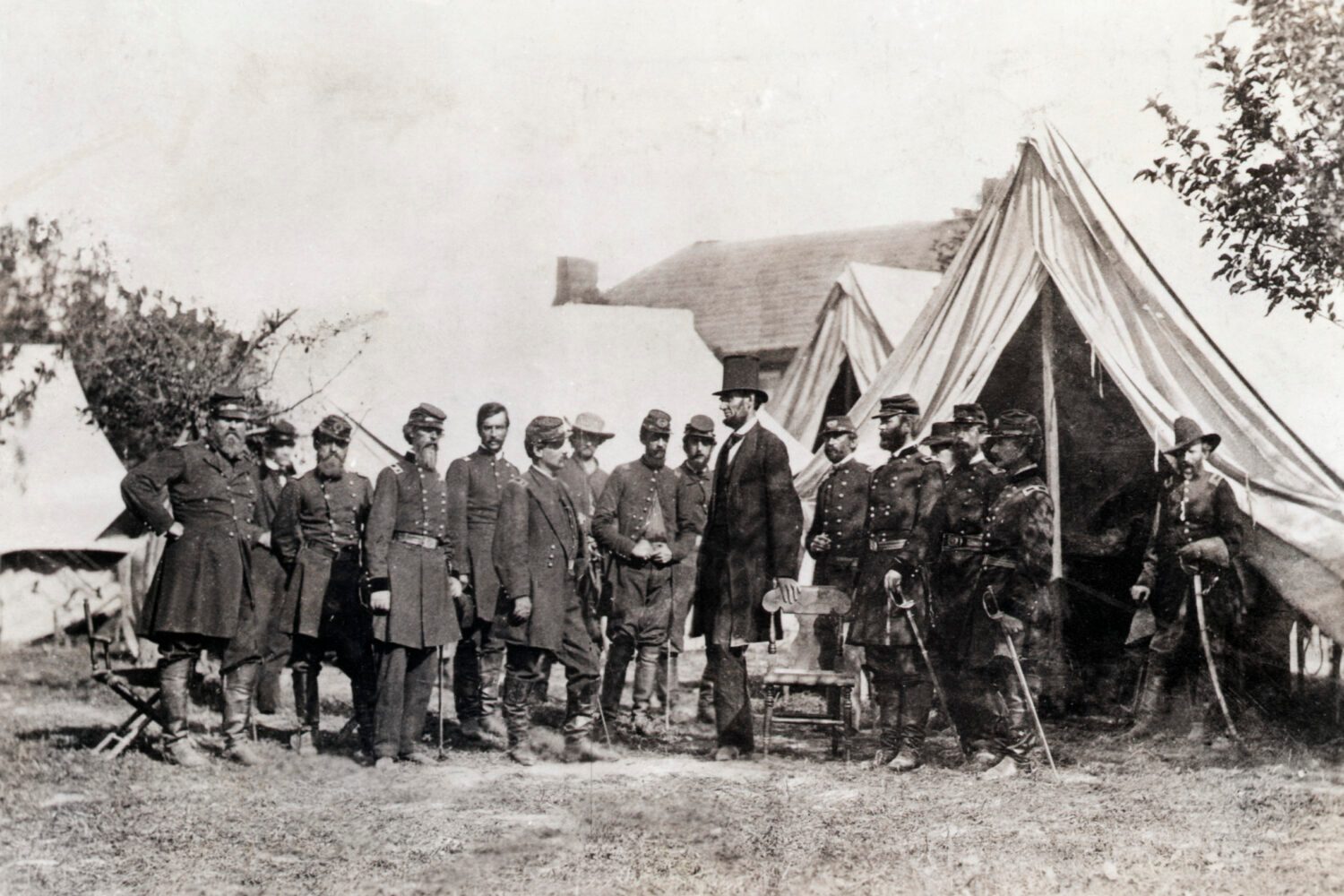
Sarah Josepha Hale tried for years to get Thanksgiving recognised as a national holiday, but it was with the outbreak of the American Civil War in 1861 that the circumstances finally came together.
In 1863, she wrote to President Abraham Lincoln arguing that Thanksgiving could heal the divided and hurting country, and he agreed. Less than a week later, he issued a proclamation declaring a holiday on the last Thursday of November – and so Thanksgiving has been celebrated ever since, with a few exceptions.
12. A small Pacific island has celebrated Thanksgiving since the 1800s
Thanksgiving is not celebrated only in the US: Canada marks it in October, while festivities can be seen in countries around the world. A contender for the most unlikely place has to be Norfolk Island, a tiny Australian territory in the Pacific Ocean home to just over 2,000 people.
Yes, Thanksgiving comes on a Wednesday, not Thursday, and there are a lot of local dishes alongside the pumpkin pie, but the holiday is firmly rooted in American traditions. It began in the 1800s when American sailors and whalers made regular stops there. One American, Isaac Robinson, settled on Norfolk Island and made a big deal of celebrating Thanksgiving. After he died, the islanders just kept it going.
13. The inaugural Turkey Trot had only six runners
Every year on (or near) Thanksgiving, around a million people put on their running shoes – and maybe a turkey costume – and take part in their local Turkey Trot, one of many races held all over the US. If nothing else, the run will help counter all the calories about to be consumed.
The Turkey Trot began in Buffalo, New York, in 1896, on a much smaller scale. Just six runners started the five-mile course, with four finishing. One pulled out after two miles, while another had to stop when his “late breakfast refused to keep in its proper place”.

14. The first Macy’s Parade featured live animals, not balloons
Another constant of Thanksgiving television is the Macy’s Parade. Best known today for the storeys-high balloons in the shapes of beloved characters, when the department store first planned a parade through the streets of New York in 1924, the main attraction was a bit livelier – literally. They borrowed animals from Central Park Zoo, including elephants, tigers, bears, camels and monkeys.
Some 10,000 people attended the Macy’s Christmas Parade, so-called as it launched shopping season for Christmas, preferably at Macy’s at Herald Square, rather than celebrated Thanksgiving.
- Read more | The history of Christmas, plus 10 festive facts you might not know
15. Snoopy has the most appearances in the Macy’s Parade
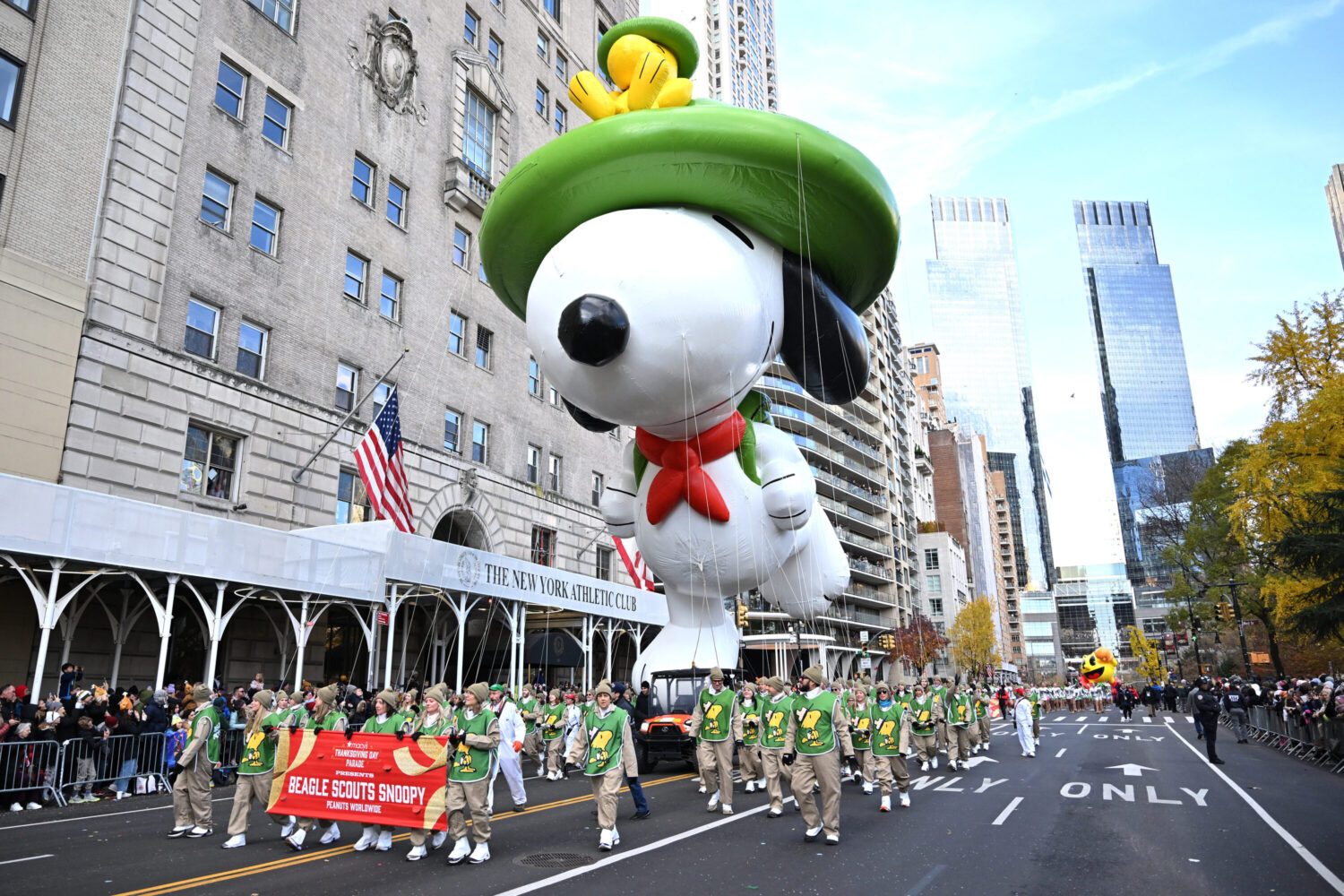
The famous Macy’s Parade balloons made their debut in 1927, with the honour of the first character going to Felix the Cat. It is a dog, however, who has been flown through the streets of Manhattan on Thanksgiving more than any other. Since 1968, Snoopy, Charlie Brown’s loyal companion from the beloved Peanuts comics by Charles M Schulz, has clocked up more than 40 appearances with eight different balloons.
16. Calvin Coolidge was sent a raccoon for his Thanksgiving meal
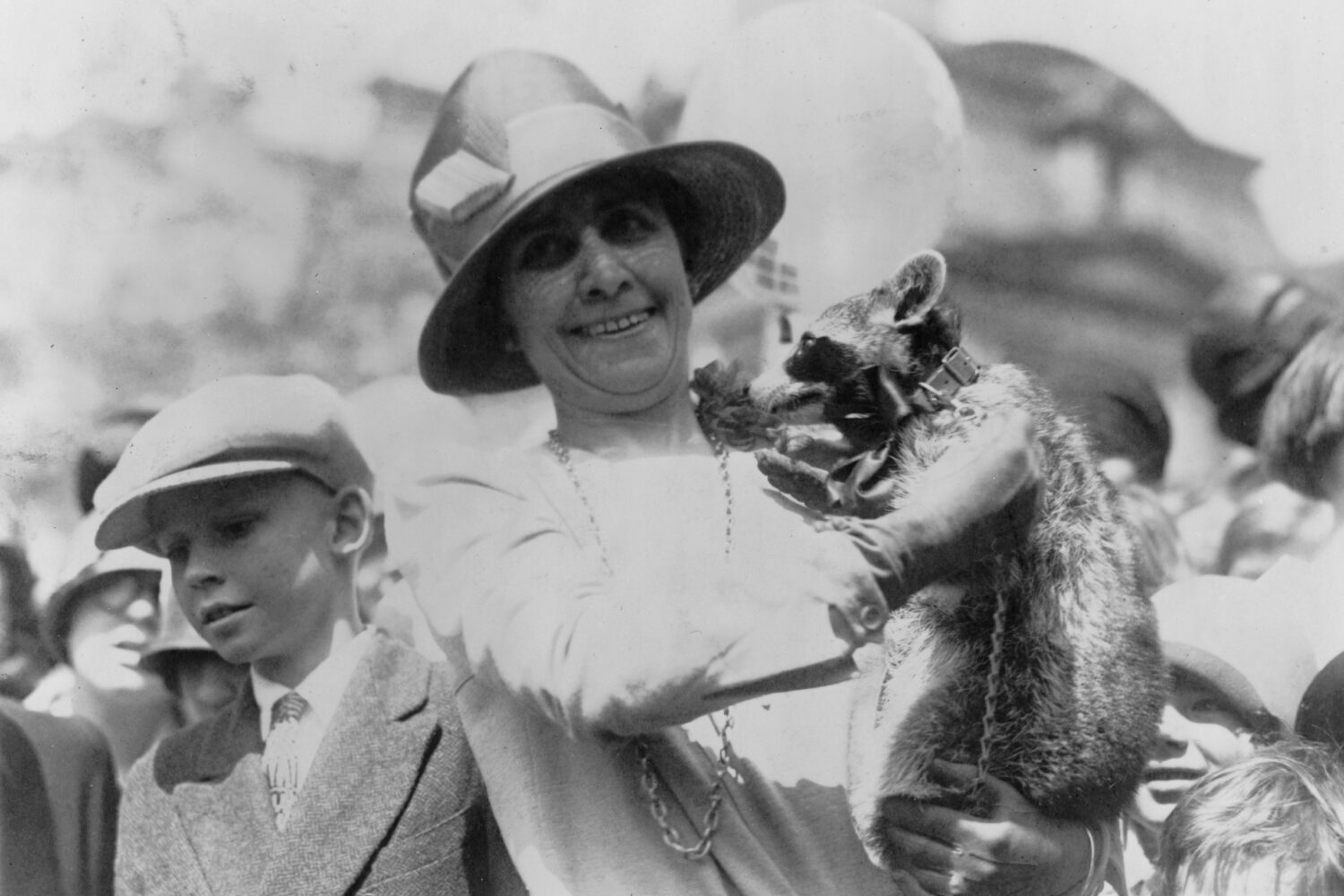
In 1926, President Calvin Coolidge received an unusual present from one of his supporters: a live raccoon, along with a note suggesting that it would make a delicious Thanksgiving meal. Rather than send the animal to the oven, though, Coolidge decided to keep it as a pet. Named Rebecca, she had free rein of the White House and its grounds, and at the end of his presidency Coolidge and his wife, Grace, sent the raccoon into retirement at a zoo in Washington, DC.
- Read more | 10 famous people in history and their bizarre pets
17. The Detroit Lions always play Thanksgiving football
American football is as much a part of Thanksgiving as turkey, with millions tuning in to the blockbuster matches that afternoon. It’s a big day for the sport, but especially for fans of the Detroit Lions since they play every year.
This custom goes back to 1934. When radio executive George Richards bought an Ohio-based team and moved them to Detroit, Michigan, he had the idea to drum up excitement by putting on a game on Thanksgiving, when everyone was off work.
It was inspired: the game between the Lions and the champion Chicago Bears sold out, and became an instant annual tradition. In 1966, the Dallas Cowboys got in on the act and now they have their own game too.
18. There were two Thanksgivings in 1939, 1940 and 1941
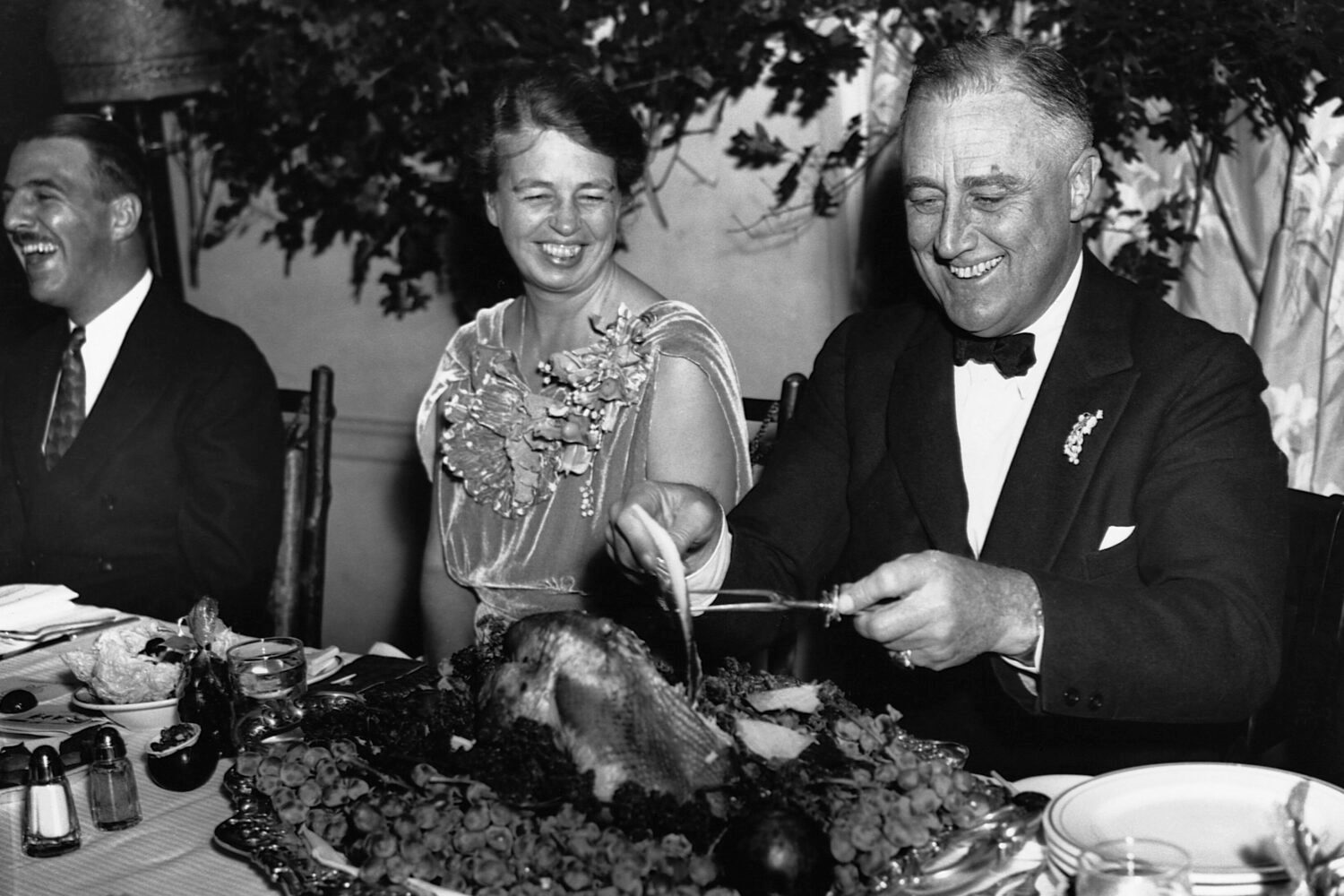
President Franklin D Roosevelt made a bold decision in 1939 to go against precedent and move Thanksgiving up a week. The issue was that the traditional date for the holiday fell on the last day of November that year, leading retailers to warn FDR about the economic damage a late Thanksgiving would have on Christmas shopping.
Not everyone was happy with the date change, dubbed ‘Franksgiving’, with Time magazine even comparing FDR to Adolf Hitler. With many states ignoring it and celebrating on the usual day, the US had two Thanksgivings.
- Read more | “We analysed Hitler’s DNA – and what we discovered made us gasp”
Despite the criticism, the president doubled down and did the same thing the following year. Congress got involved in late 1941, passing a resolution to set the date for Thanksgiving once and for all – but not before that year’s festivities had already been impacted too.
19. The day after Thanksgiving is the busiest day of the year for plumbers
Perhaps this should not be all that surprising: with large groups gathering under a single roof to eat a huge meal, clogging up the kitchen drainage and – ahem – bathroom pipes, the pressure on America’s plumbing peaks at Thanksgiving.
The day after the celebrations, therefore, proves to be an extremely busy time for plumbers. One national company claims they see a 50 per cent increase in calls from the average Friday. While everyone else is calling it ‘Black Friday’, the plumbers of America have come to refer to it as ‘Brown Friday’.
20. Presidents have the power to pardon turkeys
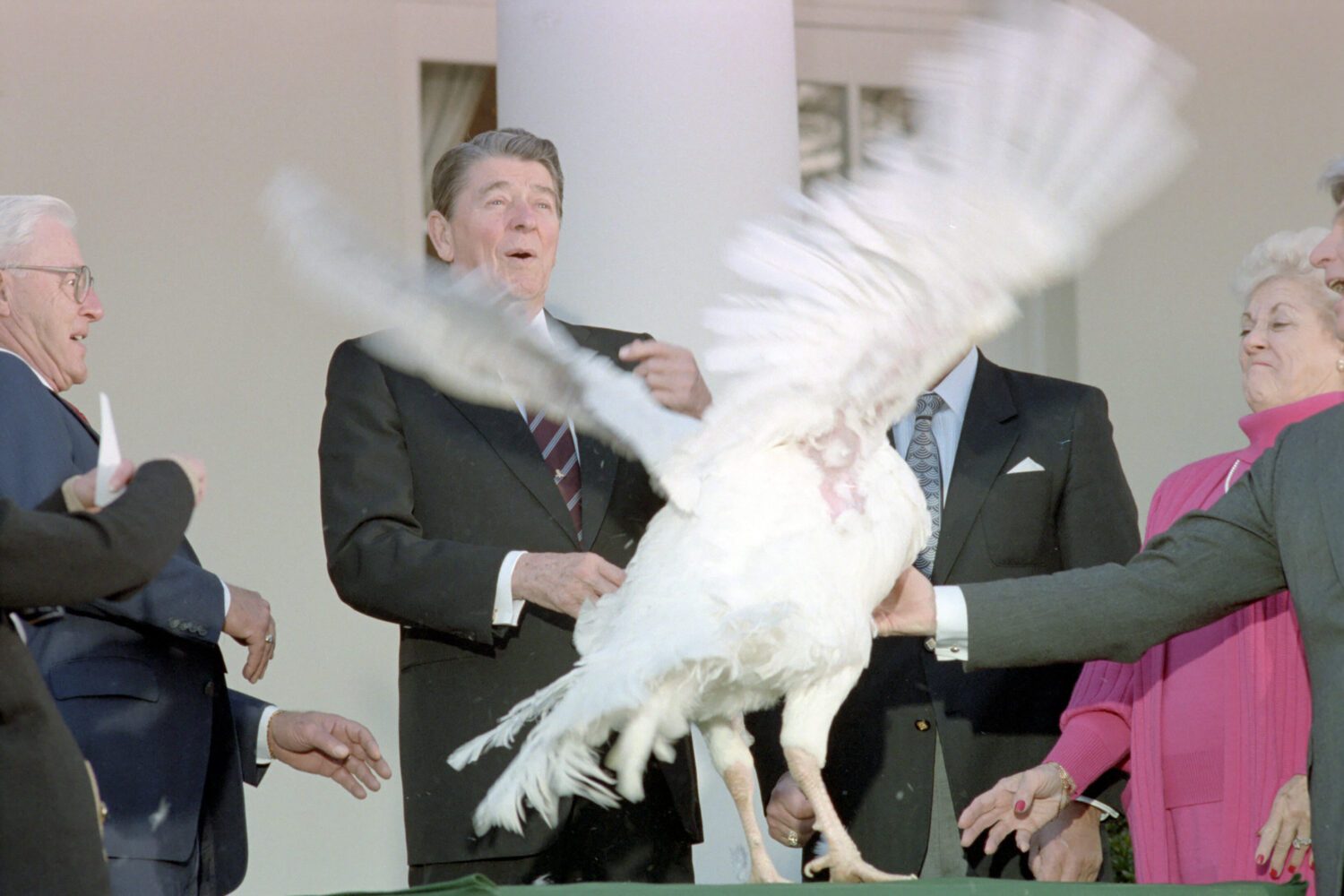
Every Thanksgiving, the president performs one of their stranger duties: the pardon of one or two turkeys. Freed from the dinner table, they are sent for a long life on a farm or petting zoo (or, in some cases, Disneyland).
The custom officially began with George HW Bush in 1989, although its roots go back further. When a turkey was sent to the White House for the Thanksgiving meal, JFK, Richard Nixon and Jimmy Carter all chose to let them live. Ronald Reagan did the same, although he went so far as to use the word “pardon”.
21. The same day also marks the National Day of Mourning
For many Americans, Thanksgiving is not a cause for celebration, but a stark reminder of the oppression of the Native American population. The image of the first Thanksgiving – where European settler and indigenous people sat side-by-side in peace – is a myth that glosses over the centuries of brutality and persecution that followed. The last Thursday in November, therefore, is a time of protest.
It began in 1970 when Wamsutta Frank James, an elder of the Aquinnah Wampanoag, was refused the chance to give a speech he had written for the 350th anniversary of the arrival of the Mayflower, which spoke of the painful legacy of colonisation and governmental subjugation. Instead, he led a group of protesters in Plymouth and declared the first National Day of Mourning.
Today, the United American Indians of New England (UAINE) organise a march and rally to honour their ancestors and educate the public about why Thanksgiving should be about more than giving thanks.
]]> HistoryExtra <![CDATA[Daily Quiz: 24 November]]> https://www.historyextra.com/membership/daily-history-trivia-quiz/ 2026-11-24T07:00:05.000Z 2026-11-24T07:00:05.000Z View Riddle on the source website
If you want to test your historical knowledge further, why not try our weekly crossword too?
]]> HistoryExtra <![CDATA[Why sex was a sin]]> https://www.historyextra.com/membership/sex-sin-celibacy/ 2026-11-23T21:31:03.000Z 2026-11-23T21:30:08.000Z Christianity has always been a religion of family values, right? Not if you know anything about its history. For centuries, Christians valued celibacy – that is, abstention from sex and rejection of family life – well above wife and kids. Celibates, especially professed monks and nuns, would get to heaven more quickly than the married.
It was possible to rescue married people from marriage if they made the turn into monastic life. Listen to this horrible tale from one of the leaders in early monasticism, the fourth-century monk John Cassian. In his book of instruction, The Institutes, Cassian reminisces about Patermutus (‘the silent father’), a wealthy man who wanted to embrace the religious life and brought his eight-year-old son along when he entered a monastery. The abbot was having none of this and, seeking to sever the biological bond, separated father and son in different institutions.
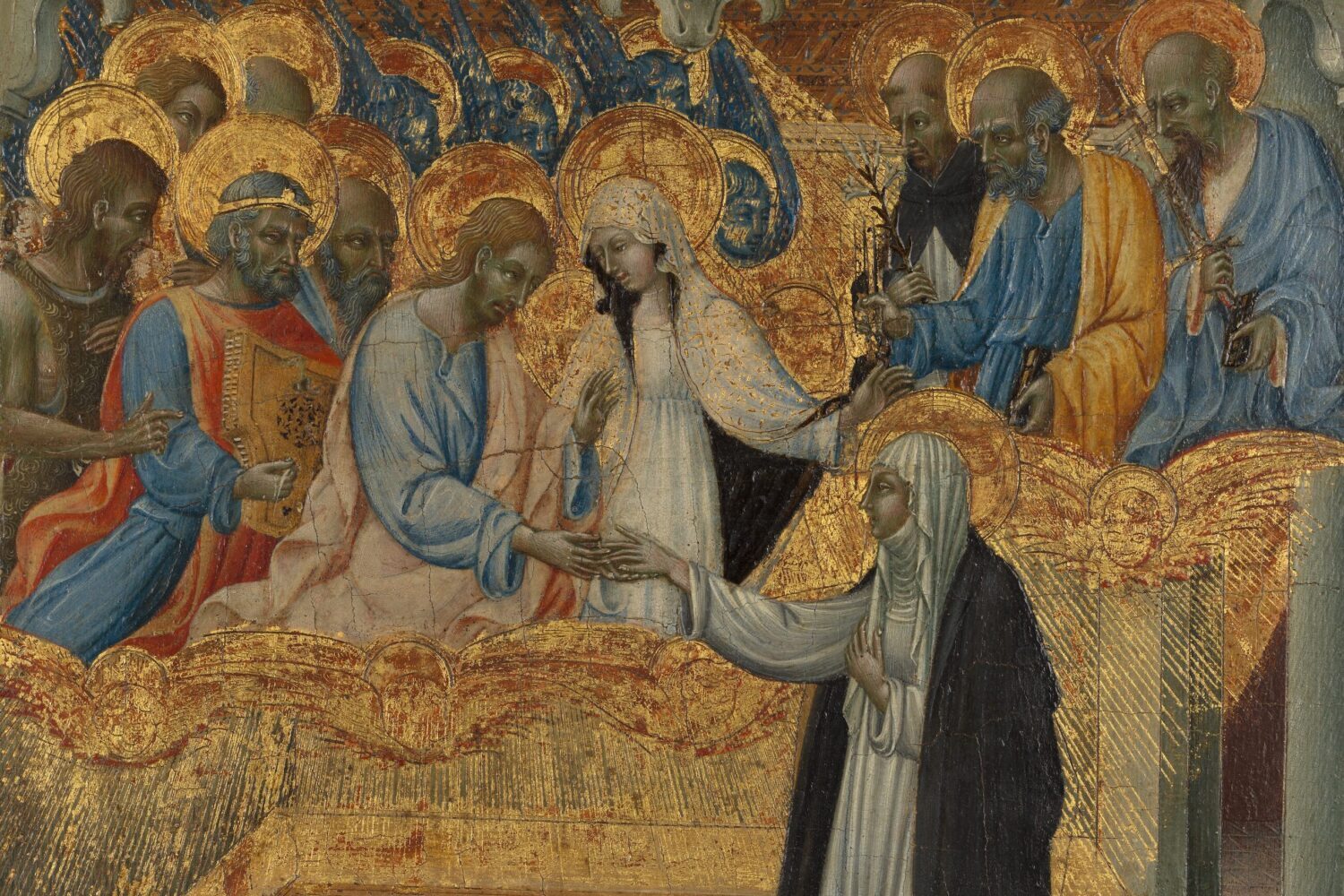
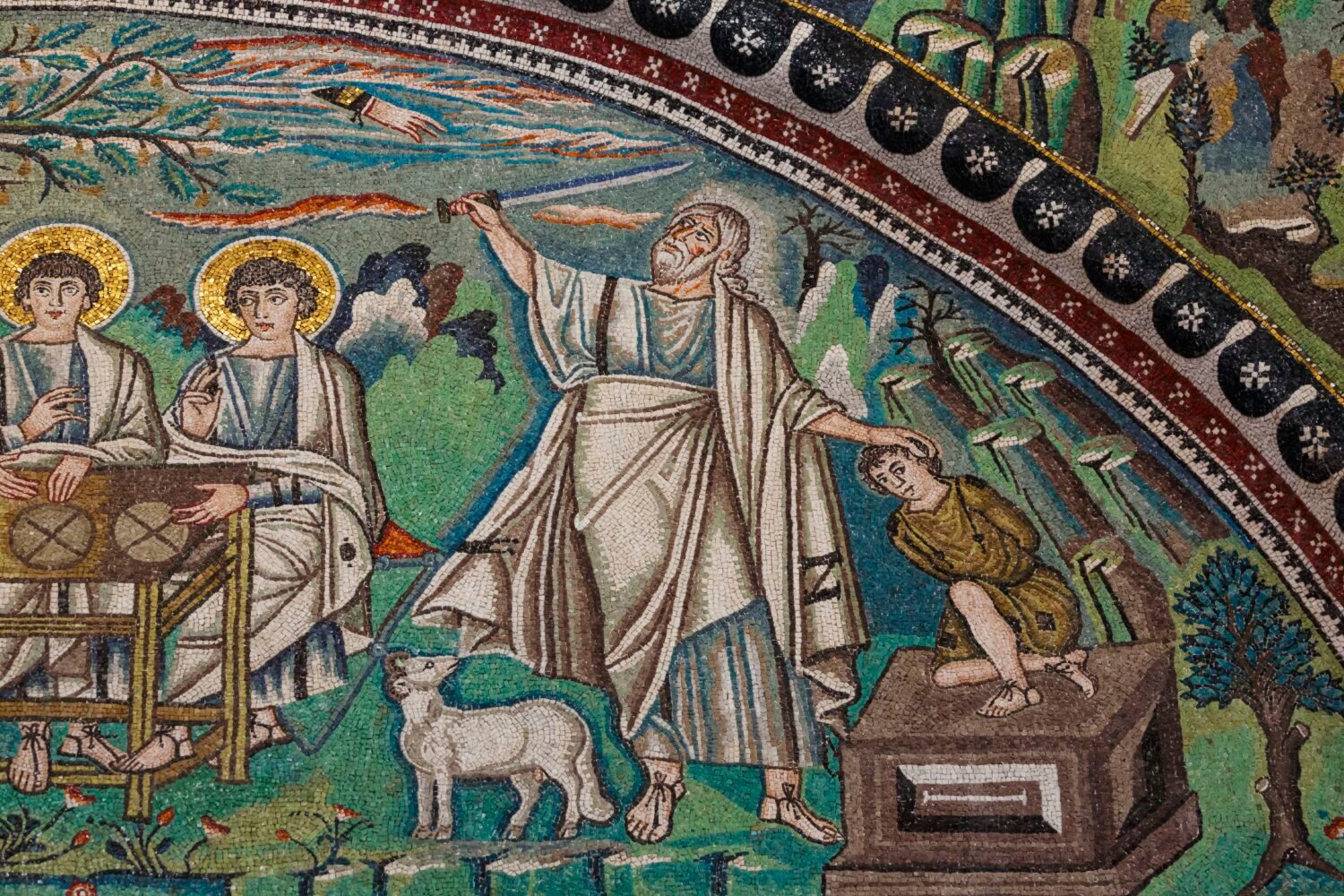
Patermutus was then sadistically tested. He heard that his little son was “purposely neglected”, “clothed in rags” and left filthy, even randomly beaten until he cried, just to emphasise that the natural father should not intervene in this cruelty. The story shockingly culminates in a ritually enacted parody of the Old Testament patriarch Abraham offering his son Isaac for a sacrificial death. The abbot ordered Patermutus to throw his son into the river, and the pair were actually at the water’s edge before two strategically placed monks intervened to tell the father he had passed the test of loyalty to his new vocation. Like Isaac, the boy did not die, but now Patermutus had lost everything from the past. He was no longer even a parent.
Cassian’s readers were expected to commend the tale of Patermutus and his little son, because Patermutus had become a celibate. From at least the fourth century, celibate men and women – hermits, monks and nuns who had rejected involvement in any form of sex – were seen as spiritually superior to conventional biological families which arise from the messy business of sexual relations. That remained so for the next millennium, especially in the western church. But why?
Confronted with this question, it may seem reasonable to start by looking for clues in the Hebrew Bible or the Christian New Testament. But there’s little or nothing in either that provides a basis for monastic life or celibacy. Just the opposite. Judaism was, and remains, a religion where the family unit is central, and the first generations of Christians pictured in the New Testament do not seem to have been too different in their attitudes.
- Listen | Sex and Christianity: 2,000 years of love and fury
Instead, it’s second-century Syria that provides the first sighting of the practice of celibacy, long after the last books in the Bible were written. Geography and the interaction between Christians and other faiths may provide clues as to where the idea came from.
Syrians were the great entrepreneurs of the eastern Mediterranean. They traded west into the Roman empire, but also east, in India, central Asia, even China. What did they find in the east? Monasteries – communities of celibates, both Buddhist and Hindu. Syrian Christians may have noted a good idea, profited from it spiritually and exported it back home.
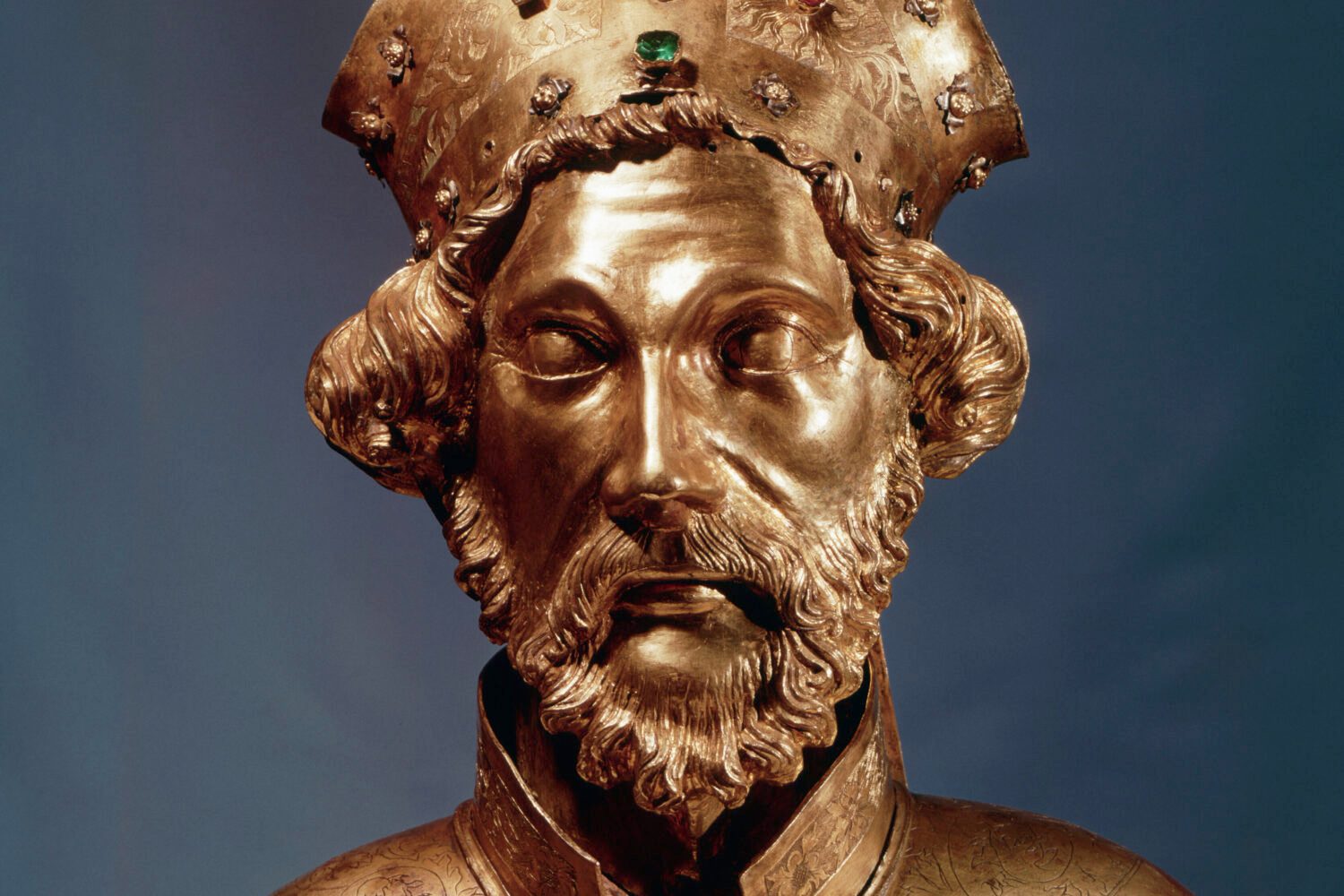
Whatever precisely happened, once monasticism arrived, it was a huge success story. More and more Christians wanted to be monks and nuns because celibacy placed them as near as possible to the angels, God’s immediate servants. The angels were beings with a male character, but increasingly not so male as in the Bible (where you’d be well advised to lock up your daughters while they were around). If humans can be only “a little lower than the angels” (a phrase in the Epistle to the Hebrews), monks saw themselves as the nearest humans to the angels – male, but not too male.
Abstinent fathers
A complication arose in the fourth and fifth centuries, when two different classes of males thought of themselves as like angels: monks and eunuchs. Eunuchs were an important part of Christian society at this time: servants to emperors and empresses, and generals in the Byzantine empire. In the Byzantine church, several of the patriarchs (essentially archbishops) of Constantinople were eunuchs. Confusing things further, quite a few monks were also eunuchs. For ambitious young men, castration might offer a chance for career advancement under the Byzantine emperors.
Monastic life expanded further when the Christian church allied with Roman imperial power, and celibacy became a personal choice in a society that otherwise offered limited choices to most people. Indeed, celibacy provided a chance for individuals to approach union with God by embracing a sort of living martyrdom at a time when actual martyrdom was no longer a possibility because Rome had inconveniently replaced persecution with financial subsidies.
Two of the empire’s best-known early monastic leaders – Pachomios in Egypt and Martin of Tours in Gaul – were former soldiers. When they moved from one single-sex organisation to another – army to monastery – they drew on their experience of Roman military discipline to lead their communities in campaigns of prayer against the Satanic spiritual powers surrounding Christians.
Wandering celibates
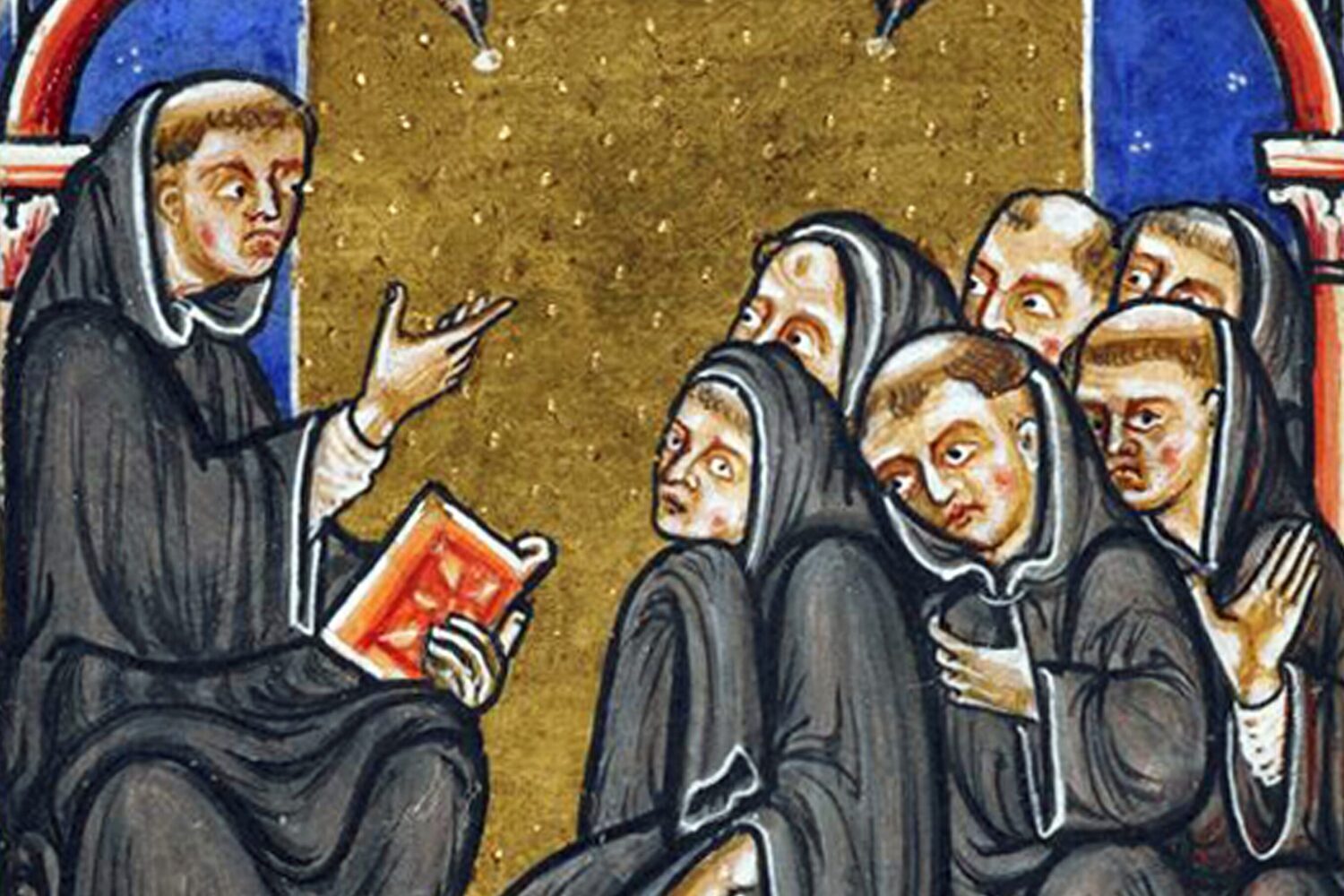
Down the years, differences developed between eastern and western monasticism. Following John Cassian’s teachings, Benedict of Nursia (c480–c547, creator in Italy of the most influential of all western monastic orders, the Benedictines) condemned the eastern customs of two or three monks living together and monks wandering outside any one community. Both forms of celibacy remain common in eastern Christian monasticism, whereas it was the 13th century before the west reinvented a carefully controlled variety of wandering celibate known as a friar (frater, or ‘brother’).
Most importantly, as monasteries became central to the life and culture of western Europe, the western church took a step unique in Christian history. It fused together two different vocations: celibacy and priesthood. This was part of a wholesale reconstruction of western society led by successive popes, especially Gregory VII (1073–85), who was both head of the church and a monk, in what’s often characterised as the ‘Gregorian’ reformation, or even revolution.
- Read more | Has there ever been a married pope?
Originally, very few monks had also been priests and most priests were married but, from the 11th century, Gregory and other western church leaders forbade marriage altogether to deacons, priests and bishops. The logic was that involvement in sex, even marital sex, brought impurity, and impurity threatened the distinctive calling of clergy to celebrate the mass.
A radical divide now chopped western society into two halves: clergy and laity. As the modern historian Dyan Elliott pithily points out, the consequence here is that “a clerical celibate elite requires a copulating laity”, a logic that still shapes Roman Catholic theology of Christian marriage.
Once again, ideas were mutating because, previously, Christian marriage could actually involve rejecting sexual contact. Between the fourth and the tenth centuries in both eastern and western Christianity, you will find stories of saintly husbands and wives, married celibates.
One of the most popular of Anglo-Saxon saints, the high-born Abbess Etheldreda (Æthelthryth) of Ely (c636–679), was venerated even though she refused to have sex through two successive royal marriages. All this changed during the Gregorian revolution as marriage became not simply the only setting where procreation should take place, but was defined by procreation – and as much as possible. This notion is no older than the 11th and 12th centuries.
In the 16th century, Martin Luther and his fellow Protestant reformers challenged this neat twofold vision of society by rebelling against what they saw as the corruption of the old western church. The chief symbol of this corruption was the celibacy of the clergy. Luther proclaimed that clergy were no different from other humans – and, like other human beings, should be given the chance, indeed almost be required, to get married and procreate. Luther set an example by marrying a former nun, Katharina von Bora, enjoying a boisterously happy family life.
As a result of the shift in thinking triggered by Luther’s Reformation, monasteries were dissolved. All over Protestant Europe, one can view their poignant ruins, as well as enjoy some of the great monastery churches that survived only because Protestants turned them over to use as parish churches. Visit Tewkesbury ‘Abbey’ in Gloucestershire or Dorset’s Christchurch ‘Priory’ to see how splendid their monasteries had once been.
In both Reformation Europe and within Protestantism as it spread around the world, celibacy became regarded not just as second-best to marriage but, worse than second-best, a popish superstition. Clergy families once more took a leading role all over Protestant Europe. In fact, their presence in the community made role-models for other families. (Here, I should declare a vested interest. I come from one of those clerical families, indeed a clerical dynasty.)
- Read more | Sex and the (Vatican) City: a brief history of clerical celibacy
Yet, once again, there was a reaction as the western church vigorously reaffirmed medieval attitudes to celibacy. The Council of Trent, which fleshed out the ‘Counter-Reformation’, Catholicism’s fightback against Protestantism, pronounced anathema (the most solemn curse possible) on anyone claiming that “the married state excels the state of virginity or celibacy, and that it is better and happier to be united in matrimony than to remain in virginity or celibacy”.
There was also an expansion in the forms of celibate life available to the faithful, courtesy of the emergence of Ignatius of Loyola’s Society of Jesus, better known as the Jesuits. Founded in 1540, the society was from the off an international organisation that offered celibate men rigorous training. In turn, Jesuits offered elite lay families a broadly based and sophisticated education for their sons. Female celibate allies of the Jesuits, the ‘Ursulines’, performed a parallel service for girls.
In countries where the Catholic church held sway, the ideas of the Counter-Reformation were in the ascendancy for two centuries. But then, in 1789, came the French Revolution. This particularly targeted priestly celibacy in a steadily more brutal campaign against the power of the old church. Clergy were hunted down for death, imprisonment or exile, and their only reliable safe course was to marry.
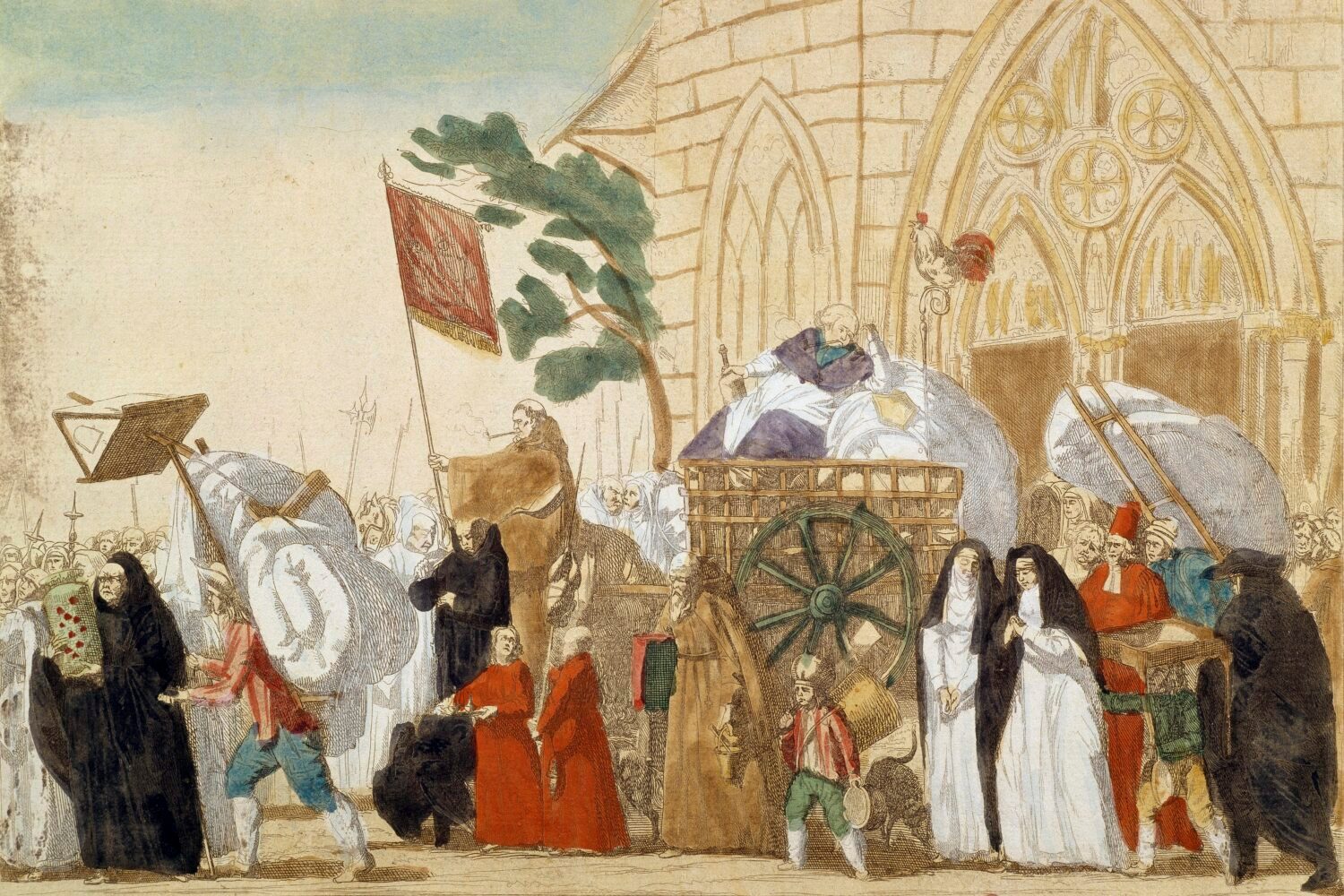
When something of the old Catholic framework returned after 1801, the year Napoleon and Rome thrashed out a deal agreeing the status of the church in France, more than 3,000 members of the clergy, including around 1,000 monks and nearly 300 nuns, sought papal absolution for the ‘sins’ they had committed over the previous decade. In bewildering times, it’s likely many more chose not to reveal what they had done.
Decline of the west
Priestly celibacy was restored in the newly assertive Catholic church, but in the 20th century it faced new challenges, with many Catholic clergy or potential clergy hoping to see it made optional. Instead, Pope Paul VI reaffirmed its compulsory nature in 1967. Many priests renounced their public ministry to marry. In the west, numbers seeking ordination began an inexorable decline.
Among Catholics in many parts of Africa, where marriage is considered de rigueur for everyone regardless of clerical status, the reaction was simply to carry on as usual and to look benevolently on Catholic priests who cherished spouses and offspring. In Africa, significantly, vocations to the priesthood have continued to flourish.
Meantime, Protestant hostility to celibacy and life in monastic communities took a long time to fade. But, in the 19th and 20th centuries, the ‘Anglican’ successor-churches of the Church of England across the world – both within and beyond the British empire – revived communities of monks, friars and nuns. Other churches have experimented with communities, welcoming celibates or exploring religious communal life.
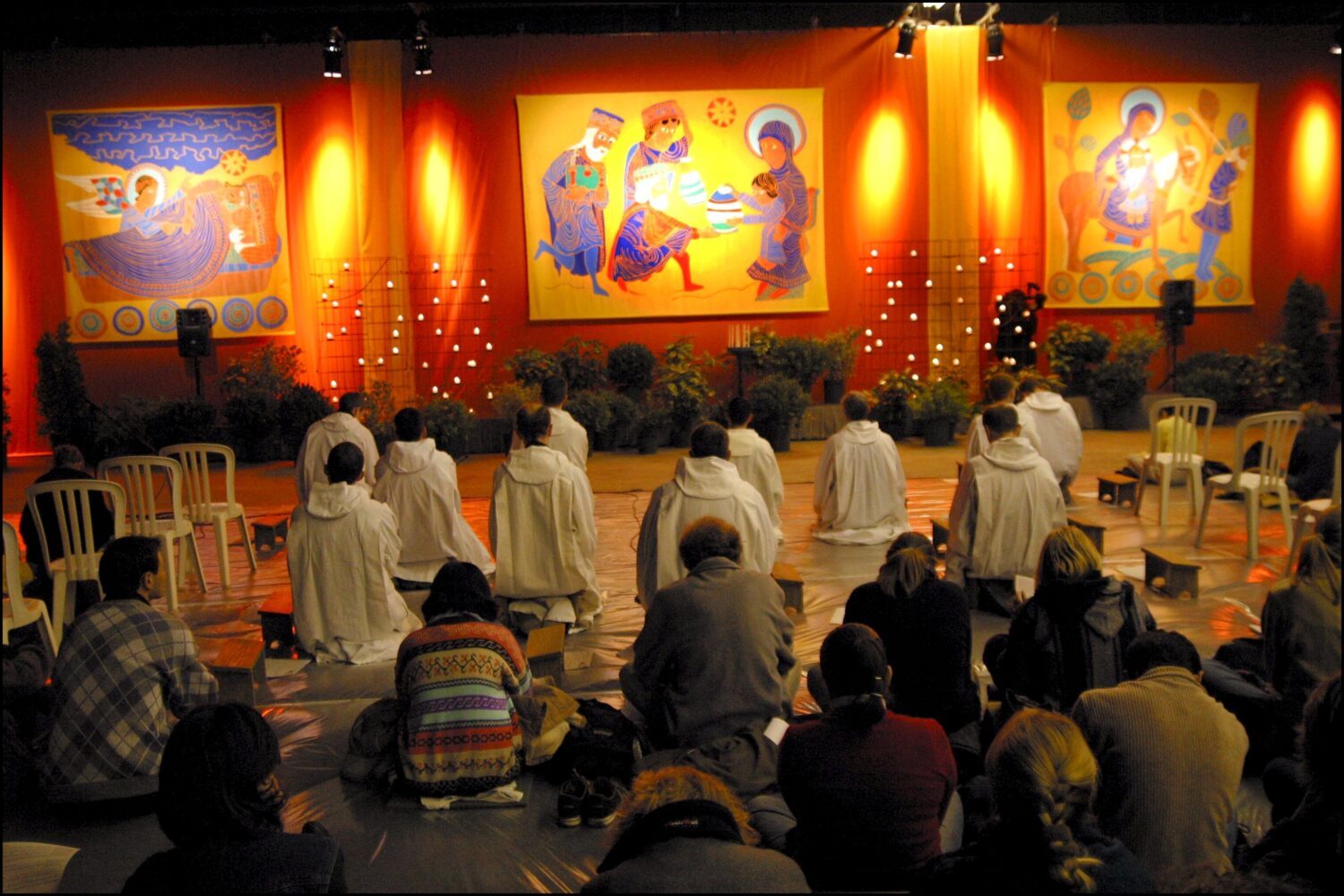
Think of the ecumenical Iona Community, established in 1938 when a team led by the Scots Presbyterian minister George MacLeod began the restoration of the island’s ancient abbey. Even while celibate numbers have fallen across the western world, these new developments show the continuing liveliness, and adaptability, of the ideal.
Hospitality, always a basic principle of Benedictine monasticism, has blossomed into a veritable industry of monastic retreats and guides to spiritual direction. Fascinatingly, monasteries and nunneries appeal to so many precisely because of their counter-culturalism: in a self-centred and materialistic world, they are devoted to what an ancient Greek philosopher called “that yonder”. For all the historical tensions over the role of celibate religious orders, monasteries and nunneries continue to draw us in – above all, perhaps, when we need a break from the hurly-burly of family life.
Less sex, more power? How celibacy helped early Christian women find their voices
Women were involved in the celibate enterprise as early as men. And in Christianity’s first recognisably celibate group – which appeared in Syria in the second century – we see celibacy offering female believers liberating opportunities.
Syria was a pioneer in Christian music, and the involvement of women as well as men in public musical activity within the group radically infringed gender conventions in the Graeco-Roman world that women should keep silent in public. These proto-nuns were preserved from scandal by the holiness of their celibate state.
That’s not to say, however, that early nuns didn’t run into tensions with conventional male society. They could face misogynistic hostility, even from monks worried about their own emotions. One Egyptian monk turned aside from the road to avoid meeting some travelling nuns. He was rebuked by their abbess, who pointed out: “If you had been a perfect monk, you would not have looked at us, and you would not have known that we were women.”
Celibacy helped women find their voices in the medieval western church. While the growth of universities (all-male institutions) excluded women from scholarly study, they could continue their own explorations for God in ways that outflanked male theologians, through mysticism. Female mystics were far more ready than men to seize on themes of marriage and motherhood in expressing what they felt about their relationship with God, transforming the dependency assigned to women by medieval society.
Visionaries recounted experiences like changing babies’ nappies. Adelheid of Frauenburg, a 14th-century Dominican nun, was reported as wishing to “remove her skin so it could serve as a nappy for Our Lord, her veins to be made into a skirt [for him]”. Sometimes such exuberant female constructions sound suspiciously as if designed to test out the embarrassment thresholds of senior male clergy.
The delicate balance between spiritual freedom and male efforts to control it have remained a theme in female celibate life over the millennia.
Diarmaid MacCulloch is emeritus professor of the history of the church at the University of Oxford. His books include Lower than the Angels: A History of Sex and Christianity (Allen Lane, 2024).
This article was first published in the Christmas 2024 issue of BBC History Magazine
]]> Michael Wood <![CDATA[I explored the home of a mysterious ancient civilisation – and I'll never forget what I saw]]> https://www.historyextra.com/membership/ancient-civilisation-greece/ 2026-11-23T15:31:03.000Z 2026-11-23T15:30:45.000Z We are just back from a late break on Amorgos, a rocky island whose cultural traditions are typical of the Cyclades: Greek, Roman, a fine Hellenistic watchtower, medieval rural chapels and a soaring Byzantine monastery. From our taverna, shaded by gnarled tamarisks, the vista takes in Naxos and the circle of the Small Cyclades, like an inland sea, a world of its own.
In the middle, so close to the tourist hotspots, is the tiny, uninhabited island of Keros. Today it is afforded the highest protection of any Greek archaeological site, prohibited to visitors because of the danger of looting. You can view its rugged shore from a caique (a wooden boat) from nearby Koufonisi.
Keros was the centre of the still mysterious Cycladic culture, which preceded the Late Bronze Age Mycenaean culture and classical Greece in the third millennium BC. It only became known to archaeology in the 19th century with the discovery of Cycladic figurines, famous now around the world. The first, found in 1873, was a stunning, roughly lifesize, female head, now in the Louvre, which inspired the likes of Picasso, Braque and Modigliani as they sought to break away from European realism to find some earlier, more authentic root. But the preliterate culture these Cycladic masterpieces came from has remained a mystery. Only now is new light being cast on the role of Keros as the original symbolic centre of the Cyclades.
For that we have to thank two recently lost giants of modern Cycladic archaeology: Lila Marangou and Lord Colin Renfrew. Lila, a native of Amorgos, died last winter, and ‘Milord’ Renfrew, the ‘friend of Amorgos’, two years ago. Colin was renowned for his talks in Greek about the digs in the square in the island’s capital. We will miss them both. They helped create the big picture – nothing less than the discovery of the origins of Cycladic culture.
The story began with a rescue dig in Keros in the 1960s, then one by Renfrew and Marangou in 1987, with further explorations in 2007–08 and 2015–18. It continues today with the Keros Project through the Greek Ministry of Culture and the British School at Athens. What has emerged is that Keros was crucial in the emergence of Aegean civilisation – the centre of an extraordinary florescence of imagination, creativity and ingenuity, but one based on the sea, on connectivity. It was a harbinger of the later civilisations of the Aegean, Minoan, Mycenaean, and archaic Greece.
On the tiny islet of Daskalio, once part of the main island of Keros, but now 90 metres offshore, on a steep pyramidal hill, archaeologists discovered a series of structures including a 50-foot-long stone hall, perhaps a guest house. The archaeologists think Keros was a sanctuary or place of pilgrimage from around 2750 BC, a little before the pyramids of Giza.
One intriguing discovery by Renfrew was that deposits of broken statues he uncovered had not been broken on Keros but on other islands and then brought by sea to Keros to be ritually buried. When images of the gods went out of use elsewhere, they were replaced, but reverently interred in what must have been the central shrine of the islands.
What is so fascinating about Keros is that it is a maritime centre, the earliest known anywhere, a precursor of the island of Delos, the ritual centre of Cyclades, 2,000 years later. From the time of the Odyssey, Delos was a place of pilgrimage, the birthplace of the gods. And quite fittingly so, as anyone will know who has watched the dawn break and the islands rise one after the other from the black night, in a creation drama repeated each day, just as depicted in the Greek myths of the Iron Age.
In the more isolated parts of the Cyclades, traditional customs, beliefs in omens and auspiciousness, have hung on tenaciously. In Amorgos there was a water oracle till 1963 when the Orthodox church put a stop to the practice as too pagan. But every year – on 14 August, during the festival of the Virgin Mary – the people sleep in their guest hall at her shrine in the hills and greet the dawn on the day of the Panagia, “the all-holy woman”.
As the Alexandrian poet Cavafy wrote in his poem Ionian Song: “Just because we have broken their statues, and driven them from their temples, does not mean at all that the gods are dead.”
This article was first published in the December 2026 issue of HistoryExtra Magazine
]]> Jonny Wilkes <![CDATA[You've (probably) drunk the rum – but who was the real Captain Morgan?]]> https://www.historyextra.com/membership/youve-probably-drunk-the-rum-but-who-was-the-real-captain-morgan/ 2026-11-23T11:31:04.000Z 2026-11-23T11:30:49.000Z The logo of Captain Morgan, a brand of spiced rum, is the archetypal buccaneer. His buckles could not be more swashed as he stands in his red jacket and tricorn hat, a sword in one hand and his leg resting on a barrel of rum.
The real captain who inspired the brand’s name, however, was not exactly one of those peg-legged, Jolly-Roger-flying, treasure-burying pirates. At the very least, he would not have let out an ‘ARR’ with the stereotypical West Country accent, but a Welsh one.
Who was the real Captain Morgan?
From his youth in Monmouthshire, Sir Henry Morgan rose up to be one of the most powerful buccaneers of the 17th century.
After joining the force that captured Jamaica from the Spanish in 1665, he became a captain of a ship and given a letter of marque, essentially a licence from the English government that permitted state-sponsored piracy. Morgan attacked Spanish ships and ports in the Caribbean and Americas, severely undermining England’s enemy and allowing him to build fabulous wealth from seized booty.
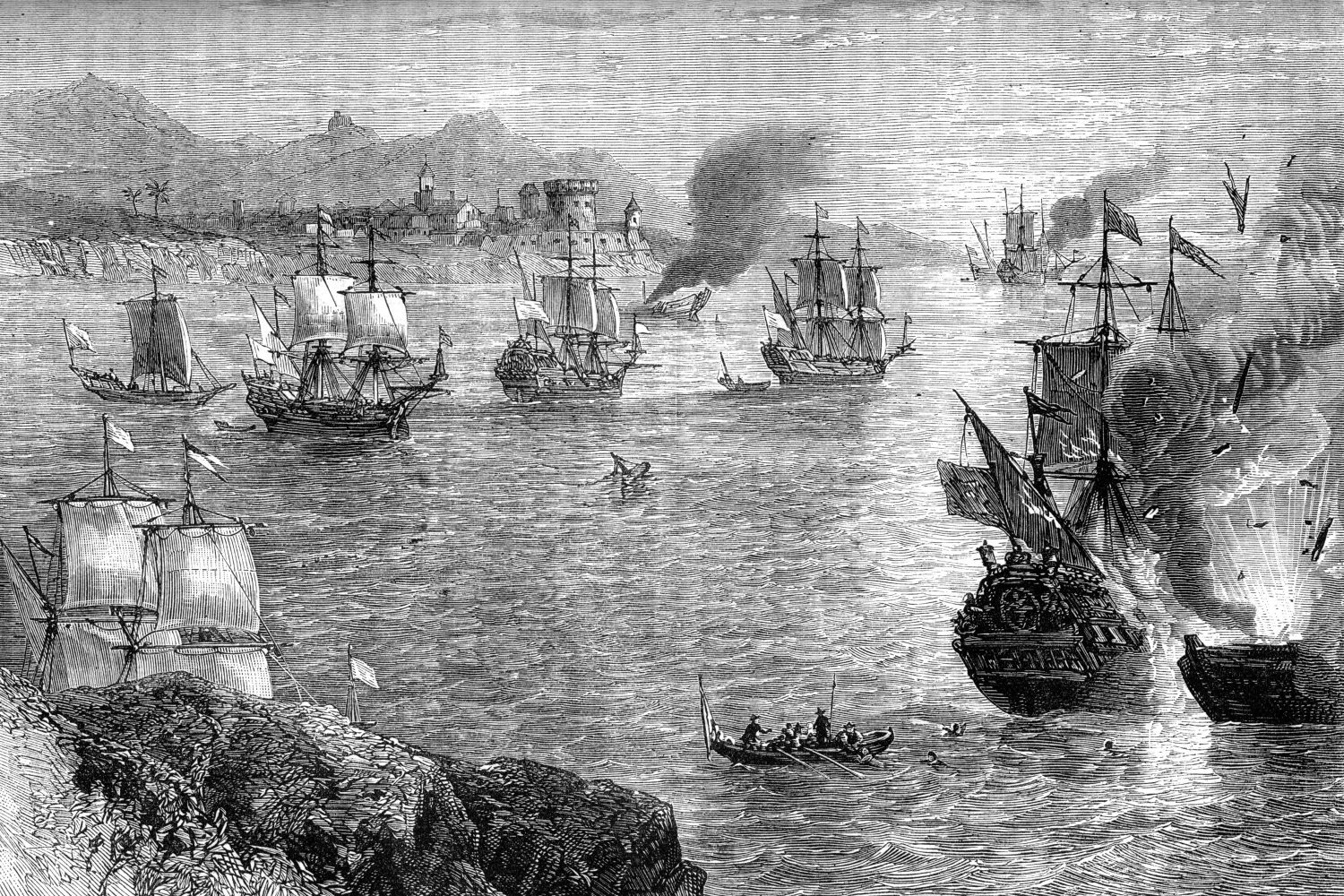
These were not the hit-and-run affairs seen in pirate movies, as Morgan quickly proved himself to be highly skilled at military strategy. At his raid on Maracaibo, Venezuela, he carried out fake landings of his men so that, from a distance, it looked like his force was much larger than it actually was.
By 1670, Morgan commanded a fleet of three dozen ships and a couple of thousand men, earning him the rank of admiral.
His career could have so easily come to a sudden end the previous year, though. In January 1669, Morgan held a council of war aboard his ship, the Oxford, when a spark in the powder magazine caused a huge explosion. Hundreds of the crew perished, as did the captains seated on one side of the council table. Morgan, sat on the other side, was blown into the water but survived.
How Captain Morgan rose, fell and rose again
Famed by the English and feared by the Spanish, Morgan carried out his most ambitious raid in 1671: the capture of Panama City, a rich and well-defended heartland of Spanish America. His men routed a larger force and plundered the city, burning it to the ground in the process, but the loot was not as vast as hoped.
What’s more, the raid had unknowingly come right after England and Spain had signed a peace treaty. An example had to be made: Morgan was arrested and brought back to England.
His downfall would be short lived. Not only was he received in London as a national hero, his skills were quickly needed back in the Caribbean. This time, they were not necessarily as a privateer but a politician. Knighted by Charles II, Morgan returned to Jamaica as lieutenant governor.
There he remained amassing a great fortune from his numerous estates and slave plantations until his death in 1688.
Why was a brand of rum named after Captain Morgan?
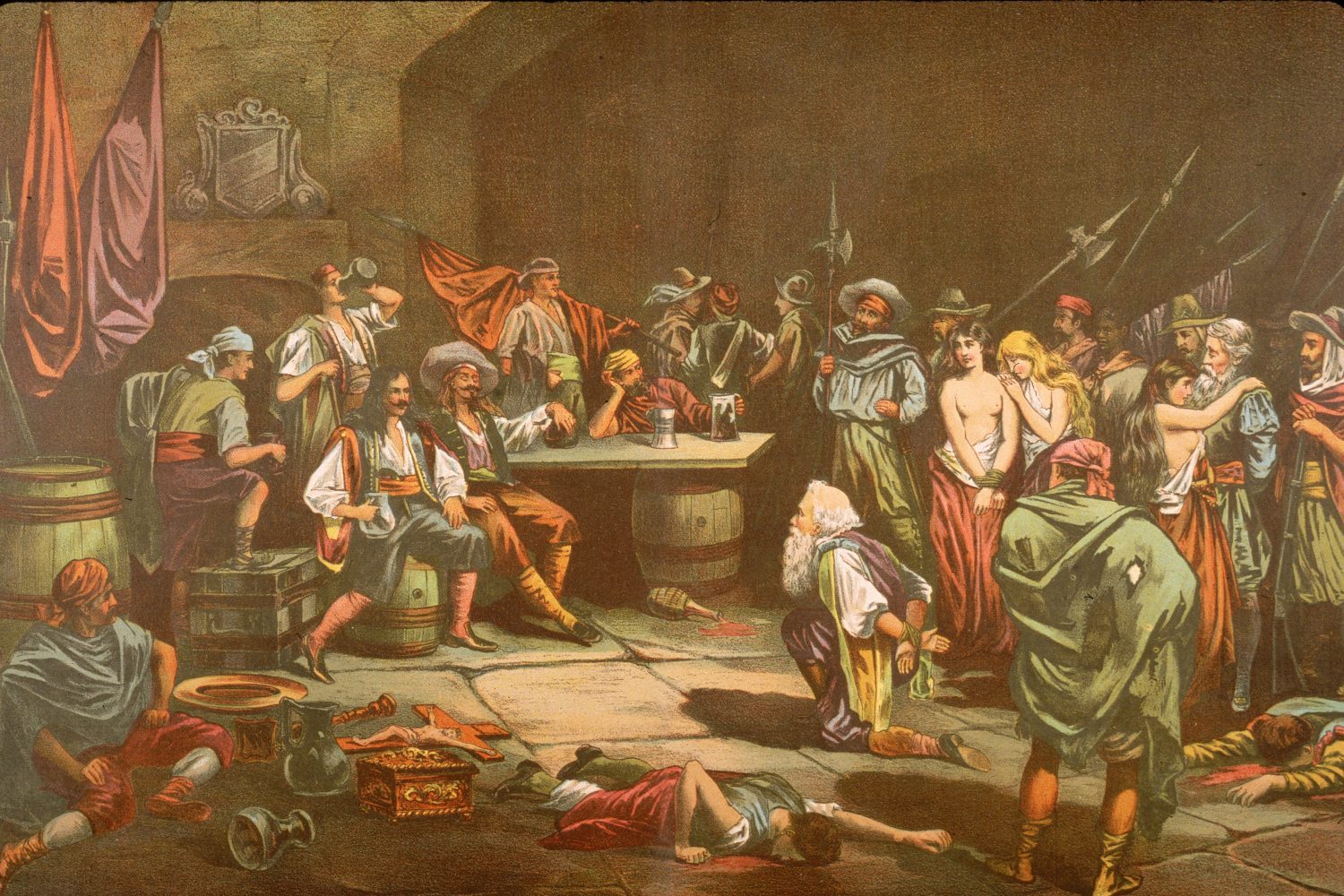
Morgan’s reputation as one of the most bloodthirsty pirates to sail the Seven Seas was partly well-earned, but partly bolstered by a questionable and sensationalistic biography written by a former shipmate, Alexandre Exquemelin. He accused Morgan of a number of atrocities, including the claim that during his raid on Porto Bello in 1668 he used the city’s nuns and priests as human shields.
While Morgan challenged Exquemelin in the courts and won a libel suit against the book’s publishers, this depiction of him has defined his legacy ever since. It certainly helped the alcohol producer and distributor, the Seagram Company, when they were looking for a historical swashbuckler as the name and image of their new brand of spiced rum in 1944.
]]> Dr Annie Gray <![CDATA[History’s Greatest Dishes: Custard]]> https://www.historyextra.com/membership/historys-greatest-dishes-custard/ 2026-11-23T09:02:04.000Z 2026-11-23T09:01:23.000Z Custard began life in a pastry case. So how did a medieval tart filling become a thick, spoon-standing star of the British dessert table? Emily Briffett and food historian Annie Gray whisk us through its transformation, with Bird’s custard powder helping the sauce find its place in the hearts of a nation. Then Annie puts her custard chronology to the test, before tackling the ultimate question: what defines the perfect custard?
Go beyond the podcast
For more on the history of vanilla, don’t miss this HistoryExtra podcast with historian and author Eric T Jennings, and check out this recipe for a rich custard dessert that has graced royal tables through the ages.
More episodes from History's Greatest Dishes:
- Season 1, episode 1: Blancmange
- Season 1, episode 2: Pizza
- Season 1, episode 3: Victoria Sponge
- Season 1, episode 4: Balti
- Season 1, episode 5: Gooseberry Fool
- Season 2, episode 1: Toast
- Season 2, episode 2: Dumplings
- Season 2, episode 3: Jerk Chicken
]]> Piers Mucklejohn <![CDATA[8 of the biggest heists in history – from the Great Train Robbery to the theft of the Mona Lisa]]> https://www.historyextra.com/membership/8-biggest-heists-history-great-train-robbery-mona-lisa/ 2026-11-23T00:33:10.000Z 2026-11-23T00:33:10.000Z The recent hack of the cryptocurrency exchange Binance, in which cybercriminals looted $6.3bn (£4.7bn), now stands as the biggest single financial theft in history.
But for as long as there has been money, there have been those eager to get their hands on it in whichever way possible, however unscrupulous, immoral or even illegal.
The calculated heist or well-orchestrated robbery is one way of getting rich quick, and even has a certain charm, inspiring countless movies where the viewer may well end up rooting for the cunning criminal.
Here are eight of the most daring, dramatic and profitable heists from history...
1. Thomas Blood’s theft of the Crown Jewels (1671)
In 1671, Thomas Blood was an unhappy man. This was because he had made the unfortunate decision to betray the royalist cause in the Civil Wars decades earlier.
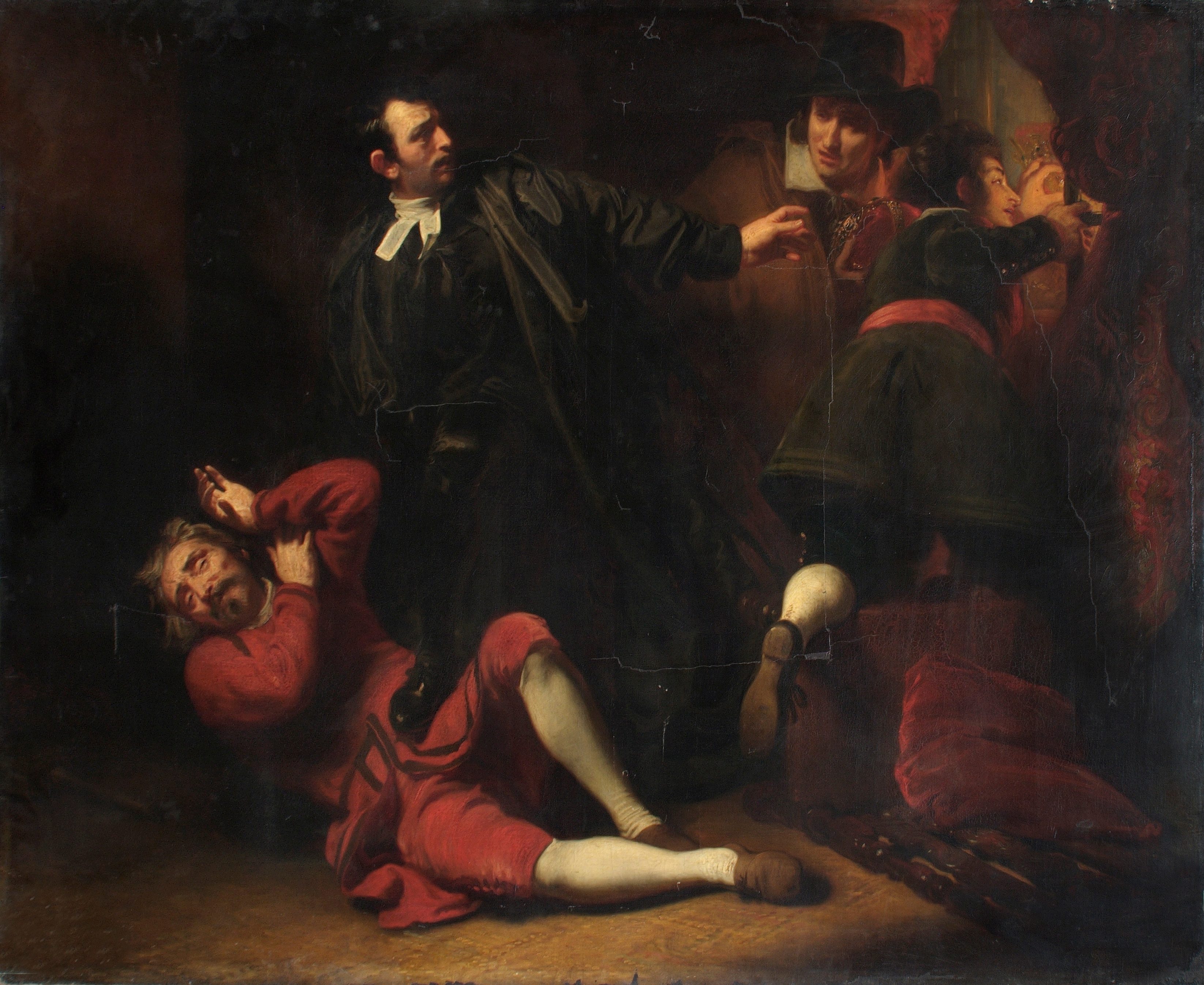
When King Charles II was restored to the throne in 1660, Blood fled to Ireland and had his lands confiscated. After unsuccessfully attempting to spur an insurrection, Blood devised a daring plan: he was going to steal the Crown Jewels. Posing as a parson, Blood visited the Tower of London and befriended Talbot Edwards, the man in charge of looking after the priceless jewellery.
- Read more | The day Thomas Blood stole the Crown Jewels
On 9 May, he returned with a group of accomplices, armed with daggers and pistols. They overpowered the 77-year-old Edwards and snatched the Crown Jewels. To smuggle them out, the gang improvised: Blood used a mallet to flatten Charles II’s crown, the Sovereign’s Orb was hidden in an associate’s trousers, and the royal sceptre was sawn in half.
The group was apprehended before they could make their escape. Blood was interrogated by Charles II himself, who, bizarrely, pardoned the rebellious robber and even granted him lands in Ireland.
2. Great Gold Robbery (1855)
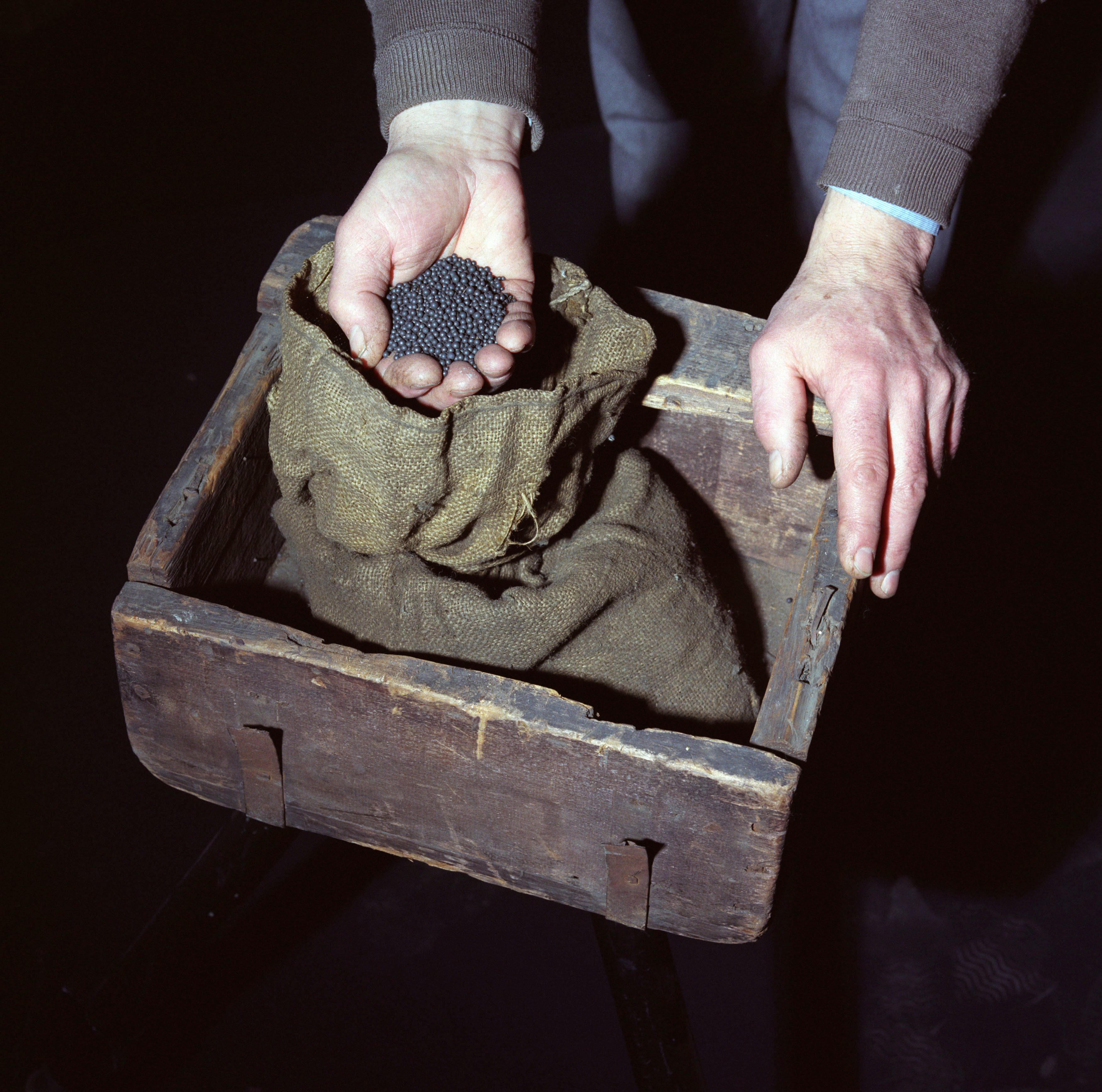
All that glitters, famously, is not gold. And for some unlucky French bank officials in 1855, the same was true even of boxes marked as containing gold bullion and coins. They were shocked to discover that the three boxes, newly arrived by train from London, had been emptied of gold and stuffed full of lead shot.
The robbery seemed almost impossible, and for some time, the police in both countries were baffled. How could the contents of these boxes, securely locked up in travelling safes, have magically disappeared?
- Read more | Dark secrets of the Victorian Underworld
It was, as investigators later discovered, an inside job. The guard responsible for the safes was one James Burgess. He had conspired with a fellow railway company employee, another former employee and the career criminal mastermind Edward Agar to make wax impressions of the safe keys and loot the gold bars, valued at £12,000 (£1.2m today).
Their plot seemed destined to succeed until Agar was convicted of a separate crime of forgery and entered dire financial straits. One of Agar’s accomplices cheated his family out of profits from the robbery, causing Agar to confess to the scheme in revenge. All those involved were subsequently convicted of the heist.
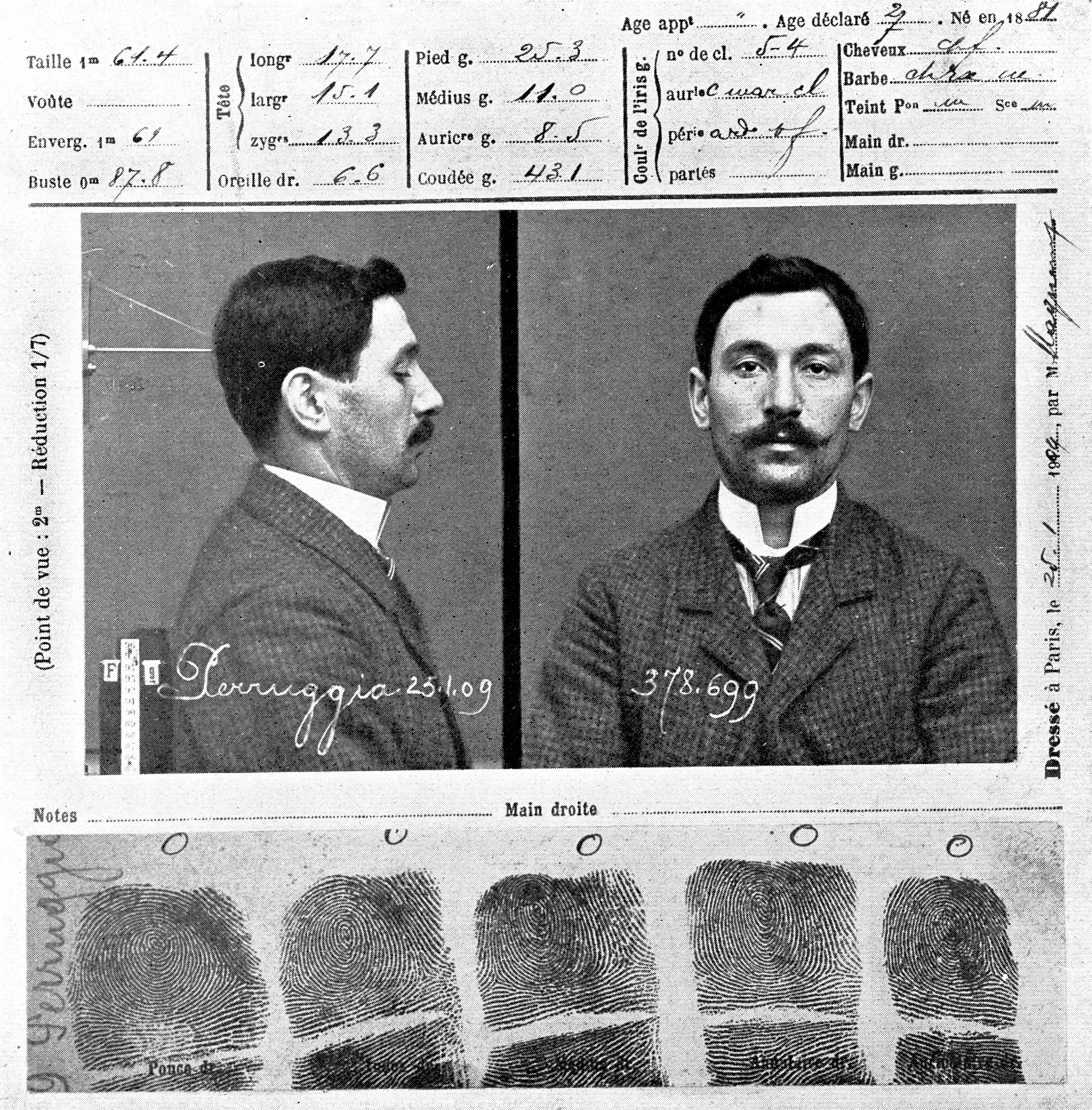
3. Theft of the Mona Lisa (1911)
It’s perhaps the most famous painting in history, but, for a brief moment, the entrancing gaze and mysterious smile of the Mona Lisa disappeared.
That’s because, in 1911, the painting was pinched by the Italian glazier Vincenzo Peruggia, who had worked for a stint at the Louvre museum in Paris, where the 16th-century artwork is held.
Disguising himself as an employee and hiding in a closet overnight, the decorator’s simple heist caused a media sensation and sent the police into a desperate investigation, which even saw Pablo Picasso questioned as a suspect.
Peruggia’s downfall came two years later when he tried to sell the portrait – stashed in the false bottom of a trunk – to an art dealer, who reported him to the police. That, of course, only added to the fame of Leonardo da Vinci’s masterpiece.
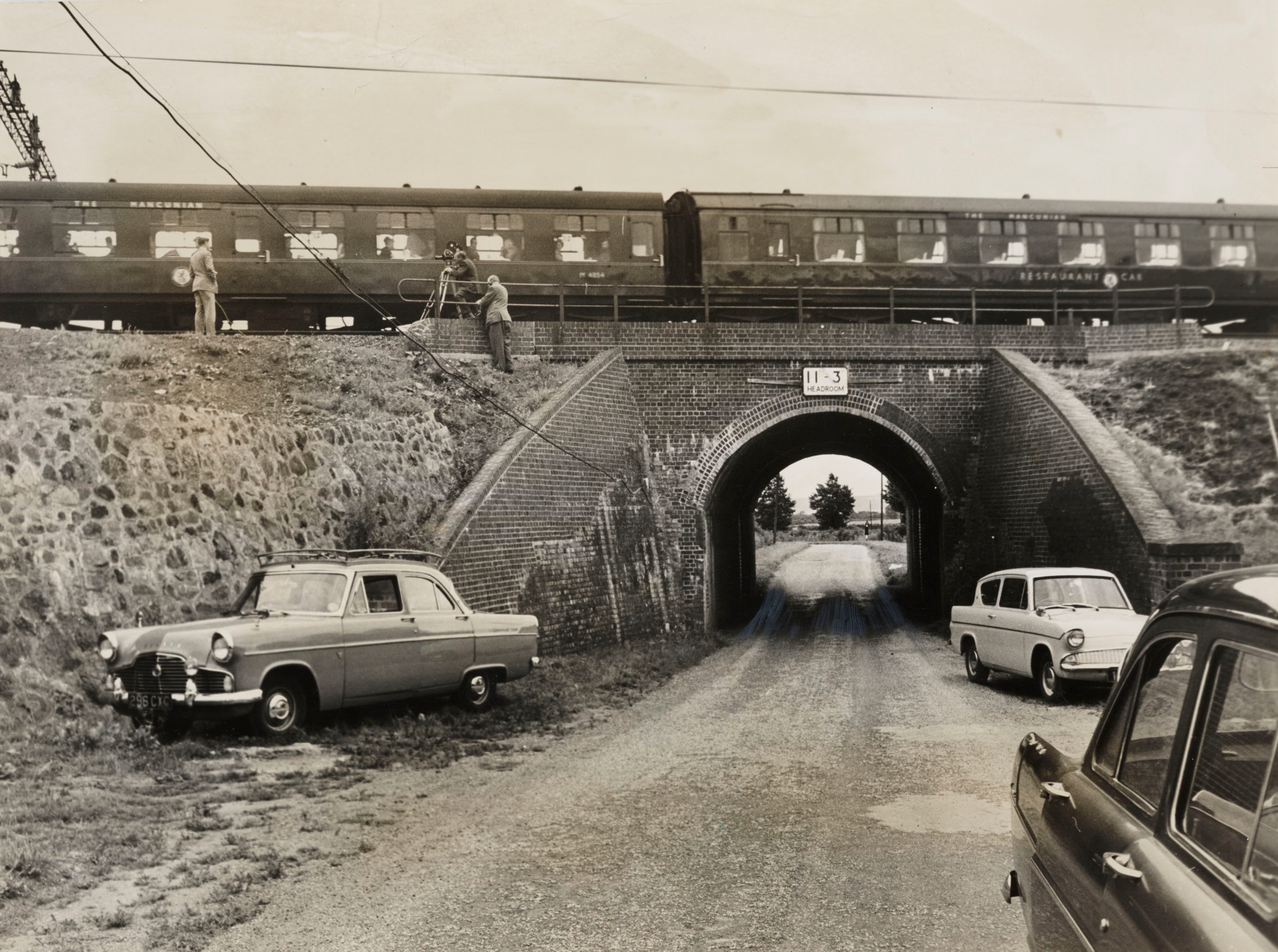
4. Great Train Robbery (1963)
The Great Train Robbery of 1963 is doubtless the most famous heist in British history: a feat of cunning criminal trickery and a good, old-fashioned holdup, all undone by reckless confidence. It netted its perpetrators £2.6m in cash (£49.5m today), and lengthy prison sentences.
At around 3am on 8 August, a group of 15 men intercepted a Royal Mail train travelling from Glasgow to London as it passed through rural Buckinghamshire. They obscured the green light of a signal with a glove and powered the red one with a battery, causing the train to stop. After overpowering the crew, the masked men forced the driver, Jack Mills, to move the locomotive and two carriages further down the track to the Bridego railway bridge, where they unloaded 120 sacks full of banknotes and placed them in a waiting lorry. Most of it was never recovered.
Unwisely, however, the brazen criminals left their fingerprints all over a nearby farmhouse hideout – even playing Monopoly with the looted notes. The men received a combined 307 years in prison sentences, though their ringleader, Bruce Reynolds, evaded capture for five years and two participants, Ronnie Biggs and Charlie Wilson, later escaped from prison.
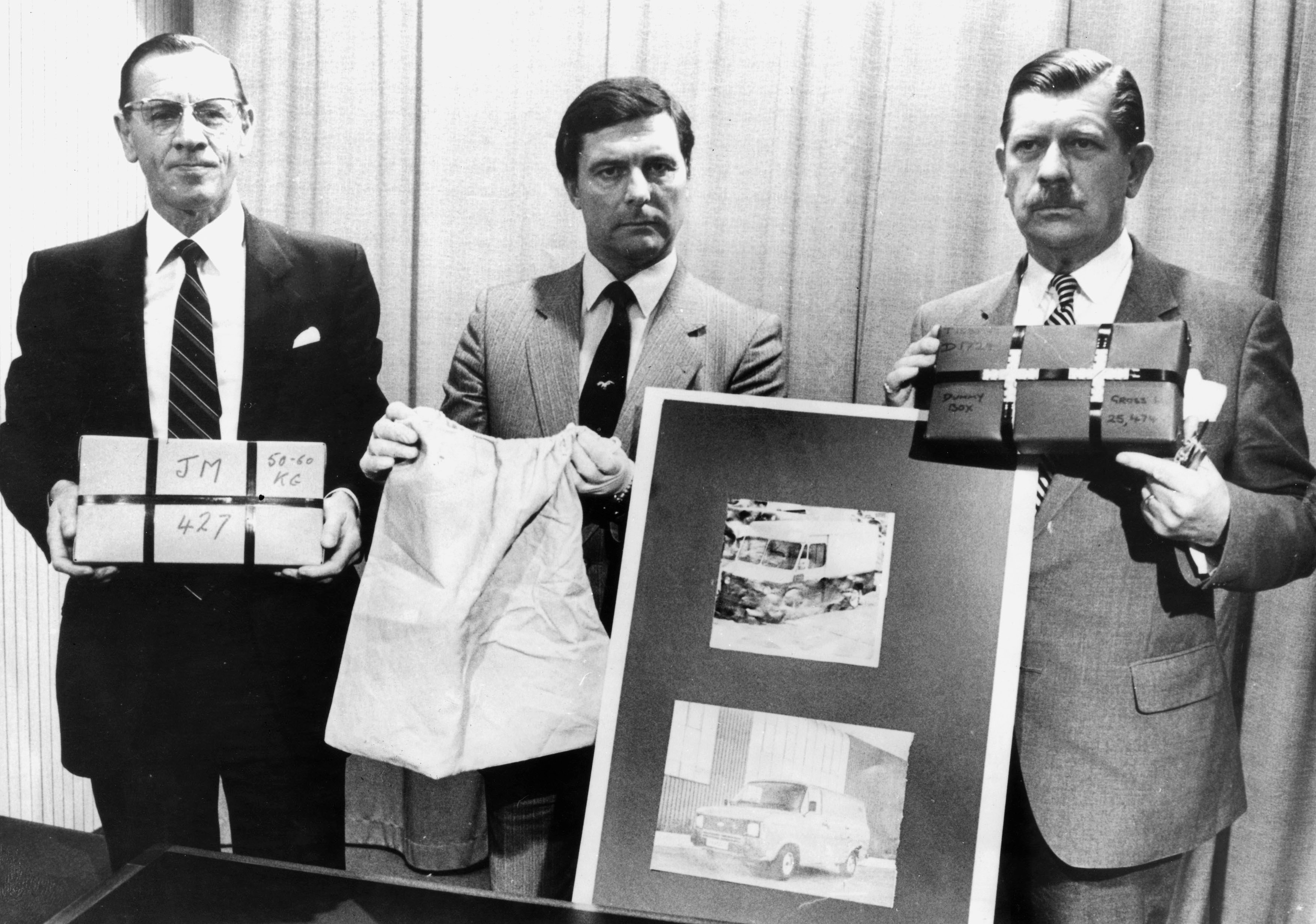
5. Brink’s-Mat robbery (1983)
On the morning of 26 November 1983, a group of men broke into a warehouse near Heathrow Airport owned by the security company Brink’s-Mat. Their targets were thousands of gold bars, weighing a combined three tonnes, and a collection of diamonds, precious metals, cash and traveller’s cheques.
Let in by security guard Anthony Black, who was in on the heist, the robbers handcuffed the other guards, some of whom they threatened to set on fire if they were denied access to the vault. They absconded with goods worth approximately £26m (£92.2m today).
Six men were eventually convicted of the crime, but many more are suspected to have been involved, and millions of pounds’ worth of gold is still missing. Several suspected individuals have subsequently died in targeted shootings, leading to the idea of the “curse of Brink’s-Mat”.
6. Antwerp diamond heist (2003)
So impressive was the theft of $100m of diamonds from a heavily protected underground vault in Antwerp, Belgium, in February 2003 that it was dubbed “the heist of the century”.
The culprits were the ‘School of Turin’, a ragtag group of Italian thieves led by Leonardo Notarbartolo who operated under the not-so-humble aliases of Speedy, the Genius, the Monster and the King of the Keys.
- Listen | History’s Greatest Cities: Antwerp
Perhaps their bravado was warranted: the gang taped over security cameras and disabled the alarm system of the Diamond Centre in Antwerp, the diamond capital of the world, in order to access the vaults.
The thieves might have got away with even more loot but, almost swamped in a pile of diamonds, jewellery and cash, there was simply too much for them to carry.
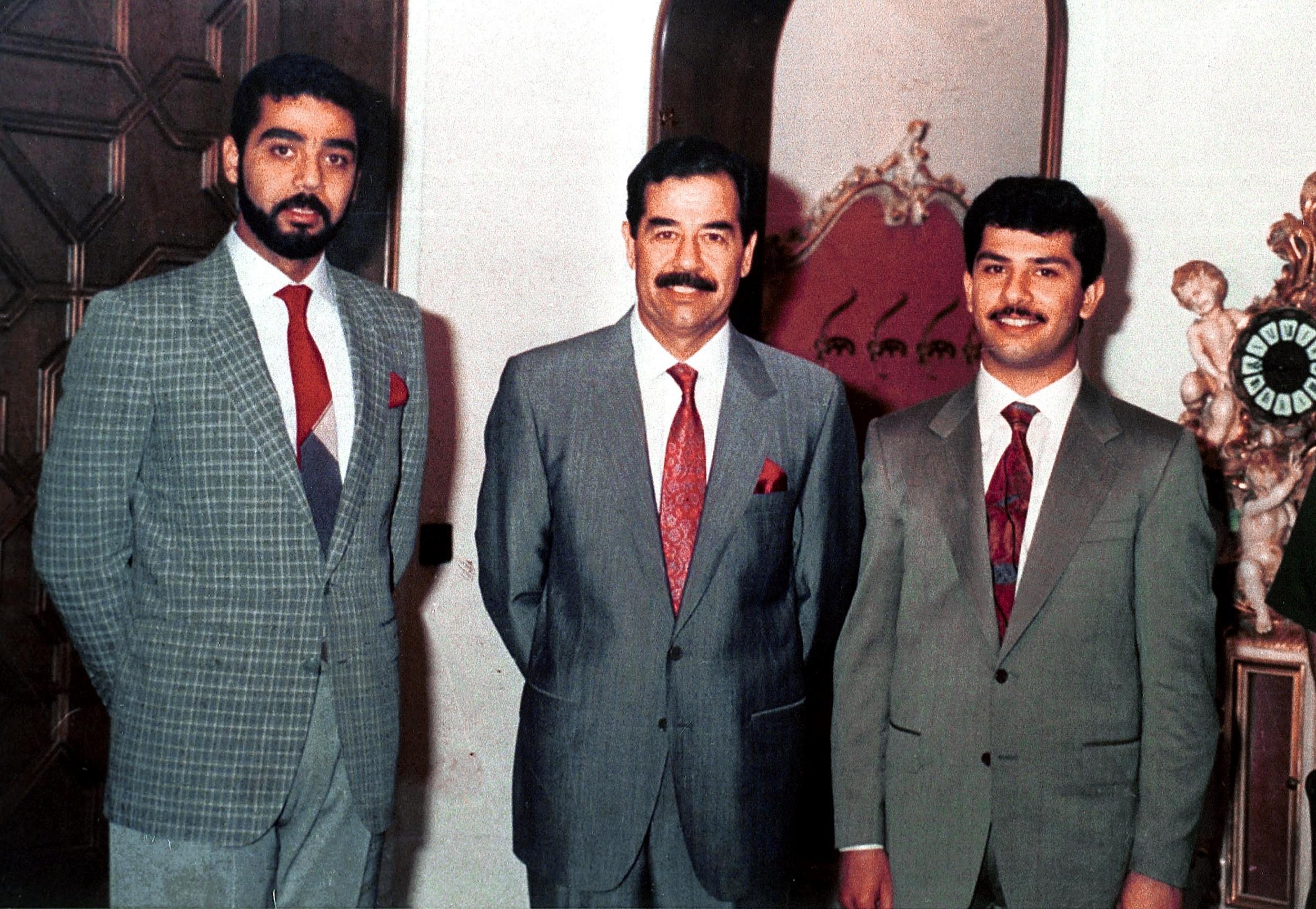
7. Central Bank of Iraq robbery (2003)
In spring 2003, as the United States-led invasion of Iraq began, the country’s central bank in Baghdad was robbed of nearly $1bn in foreign currencies.
Under the cover of darkness, three trucks slipped away with the spoils. They were doing so under the command of Qusay Hussein, the son of Iraq’s military dictator Saddam Hussein. The theft took place just hours before the first bombs fell on the capital city and was presented by President George W Bush as a desperate bid by Iraq’s leaders to smuggle their “ill-gotten loot” out of the country.
Baghdad was captured by US troops weeks later, and Qusay Hussein was killed in July in a shootout with the American military at his safe house in northern Iraq.
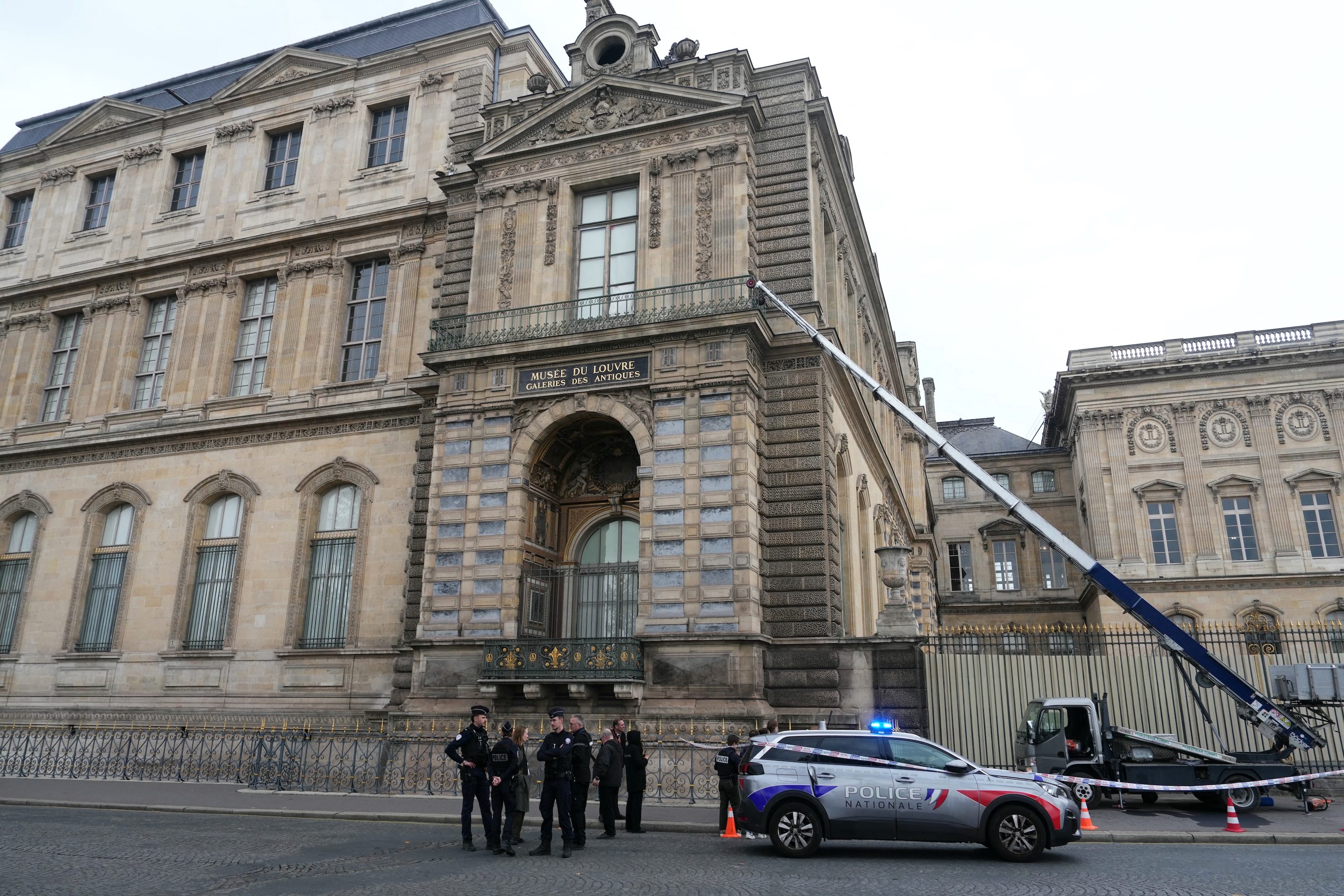
8. Louvre heist (2025)
Though it’s most famous for holding Leonardo da Vinci’s world-famous Mona Lisa, the Louvre in Paris is home to many other paintings, sculptures and historic valuables, including France’s Crown Jewels.
In October 2025, a team of thieves – in a brazen daylight robbery – used a furniture elevator and power tools to enter the museum’s first-floor Apollo Gallery and make off with nine items of jewellery, worth an estimated €88m (£76m).
- Read more | The history of Paris: Romans, Renaissance and Revolution
Among the stolen treasures were necklaces, brooches and earrings adorned with precious sapphire, pearl and emerald gemstones. The thieves also nabbed a diamond-encrusted crown belonging to Empress Eugénie, wife of Napoleon III, but dropped it as they made their escape on motorbikes.
The heist itself lasted a mere seven minutes, with the four-man gang dodging police and private security guards by just 30 seconds. French police now believe they have arrested all four men alleged to have broken into the museum. Eight of the jewellery items are still missing, however.
]]> Jonny Wilkes <![CDATA[A cannibalistic nightmare: the terrifying ordeal of the Donner Party]]> https://www.historyextra.com/membership/a-cannibalistic-nightmare-the-terrifying-ordeal-of-the-donner-party/ 2026-11-22T15:31:05.000Z 2026-11-22T15:30:26.000Z The 19th century brought monumental change to the landscape of the United States. As the still-fledgling nation acquired more territory, more American eyes began to look out across the vast continent and envisage a better life in the west. The Oregon Territory and California, then part of Mexico, promised prosperity, freedom and a fresh start, inspiring pioneering migrants to brave the difficult and dangerous journey to carve out their own slice of paradise there.
Driving this westward expansion was ‘manifest destiny’ – the belief that it was the God-given right and duty of the US to extend its borders to the Pacific Ocean and beyond. That phrase first appeared in 1845; the very next year, a group of would-be settlers set out along the recently established Oregon Trail to realise that dream. Instead, they endured a nightmare, created from a catalogue of errors and misfortunes. Their name evokes a macabre chapter in US history: the Donner Party.
The Reeds and the Donners
The doomed party began with two large families from Illinois who joined the wave of humanity to California. There were the Reeds, headed by Irish-born businessman James Reed, and the Donners, led by farming brothers George and Jacob Donner. Accompanying them were their wives, children, servants and teamsters to drive the wagons, as well as cattle and horses.
In an intriguing ‘what-if’, a bright young lawyer by the name of Abraham Lincoln seriously considered going too. The future president, a friend of Reed’s, was talked out of it by his wife Mary Todd, and turned his attentions to his political career instead.
On 14 April 1846, the Reeds and Donners set out from Springfield, Illinois, bound for Independence, Missouri, the starting point of the great trails to the west. The town provided them with the opportunity to stock up and attach themselves to a wagon train for the 2,000-plus-mile journey, which usually took four to six months.
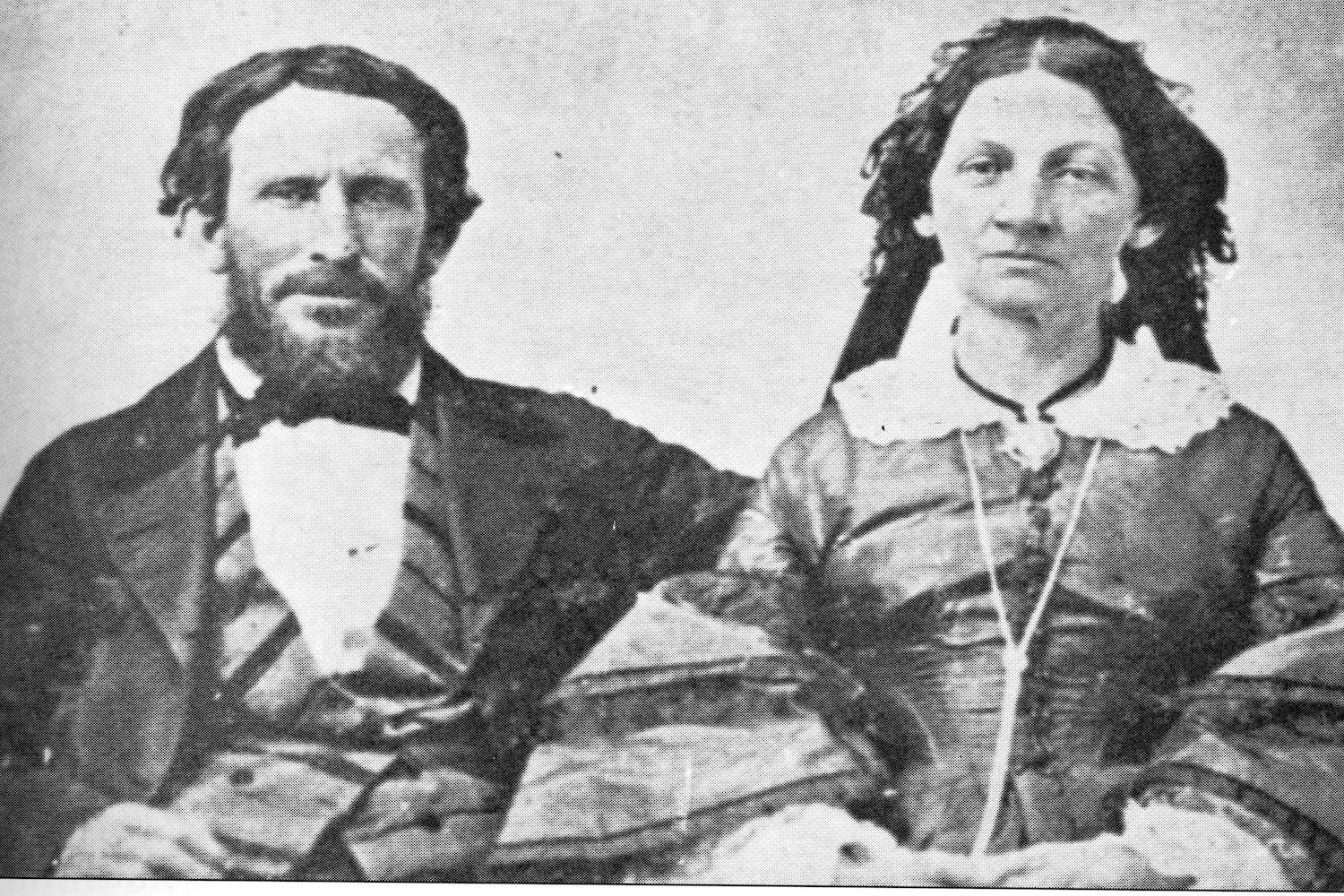
When they left Independence on 12 May, it was already late in the migration season: it was important to go late enough to avoid the rains and mud of spring, while ensuring plenty of grass for the cattle, but early enough to beat the snow.
Aware of the time pressure, they covered the ground to Fort Laramie (now in Wyoming) by late June with little incident, except for the death of Reed’s elderly and sickly mother-in-law, Sarah Keyes. From there, migrants tended to turn north to Fort Hall either to carry on with the Oregon Trail or join the California Trail. Most of the wagon train kept to the established track.
George Donner, however, took the lead of a breakaway group, which included the Reeds as well as the Breen, Eddy, Murphy, McCutchen and Keseberg families, and later the Graves family too. The so-called Donner Party numbered 87 people, nearly half of whom were children.
The shortcut
The party decided to take a new route, known as the Hastings Cutoff. An explorer named Lansford Hastings had written a book, The Emigrants’ Guide to Oregon and California, in which he promoted a shortcut he had devised. Instead of going north and around the Great Salt Lake, he suggested trekking over the Wasatch Mountains and straight across the Great Salt Lake Desert, apparently saving more than 350 miles.
In reality, the Hastings Cutoff added around 125 miles and Hastings had never traversed the route in its entirety, let alone gauged its suitability for wagons and cattle. Yet he sent out letters offering to guide migrants, which is how he enticed members of the Donner Party.
Reed even ignored warnings by an old friend not to trust Hastings, while another traveller, journalist Edwin Bryant, wrote his own letters warning against the use of the shortcut, but these went undelivered. The proprietor of a trading post – who stood to profit from use of the Hastings Cutoff – managed to hide the letters, and instead told the party to expect a smooth road.
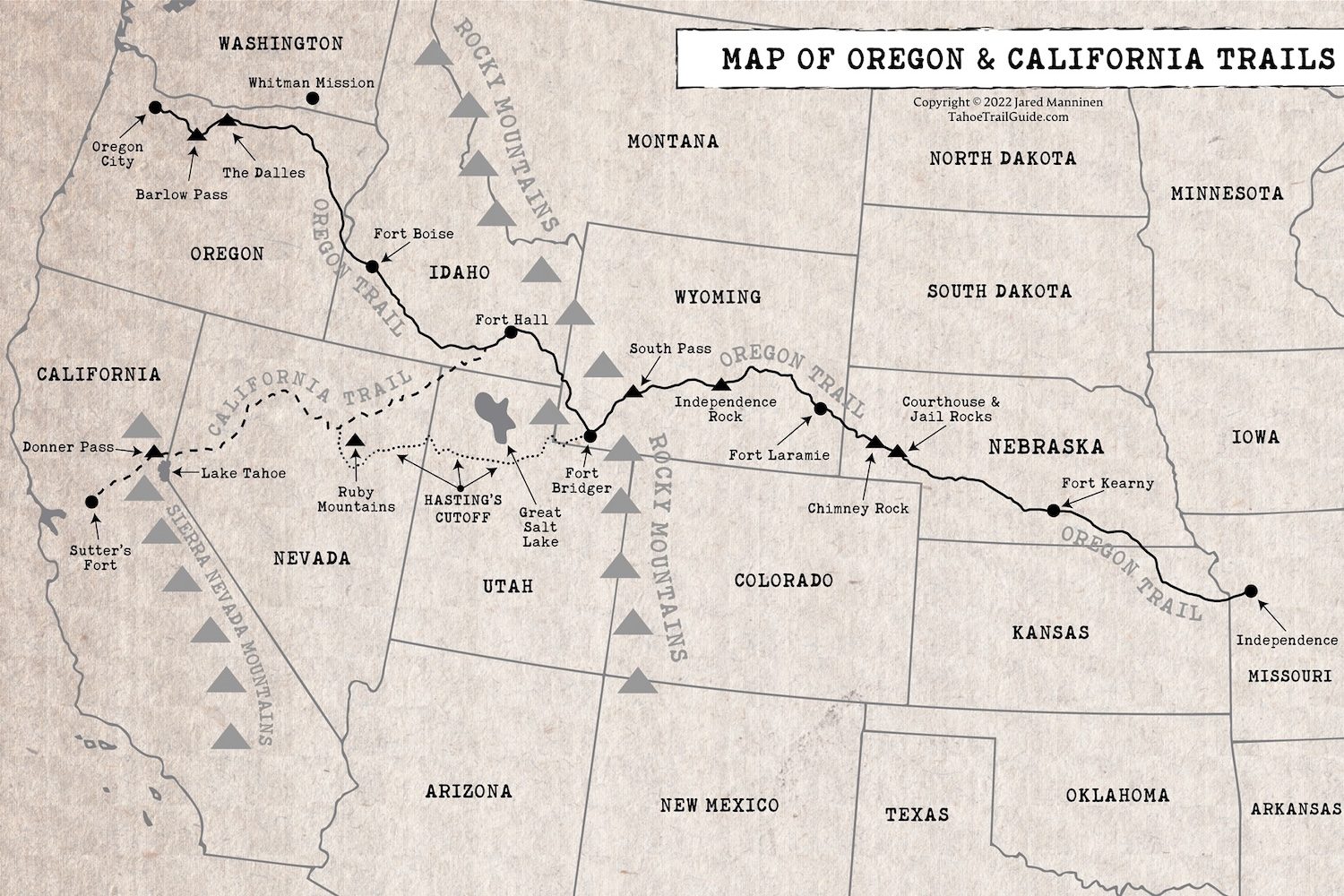
What they found was nearly impassable terrain and no Hastings to help them. He had gone ahead to guide another group, so the Donner Party relied on instructions left along the way. They forged a path through the wilderness, clearing the brush, stones and trees, and dragged their wagons up the steep mountains. At their slowest, they progressed just 1.5 miles a day, causing them to fall behind schedule.
Banished from the party
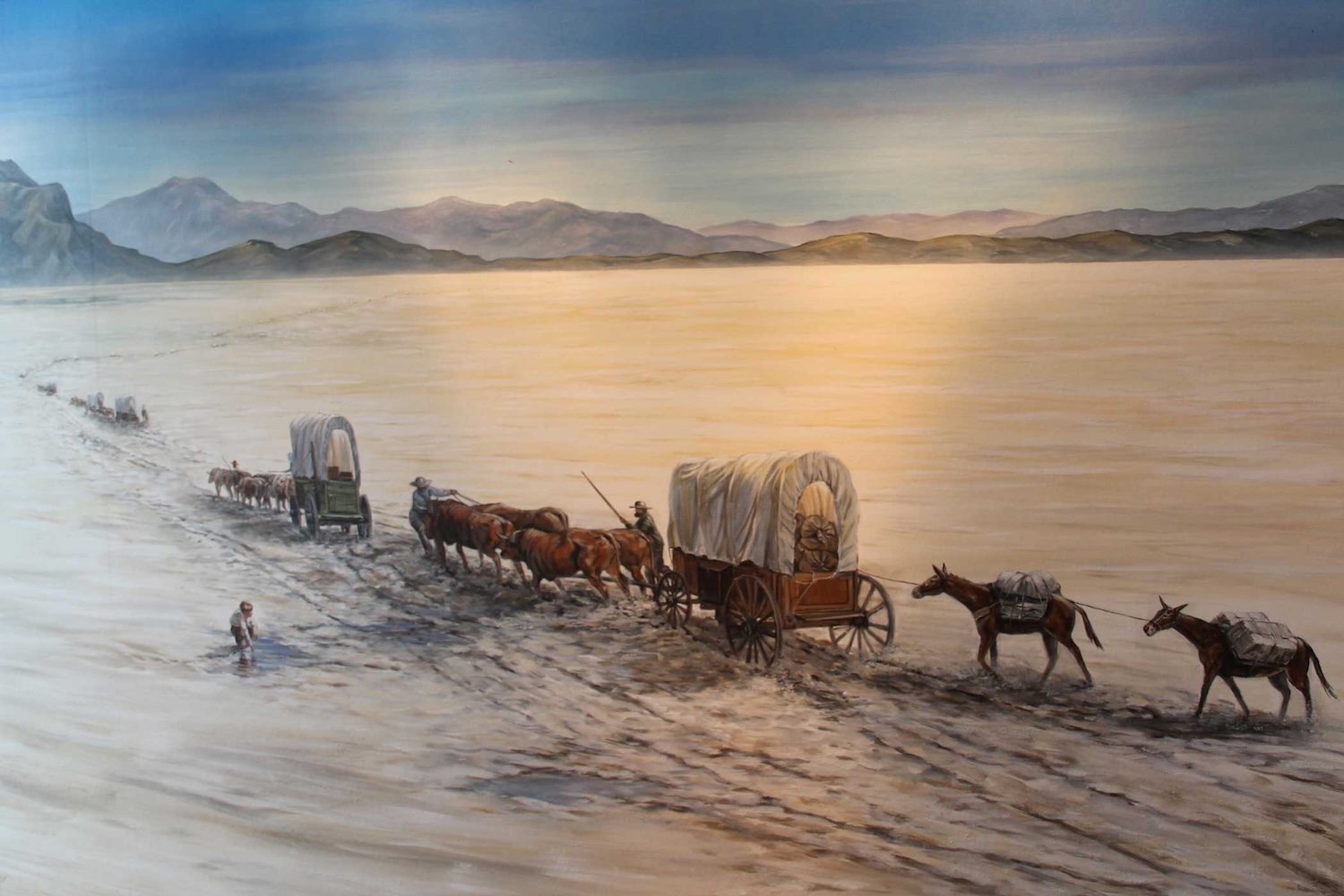
When the party reached the Great Salt Lake Desert, an arid expanse of salt flats without water or grass, they found a note from Hastings claiming it would take two days to cross. In the end, it took five, with the days baking hot, the nights painfully cold, and every step hindered as the wagons sank in the sticky crust of the desert. Supplies ran low, wagons had to be abandoned, many cattle died or fled, and everyone was exhausted by the time they reached the other side.
They did not get to the Humboldt River, where they reconnected with the well-trodden trail to California, until late September. The Hastings Cutoff delayed them by a month and so raised serious doubts over whether they could cross the Sierra Nevada mountains before the snows fell. Morale, energy and supplies plummeted, and cattle numbers dwindled in raids from local Native American tribes. Four deaths came in quick succession, including an old man left on the road when he could go no further.
Then, on 5 October, Reed got into a fight and killed a teamster called John Snyder. Wagon trains administered their own justice and, against calls for his hanging, Reed was banished from the party, with his family permitted to stay. This could have been a death sentence, but, as it turned out, this decision ultimately saved his life and the lives of others. The Donners, meanwhile, fell behind when a wagon was damaged and George severely cut his hand during the repairs.
There was a brief glimmer of optimism when Charles Stanton, who had gone ahead in search of supplies, returned with food and two Miwok guides, known by the westernised names Luis and Salvador. All hopes of completing the journey that season were finally dashed, however, when they reached a pass high up in the mountains already blocked by snow. The Donner Party had no choice but to see out the winter as best they could.
Murder for meat
The majority set up a rudimentary camp at Truckee Lake, sheltering in a few dilapidated cabins built by previous travellers, as well as tents and lean-tos. The Donner families and a handful of others had to make do with even more ramshackle shelter several miles back near Alder Creek. There they remained for months as the winter weather intensified. A blizzard lasting more than a week blanketed the area in deep snow, all but burying the camps and killing off the remaining cattle.
Food supplies soon ran out, and the only meat left was the occasional mouse found in the cabins. Facing starvation – unless the cold killed them first – people boiled the oxhides used for shelter and sucked out the jelly they produced, or gnawed at tree bark. The last animal bones were boiled for broth so many times that they crumbled in the mouth. Baylis Williams, one of the Reeds’ workers, was the first to die of malnutrition; others soon followed.
By December, the situation had become so desperate that a small group from Truckee Lake set out on a highly dangerous attempt to cross the mountain pass in makeshift snowshoes and get help. The group started with 17 of the healthiest members, including a couple of children, but two turned back quickly. The others trudged on with minimal equipment and food, and with diminishing strength. Later historians dubbed them ‘the Forlorn Hope’.
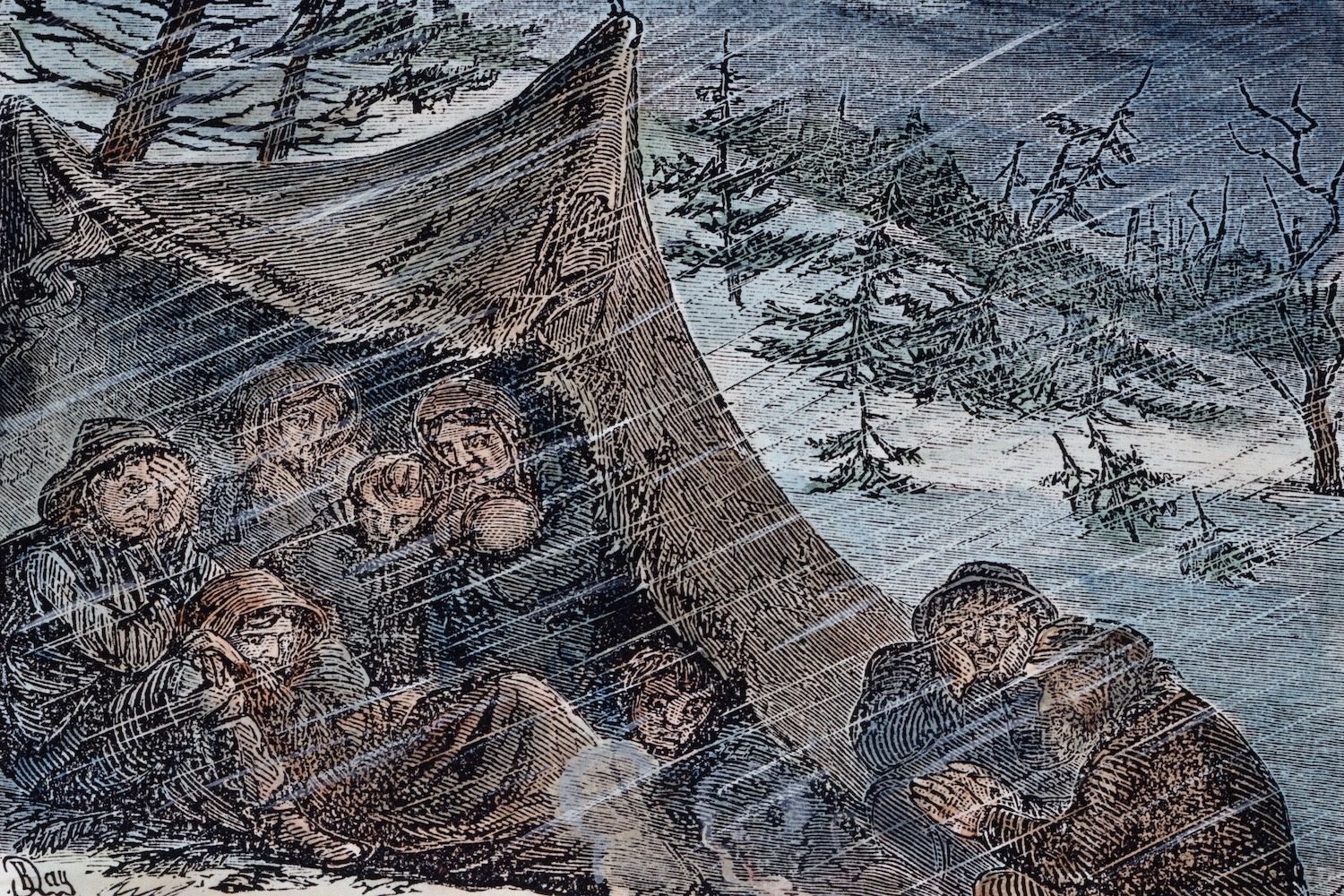
After a week that brought them to the brink of death, the group were forced to contemplate the ultimate taboo of survival: cannibalism. Although many were intensely reluctant – even when the first deaths occurred, the bodies were not touched – there soon remained no other choice.
Patrick Dolan, the first to suggest eating human flesh, lost his mind with hypothermia, stripped off his clothes and ran into the trees, dying just a few hours later. The group gave in and cannibalised his body. Soon, the remains of everyone who perished were also cut up and stored for food. Care was taken to ensure that no one ate the flesh of a relative.
When that still proved insufficient, though, talk turned to killing the guides, Luis and Salvador. While they initially escaped, the others caught up with them a few days later and a man named William Foster shot them. This is the only instance in the Donner Party of murder committed for meat, and serves as a damning demonstration of how little the lives of Native Americans were regarded.
Eight of the Forlorn Hope would die before the survivors wandered into a Miwok camp after 33 days. They would not have made it without resorting to cannibalism.
The relief parties
After arriving at the Miwok camp, the group raised the alarm. Leaving Sutter’s Fort in early 1847 and trekking into the snowy mountains, a relief party managed to reach Truckee Lake in mid-February, but saw no signs of life. Only when they called out did a woman, Levinah Murphy, poke her head out of the snow and, on seeing the newcomers, remark, “Are you men from California, or do you come from heaven?”
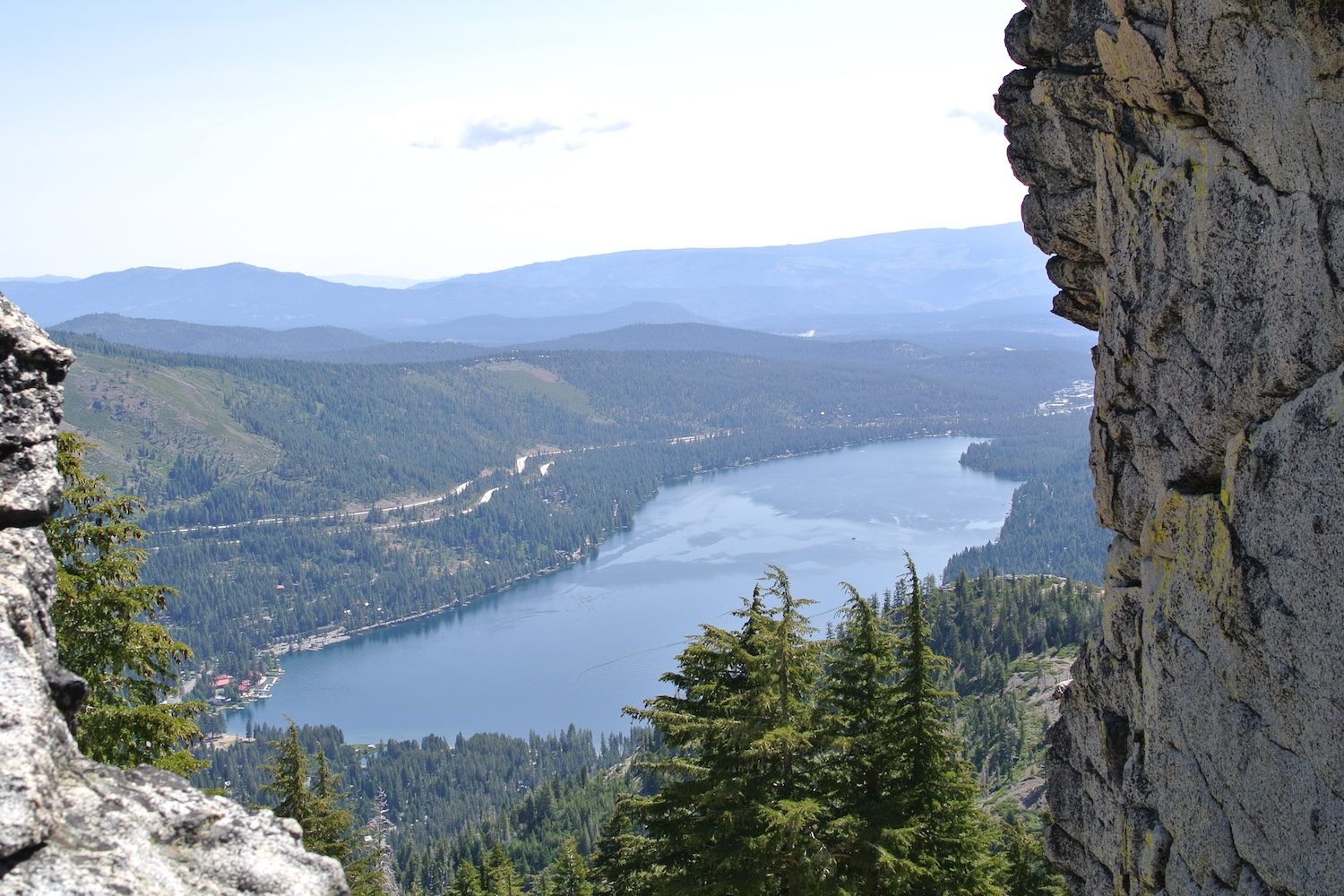
The state of the buried camp was horrendous, with 13 dead and the rest emaciated and mentally frail. The situation at Alder Creek was no better. While the rescuers knew they could not take everyone with them, especially the weak and infirm, they led 23 of the Donner Party back down the mountains, nearly all children. During the arduous journey, two died, and another died once they reached safety.
On the way, though, they passed another relief party. At the front was none other than James Reed. Having reached California following his banishment, he had grown increasingly worried when the others, including his family, did not appear, and worked tirelessly to organise a rescue effort. He discovered his wife and children all alive.
In fact, no one else had died at the camps, but cannibalism had become widespread. The rescuers saw a man named Jean Baptiste Trudeau carrying a human leg, and the organs of Jacob Donner being used to sustain his own children.
The second relief took another 17 away, mostly children from the Breen and Graves families, leaving just five each at Truckee Lake and Alder Creek. The return journey was miserable, with three deaths and the rest growing so weak that their rescuers left them. They only survived what became known as ‘Starved Camp’ through cannibalism.
Even the arrival of a third relief effort did not bring salvation as there were not enough men to carry all the children. That was until a man named John Stark refused to leave them, and began carrying each child a little distance at a time before returning for another and repeating the process.
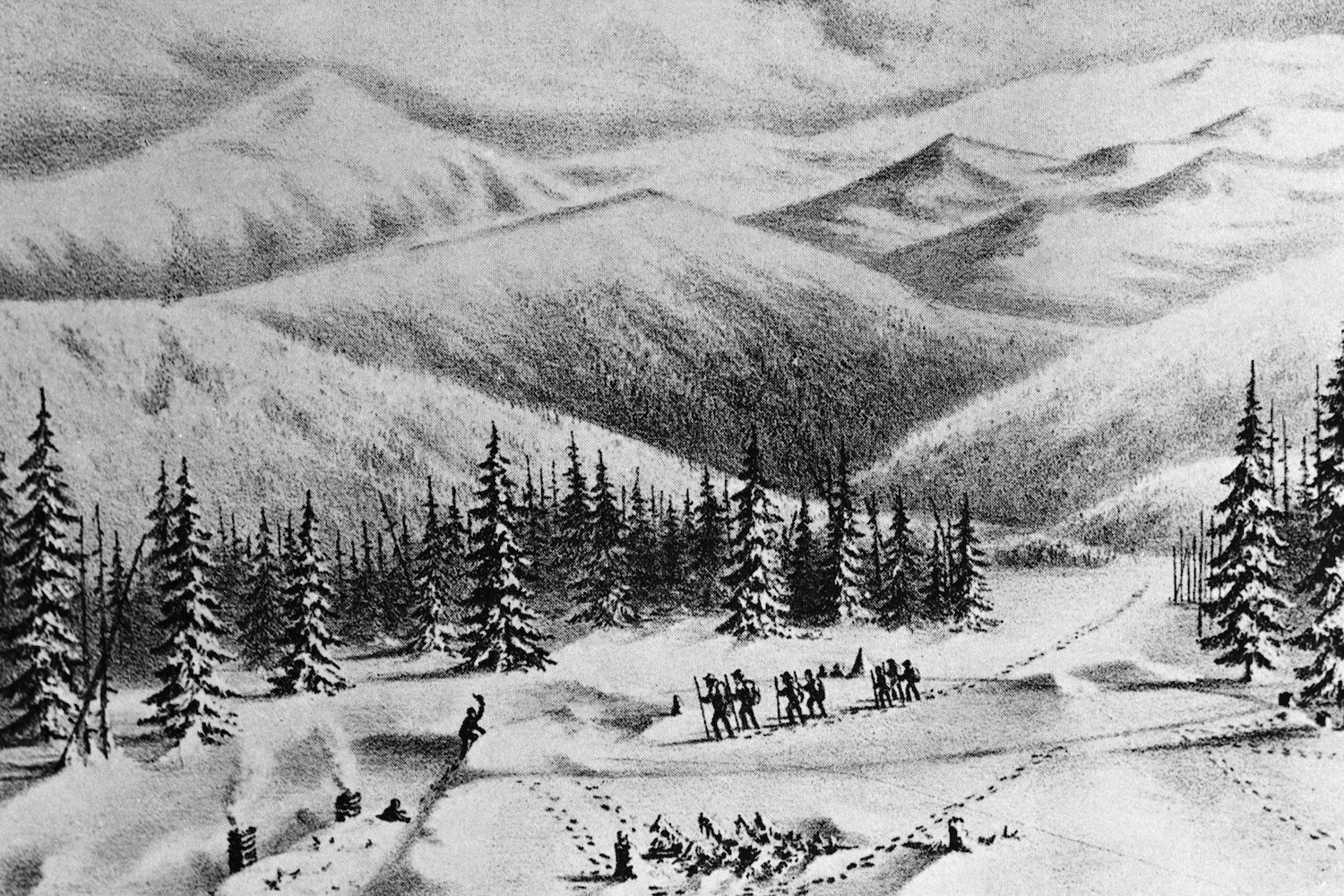
While Stark heroically brought nine children down the mountain, other members of the third relief carried on to the camps, including Forlorn Hope members William Foster and William Eddy. They learned that, in their absence, their children had perished, and one of the survivors, Lewis Keseberg, admitted to eating Eddy’s son.
With the rescuers saving another five children, only a handful remained. Keseberg refused to leave, Levinah Murphy was too weak, George Donner was unable to move due to the hand injury he sustained months earlier (which had turned gangrenous), and George’s wife Tamsen chose to stay with him, knowing this likely guaranteed her death.
- Read more | The first great polar expedition: Fridtjof Nansen’s 1888 traverse of the Greenland Ice Sheet
Heroes and villains
It would be weeks before one last party set out for the camps in April 1847 – not with the expectation of finding anyone else alive, but to retrieve belongings. Yet at the Truckee Lake camp was a sole survivor, Keseberg. Before he was brought away, though, it was said that he acted suspiciously and was found with a cooking pot filled with human flesh and some of the Donners’ possessions. Unproven claims that he murdered Tamsen emerged, and sensationalised stories in the newspapers made him something of a villain – a reputation that haunted Keseberg for the rest of his life.
Of the 87 members of the Donner Party who went into the mountains in the winter of 1846, 48 came out the other side, and of the individual families, only the Reeds and Breens did not suffer a death. Everyone who lived, however, carried with them the trauma of their ordeal and the measures they took to survive. Virginia Reed wrote to a cousin back east, saying, “I have not wrote you half of the truble, but I hav Wrote you anuf to let you now what truble is.”
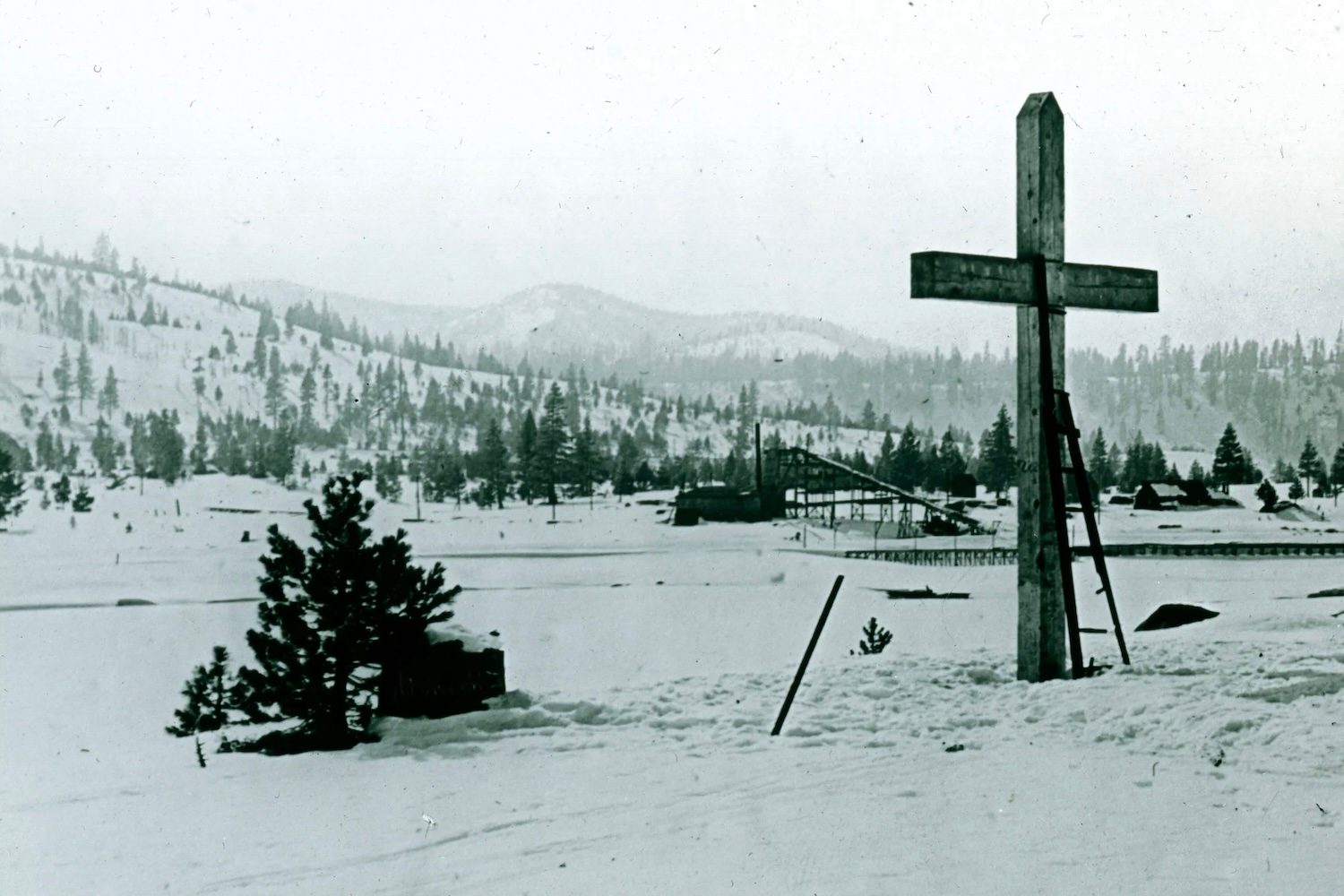
But as they looked to build their lives in California, the tragedy of the Donner Party was already entering American folklore. Truckee Lake and the trail became known as Donner Lake and Donner Pass respectively, and the site of the cabins was turned into a tourist attraction as early as the 1850s. A plethora of accounts and books also emerged, framing the story in terms of heroes like Tamsen Donner and villains like Keseberg.
In the end, it proved ineffective as a cautionary tale of the dangers of westward expansion and did little to stem the flow of migrants, especially after the discovery of gold in California. Virginia Reed herself did not want her “truble” to dishearten future pioneers; as she made clear in her letter, the pain the Donner Party endured began with one costly mistake: “Never take no cutofs and hury along as fast as you can.”
]]> Jonny Wilkes <![CDATA[The island that Hitler couldn't defeat: why an entire country won an award for bravery in WW2]]> https://www.historyextra.com/membership/why-was-the-entire-country-of-malta-awarded-the-george-cross-inside-the-ww2-siege/ 2026-11-21T15:31:04.000Z 2026-11-21T15:30:57.000Z The George Cross is among the most prestigious British decorations, second to the Victoria Cross. Whereas that is awarded to members of the military for valour in the face of the enemy, the George Cross can go to civilians for “acts of the greatest heroism or the most conspicuous courage in circumstances of extreme danger”.
It was introduced by King George VI, superseding the Empire Gallantry Medal, in 1940. At the time of the Battle of Britain and the Blitz, it became increasingly apparent that the bravery of civilians needed to be recognised as well as the soldiers.
Since then, there have been more than 400 recipients of the medal, but one occasion when it went to a whole country: Malta.
Malta under siege
During the Second World War, the Mediterranean island and British colony was of vital strategic importance to the Allies, as a base from which the North African campaigns could be waged. As such, the Axis powers of Nazi Germany and Italy targeted Malta with heavy attack from their air forces as early as 1940, in preparation for an invasion.
From January to July 1942, Adolf Hitler ordered an escalation of hostilities to ensure that Malta would be “neutralised”. The Luftwaffe carried out hundreds of air raids – in fact, there was only one 24-hour period in those six months without bombing.
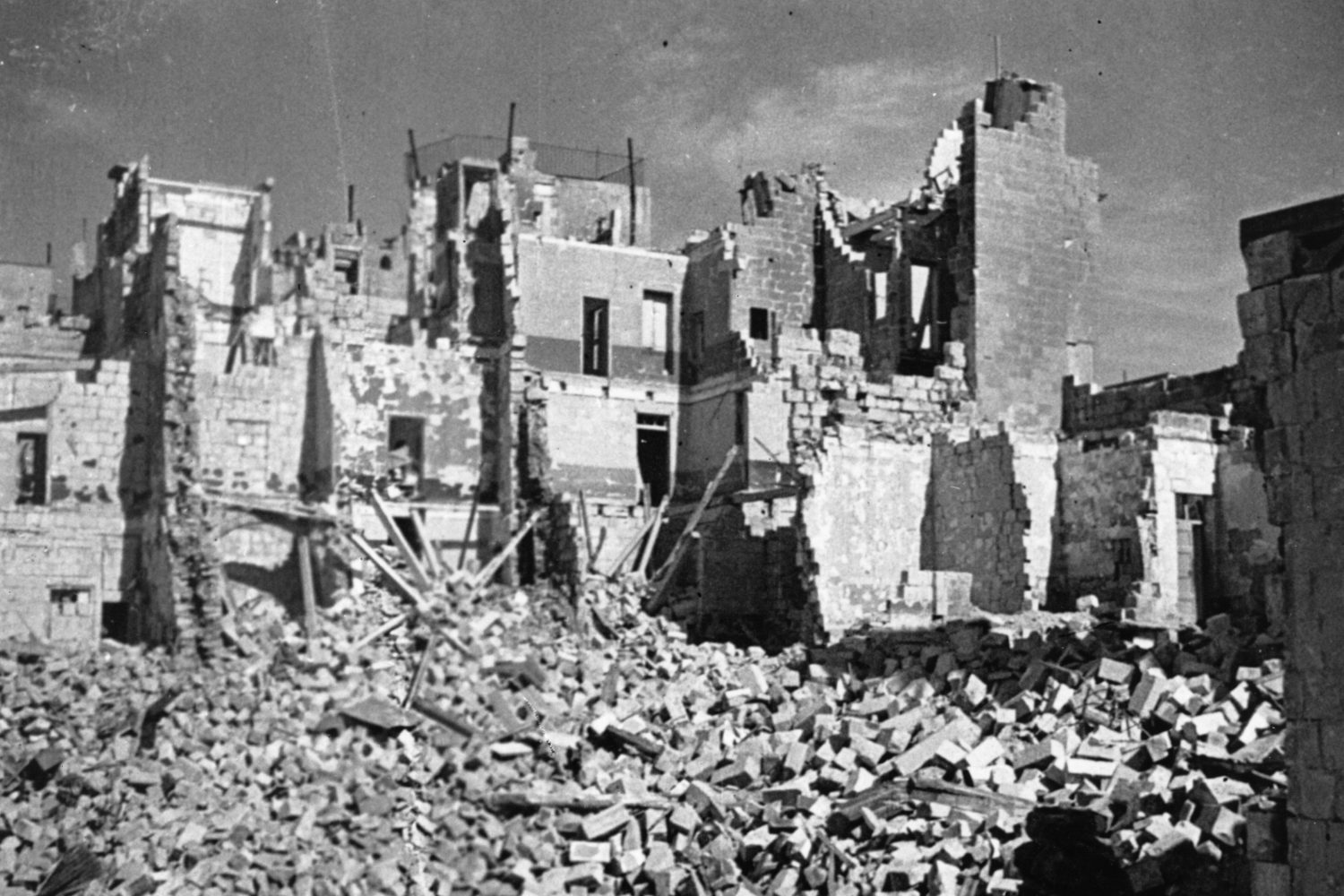
The island suffered catastrophic damage with thousands of buildings destroyed, while the military defences stretched to breaking point. Ammunition ran so low that just a few anti-aircraft rounds could be fired each day until the arrival of a few dozen Spitfires offered some resistance in the skies.
The population of Malta faced the constant terror of bombardment and, as food became scarce, was pushed to the brink of starvation. People spent most of their time in underground shelters, desperately carved out of the limestone rock of the island.
Yet Malta did not surrender.
“To honour her brave people”
In a letter dated 15 April 1942 to governor-general William Dobbie, the king announced the remarkable decision to recognise the island itself, writing: “To honour her brave people, I award the George Cross to the Island Fortress of Malta to bear witness to a heroism and devotion that will long be famous in history.”
Dobbie responded: “By God’s help Malta will not weaken but will endure until victory is won.”
The siege continued until May 1943, and the defence only held out thanks to a dangerous supply mission, codenamed Operation Pedestal, which brought much-needed fuel, food and medical supplies. Its success came at a great cost: nine of the 14 merchant ships failed to reach Malta, while four of the accompanying warships were sunk.
Incidentally, for his part in Operation Pedestal, Dudley William Mason – captain of the fuel tanker Ohio, which sustained heavy damage on its way to the island’s harbour – would be awarded the George Cross himself.
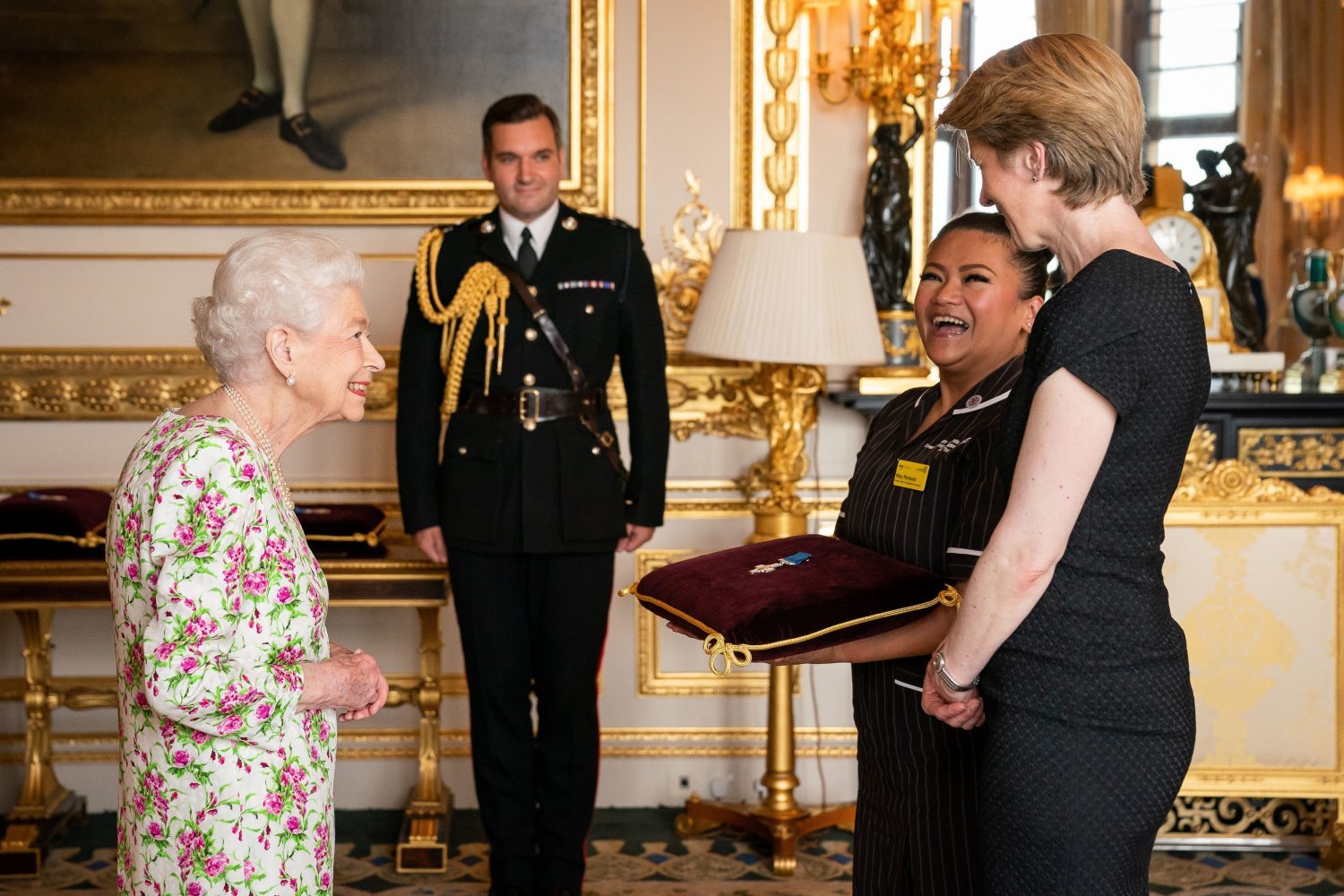
Legacy of the George Cross
Then with their defeat in North Africa, Hitler and Benito Mussolini were forced to abandon hopes of seizing Malta once and for all. By then, there had been a recorded 3,340 air raids, resulting in 1,581 deaths.
To this day, Malta’s unique honour is remembered in the country’s flag, with the George Cross included in the top-left corner. This is not the sole example, however, of a non-individual recipient of the decoration. Eilzabeth II awarded it to the Royal Ulster Constabulary – the police force in Northern Ireland during the Troubles – and, in 2021, to the staff of the National Health Service.
]]>